

Omega-3 Index: Optimize Your Health and Longevity
A staggering 98 percent of the population carries a cellular deficiency that conventional blood panels completely ignore. Research indicates that maintaining a high omega 3 index can extend your life by nearly five years, offering a level of protection comparable to the mortality risk reduction of quitting smoking. You likely prioritize your health, yet you probably feel a nagging uncertainty about whether your daily fish oil is actually reaching your cells or simply passing through your system. It's time to replace guesswork with precision.
Standard lipid panels offer a surface-level glance, but they fail to detect the silent vascular inflammation that erodes long-term vitality. This guide moves beyond generic supplementation toward total biological mastery. You'll discover how the omega 3 index serves as the definitive measure of cellular EPA and DHA saturation, providing a data-driven roadmap for cardiovascular resilience. We'll detail the exact targets required to achieve an optimal longevity score above 8 percent and explain how to integrate this critical biomarker into a comprehensive functional medicine strategy for peak performance.
Key Takeaways
- Replace volatile plasma readings with stable erythrocyte membrane analysis to achieve a precise baseline of your biological resilience.
- Discover how high-level EPA and DHA saturation optimizes cellular fluidity and enhances the transport of vital nutrients across cell membranes.
- Execute a clinical testing protocol to determine your exact omega 3 index and eliminate the uncertainty of standard over-the-counter fish oil regimens.
- Evaluate the vital ratio between omega-6 arachidonic acid and EPA to identify silent inflammatory triggers undetected by routine checkups.
- Integrate advanced fatty acid diagnostics into a personalized longevity roadmap to secure long-term cardiovascular and metabolic health.
What Is the Omega 3 Index and Why Does It Matter?
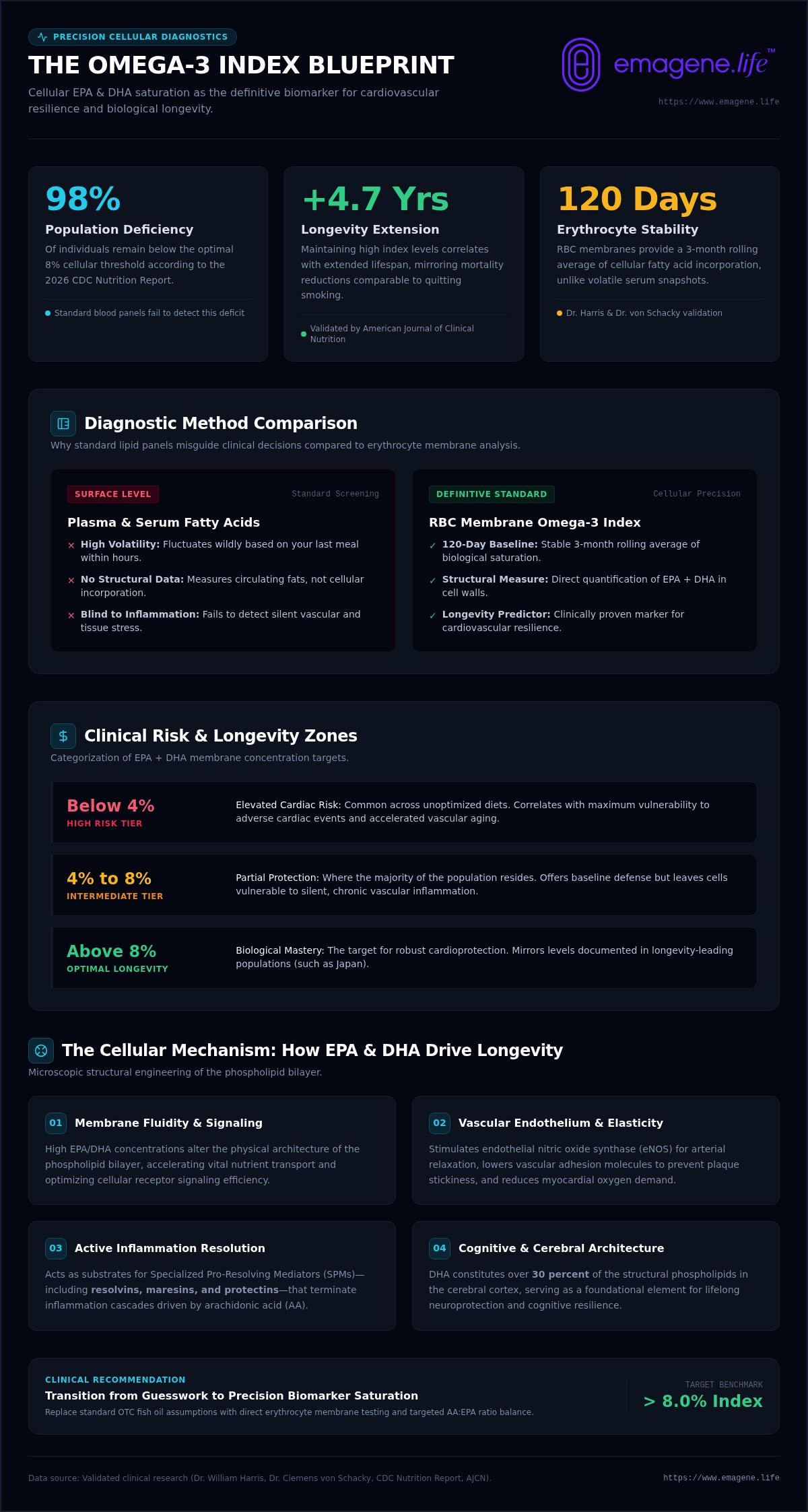
Standard cardiovascular screenings often miss the most critical indicator of your biological durability. The omega 3 index measures the specific percentage of eicosapentaenoic acid (EPA) and docosahexaenoic acid (DHA) embedded within your red blood cell membranes. Unlike transient markers, this metric provides a stable, data-driven reflection of your long-term health status. Validated by the pioneering work of Dr. William Harris and Dr. Clemens von Schacky, it has emerged as a premier predictor of cardiovascular resilience and overall longevity.
Erythrocyte Membranes vs. Serum Fatty Acids
Stop settling for snapshots when you need a film. Most routine blood tests measure circulating plasma fatty acids, which fluctuate wildly based on your last meal. This volatility makes serum testing an unreliable guide for clinical decisions. Red blood cells possess a distinct 120-day life cycle. By analyzing these membranes, we obtain a three-month rolling average of how effectively your body incorporates essential Omega-3 fatty acids into its physical structure. This cellular saturation is what ultimately dictates nutrient transport and receptor signaling efficiency.
The Clinical Risk Zones: Low, Intermediate, and Desirable
Precision diagnostics allow us to categorize your health into clear, actionable zones. Research published in the American Journal of Clinical Nutrition highlights that a higher index correlates with living an average of 4.7 years longer. The risk associated with a low score is comparable to the biological impact of smoking. The risk tiers are uncompromising:
- High Risk (Below 4%): This level is unfortunately common and correlates with the highest risk of adverse cardiac events.
- Intermediate (4% to 8%): Most individuals reside here, possessing some protection but remaining vulnerable to silent vascular inflammation.
- Optimal (Above 8%): This is the target for biological mastery. It mirrors the levels seen in populations with exceptional heart health, such as those in Japan.
A 2026 CDC Nutrition Report underscored the urgency of this metric, revealing that 98 percent of the population remains below the 8 percent mark. Reaching the optimal zone requires more than generic advice. It demands a sophisticated understanding of your unique cellular requirements and a move toward active mastery over your biology.
The Cellular Mechanism: How EPA and DHA Drive Biological Longevity
Your cells are only as resilient as their boundaries. The phospholipid bilayer dictates whether a cell thrives or survives. While standard serum triglyceride tests only reflect recent dietary intake, they fail to reveal chronic cellular deficiencies. When you optimize your omega 3 index, you're physically altering the architecture of these membranes. High concentrations of EPA and DHA increase membrane fluidity, a state that accelerates nutrient transport and optimizes receptor signaling. This isn't just a dietary choice; it's structural engineering at a microscopic level.
Vascular Endothelium Protection and Arterial Elasticity
Rigid arteries are a hallmark of biological aging. Omega-3 fatty acids directly stimulate endothelial nitric oxide synthase, the enzyme responsible for arterial relaxation. By reducing vascular adhesion molecules, these fats prevent the cellular stickiness that leads to plaque formation. Achieving an optimal index lowers resting heart rate and reduces myocardial oxygen demand, effectively making your cardiovascular system more efficient under stress.
Resolving Systemic Inflammation at the Root Level
Chronic inflammation is the silent driver of cellular senescence and accelerated telomere shortening. While standard treatments often just suppress symptoms, EPA and DHA act as substrates for specialized pro-resolving mediators (SPMs). According to the NIH Office of Dietary Supplements, these fatty acids are essential for modulating inflammatory responses. Unlike pro-inflammatory arachidonic acid pathways that fuel systemic heat, omega-3 signaling mechanisms prioritize resolution and repair. They generate resolvins, maresins, and protectins that actively terminate the inflammatory cascade. This metabolic shift is vital when utilizing functional medicine for physical performance to ensure rapid recovery and tissue restoration.
Cognitive Longevity and Neuroprotection
Your brain is the most fat-dense organ in your body. DHA alone constitutes over 30 percent of the structural phospholipids in the cerebral cortex. Maintaining high membrane saturation protects hippocampal volume as you age, preventing the cognitive decline often accepted as inevitable. Fluid membranes accelerate synaptic signaling and boost neurotrophic factor expression. To truly master your biology, you must move beyond generic health advice and embrace a precision longevity strategy that prioritizes cellular integrity and long-term cognitive function.
How to Test and Optimize Your Omega 3 Index: A Clinical Protocol
Generic health advice fails because it ignores individual metabolic variation. You cannot optimize what you do not measure. Achieving a superior omega 3 index requires a transition from passive supplementation to a rigorous, data-backed clinical protocol. This process replaces uncertainty with precise biological targets, ensuring your efforts translate into actual cellular resilience.
Step 1: Baseline Quantification via Dried Blood Spot
Precision begins with objective data. Execute an initial baseline dried blood spot or venipuncture validation to determine your current status. It's critical to collect your sample while avoiding acute high-fat meals that can temporarily distort plasma readings. We utilize accredited gas chromatography to analyze your total fatty acid profile, establishing a personal benchmark before introducing concentrated therapeutic interventions. This initial step reveals the exact depth of your cellular deficit within the context of your current dietary fat composition.
Step 2: Bioavailable Repletion and Targeted Dosing
Repletion is a science, not a habit. Many over-the-counter supplements suffer from poor absorption and rapid oxidation, rendering them ineffective. You must prioritize triglyceride-form oils, which demonstrate superior bioavailability compared to common ethyl esters. Dosing logic must also account for the meal matrix. Always consume therapeutic fatty acids alongside dietary fats to stimulate pancreatic lipase secretion and bile release. Factor in these variables to maximize uptake:
- Form: Choose triglyceride-based oils over synthetic ethyl esters.
- Matrix: Pair supplements with a fat-containing meal to trigger digestive enzymes.
- Enzymes: Utilize supplemental lipase if your digestive efficiency is suboptimal.
Calculating your targeted EPA and DHA requirements depends entirely on your baseline deficit. To begin your journey toward biological mastery, book a comprehensive functional medicine assessment.
Step 3: Verification and Biological Adaptation
Biological change takes time. Red blood cell turnover requires roughly 120 days to reach a stable equilibrium. Retesting before this four-month window yields misleading results that reflect transient intake rather than sustained cellular incorporation. Schedule your clinical retesting after sixteen weeks of consistent repletion. This verification phase allows us to analyze how your unique biology responds to the intervention, permitting precise adjustments to your long-term longevity roadmap.
Beyond the Standalone Score: Integrating Biomarkers into Functional Medicine
A single metric, no matter how potent, is insufficient in isolation. To achieve true biological mastery, we must view the omega 3 index as one pillar within a vast physiological architecture. Viewing biomarkers through a narrow lens overlooks the systemic interactions that drive aging. We integrate these values into a broader framework to uncover the root causes of dysfunction and build a foundation for peak performance.
The Omega-6 to Omega-3 Balance and Inflammatory Load
Modern industrial diets have distorted our evolutionary biochemistry, often pushing fatty acid ratios past fifteen to one. This imbalance is driven by excessive linoleic acid, which competes directly with omega-3 desaturase enzymes. This competition effectively throttles your body's ability to utilize protective fats. By balancing these ratios, we mitigate cellular oxidative stress and prevent the immune overactivation that leads to chronic tissue degradation.
Cardiovascular and Metabolic Biomarker Synergy
True precision requires correlating fatty acid levels with metabolic markers like fasting insulin. We combine your testing with advanced lipid subfractions and high-sensitivity C-reactive protein (hs-CRP) to map your total inflammatory load. This synergy allows us to address metabolic resistance through a personalized health roadmap. We also examine the hormonal interplay governing cellular energy and mitochondrial function to ensure every system is optimized for long-term resilience.
Clinical Precision Through Functional Medicine
Generic one-size-fits-all dietary supplements are a relic of the past. Personalized diagnostic roadmaps are the future. Our protocols focus on optimizing your biological age and extending your overall healthspan by addressing specific physiological imbalances. To transform raw data into a definitive strategy for vitality, you must explore full-body testing via a comprehensive functional medicine assessment. This approach ensures that your longevity strategy is as unique as your DNA.
Master Your Biological Future
Stop relying on the hope that your daily supplements are working. True longevity requires precise biological tracking and a shift toward active mastery over your biology. The omega 3 index isn't just a number; it's a structural assessment of your cellular integrity. By achieving a score above 8 percent, you aren't just preventing disease. You're actively optimizing your cardiovascular and neurological resilience for a more advanced, precise future. Precision diagnostics replace the trial-and-error approach of traditional care with a definitive roadmap for vitality.
Emagene Life provides evidence-based functional medicine longevity assessments that look beyond isolated markers. We utilize comprehensive root-cause investigation across all physiological systems to ensure your protocols are effective and grounded in data. You deserve a personalized diagnostic roadmap to extend your healthspan and secure your peak performance. The path to restoration and renewed vigor begins with precision.
Take Control of Your Cellular Health with Emagene Life and start your journey toward biological excellence today.
Frequently Asked Questions
What is an ideal Omega 3 Index score for longevity?
An ideal omega 3 index score for longevity is 8 percent or higher. Maintaining your level within this optimal range is clinically associated with maximum cardiovascular protection and enhanced cellular resilience. Scores below 4 percent represent a high-risk zone for systemic inflammation. Targeting the upper threshold ensures your cell membranes possess the necessary fluidity to support vital metabolic signaling and long-term healthspan extension.
Can standard cholesterol tests determine my cellular omega-3 status?
No, standard cholesterol panels can't determine your cellular omega-3 status. Routine lipid tests measure circulating fats like LDL and HDL in the fluid portion of your blood. They fail to assess the fatty acid architecture of your cell membranes. The omega 3 index specifically quantifies erythrocyte membrane saturation, revealing deep physiological realities that standard cardiovascular checkups completely miss.
How long does it take to raise a low Omega 3 Index?
It typically takes three to four months of targeted, bioavailable repletion to significantly raise a low omega 3 index. This timeline is dictated by the 120-day lifespan of red blood cells. New erythrocytes must incorporate the fatty acids into their membranes during formation. Attempting to retest before sixteen weeks will yield volatile plasma data rather than a stable biological reflection of tissue saturation.
Why is eating fish twice weekly often insufficient for an optimal score?
Eating fish twice a week often falls short because of variations in absorption, preparation methods, and wild versus farmed fat profiles. Industrial cooking techniques frequently damage fragile polyunsaturated fats through oxidation. High consumption of modern seed oils rich in omega-6 also creates enzymatic competition. This interference blocks the proper assimilation of EPA and DHA into your cellular structures, requiring a more precise clinical approach.
What is the difference between fish oil supplements and cellular index testing?
Fish oil supplements are a generic input, while cellular index testing provides objective diagnostic output. Taking over-the-counter oils doesn't guarantee that the fatty acids are successfully penetrating your cell walls. Testing measures the actual biological destination of those fats. It quantifies the exact percentage of EPA and DHA within your red blood cells, transforming random supplementation into a structured, data-driven longevity protocol.
Can an Omega 3 Index score ever become excessively high?
Yes, an index score can exceed optimal therapeutic limits, typically when it climbs above 12 to 15 percent. While rare, extreme saturation can over-fluidize cell membranes and potentially affect blood clotting times or immune responses. This risk is why random, high-dose supplementation is dangerous. True biological mastery requires regular biomarker tracking to keep your cellular levels precisely balanced within the ideal longevity zone.


