

Why Am I So Tired All the Time? Causes and Next Steps
Persistent tiredness is a signal, not a diagnosis. If you’re wondering why you’re so tired all the time, possible causes include a medical condition, nutrient deficiency, poor sleep, medication effects, stress, anxiety, or low mood. More than one factor may be involved.
It’s understandable to suspect a demanding schedule or a few restless nights. But ongoing fatigue can have physical and emotional causes, and noticing its patterns is a useful first step. A healthcare professional can review your symptoms, health history, and medicines, then decide whether tests may help identify the cause.
This article explains how thyroid problems, diabetes, nutrient deficiencies such as iron deficiency, and emotional strain can affect energy. It also covers how fatigue is assessed and treated, and when to seek medical advice. The goal is to help you move from guessing to a clearer next step.
Key Takeaways
- Ongoing fatigue can have several causes, including health conditions, medication effects, poor-quality sleep, and emotional strain.
- Iron deficiency anemia can contribute to tiredness; testing can help distinguish it from other possible causes.
- Stress, anxiety, and low mood may affect energy, while improving sleep habits can support better rest.
- A healthcare provider may review your symptoms, lifestyle, and medications, examine you, and order tests to investigate fatigue.
- Track when tiredness occurs and seek medical advice if it persists, is unexplained, or comes with concerning symptoms.
What medical conditions cause fatigue?
Common causes of persistent fatigue include disrupted sleep, stress, medication effects, and conditions such as anemia, thyroid problems, diabetes, and heart disease. The pattern matters: feeling tired after a night shift differs from fatigue that continues despite enough sleep or interferes with everyday activities.
Several conditions can reduce energy in distinct ways. An underactive thyroid can slow metabolism and leave you sluggish. In diabetes, high or low blood sugar can cause fatigue. Iron deficiency anemia may bring tiredness, shortness of breath, and pale skin. Heart failure, cardiomyopathies, and arrhythmias can also cause fatigue. ME/CFS involves extreme fatigue lasting at least 3 months that makes daily activities very difficult. These symptoms can overlap, so a clinician may need to assess them to rule out possible causes.
Sleep and daily routines can add to the picture. Shift work may disrupt the body’s sleep-wake rhythm, while inactivity can make regular tasks feel more tiring. Alcohol may affect sleep quality, even if it initially makes you feel drowsy. Adults aged 18-60 should get 7 or more hours of sleep per night, according to the Centers for Disease Control and Prevention. The World Health Organization recommends exercising 150 minutes each week. Gradual activity, such as walking, can help build movement into a routine.
Medicine can also be affecting your energy. Examples include:
- Beta blockers such as bisoprolol and atenolol, which can cause tiredness, particularly when treatment first starts.
- Diuretics, which may contribute to dehydration or low blood pressure, causing weakness, dizziness, or tiredness.
- Sleeping tablets and anxiety medications, which may cause daytime drowsiness or grogginess, especially with long-term use.
If your energy drops after starting or changing a medicine, ask your primary care doctor or pharmacist to review your prescriptions. Don’t stop or change a prescribed medicine without discussing the risks and benefits with your healthcare provider.
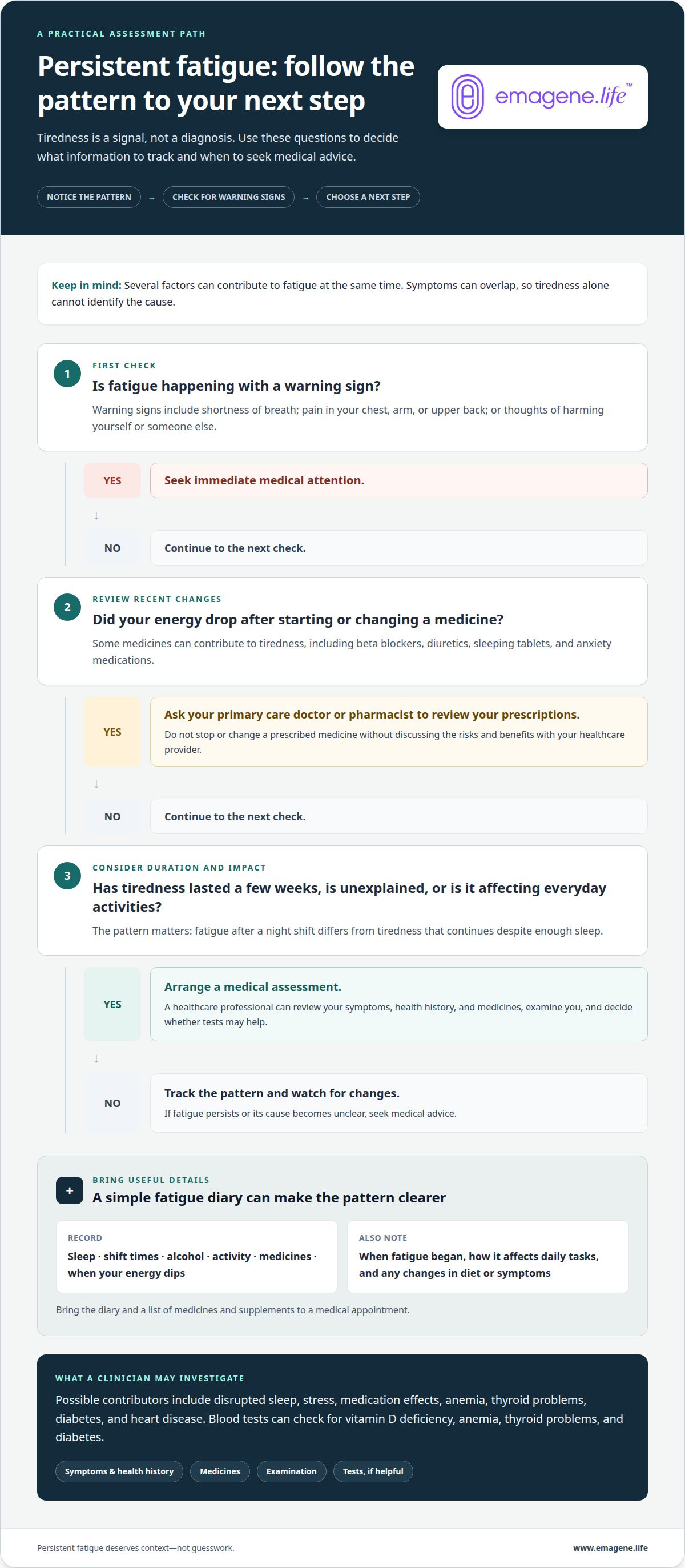
Make the pattern easier to assess. Keep a fatigue diary that notes sleep, shift times, alcohol, activity, medicines, and when energy dips. Bring it to a medical appointment, especially if tiredness has lasted a few weeks and its cause is unclear. Seek immediate medical attention if fatigue occurs with shortness of breath or pain in your chest, arm, or upper back. Thoughts of harming yourself or someone else also warrant immediate medical attention.
Nutrient deficiencies
Low energy can sometimes be linked to nutrient deficiencies, including iron deficiency anemia. Iron helps the body make hemoglobin, which carries oxygen in the blood. Anemia may cause fatigue, shortness of breath, and pale skin. These symptoms can affect daily activities, but they don’t identify the cause on their own. A healthcare professional can assess the pattern and use tests to distinguish anemia from other reasons for feeling tired.
Iron deficiency and anemia are related, but they aren’t interchangeable. Iron deficiency means the body has too little iron; iron deficiency anemia occurs when this affects the blood’s ability to carry oxygen. A balanced diet can support nutrient intake, but persistent fatigue doesn’t prove that you have a deficiency. Taking iron without confirming a need can distract from another condition and may be inappropriate for some people. A primary care assessment can help determine whether testing or treatment is suitable.
Vitamin D deficiency is another possible cause of tiredness. Blood tests can check for vitamin D deficiency, anemia, thyroid problems, and diabetes. Results put symptoms into context rather than relying on fatigue alone. If a test identifies a deficiency, the next step depends on which nutrient is low and why. Food intake, absorption, ongoing blood loss, and other health factors may all matter, so treatment should address the cause.
Hormonal imbalances can also affect energy. Thyroid hormones influence metabolism, and an underactive thyroid can cause sluggishness. Notice whether changes in energy come with other symptoms, such as changes in sleep, mood, or temperature tolerance. A clinician can consider these details alongside examination findings and blood tests. Hormone-related fatigue calls for a cause-specific assessment, not a general supplement routine.
Before an appointment, note when fatigue began, how it affects daily tasks, and any changes in diet or symptoms. Include medicines and supplements, as they may be relevant. Mention whether tiredness comes with breathlessness, pale skin, or other new concerns. Blood pressure readings can provide context when a clinician reviews your health, but they can’t establish a nutrient deficiency on their own.
If fatigue persists alongside symptoms that may point to hormonal changes, Hormone Optimization may be a relevant avenue to explore. A focused discussion can help clarify whether hormone-related factors belong in the wider assessment, alongside nutrient deficiencies and other possible causes.
Can emotional issues cause tiredness?
Yes. Stress, anxiety, and low mood can contribute to tiredness. Emotional strain can make it harder to unwind, fall asleep, or stay asleep, leaving you drained the next day. Fatigue may then affect concentration, motivation, and daily routines. Notice whether tiredness worsens during stressful periods, after restless nights, or alongside changes in mood. These patterns can help explain how emotional symptoms and sleep interact.
Insufficient or poor-quality sleep is another common contributor. Adults experiencing tiredness can aim for 6 to 9 hours of sleep, while adults should get at least 7 hours per night for optimal health. Getting enough sleep is not only about time in bed. Repeated waking, an irregular schedule, or difficulty settling down may leave you tired despite spending enough hours in bed. A regular sleep and wake schedule can help reveal whether lifestyle habits are affecting rest.
Sleep apnea can disrupt sleep. It interrupts breathing during sleep and can leave a person tired during the day. Weight and obesity are useful details to discuss during an assessment, particularly alongside sleep symptoms. Track daytime fatigue and changes in sleep quality. Thyroid problems and diabetes can also cause fatigue, so don’t assume poor sleep explains every symptom.
Try a consistent wind-down routine. Small changes can make sleep patterns easier to assess:
- Set aside a couple of hours before bed to relax, rather than filling that time with work or stressful tasks.
- Avoid eating, caffeine, or exercise in the couple of hours before sleep if these interfere with your rest.
- Turn off phones or televisions 1 to 2 hours before bedtime to reduce screen use.
- Keep a regular bedtime and wake time, including on days when your schedule changes.
Caffeine can keep affecting sleep after the cup is finished. It can remain in the body for over five hours, so consider timing as well as quantity. The article advises limiting caffeine to 200 to 300 mg per day and having it before 10 a.m. Coffee, tea, energy drinks, and some soft drinks all contribute. Record your intake and sleep quality to see whether reducing or shifting caffeine changes how rested you feel.
If tiredness continues, note your sleep hours, emotional symptoms, caffeine timing, and any concerns about weight or sleep apnea. Share these details with a healthcare professional, especially if fatigue is persistent or unexplained. A clear record can help distinguish a disrupted sleep pattern from other possible causes and give the assessment a useful starting point.
Healthcare provider assessment and treatment
A healthcare professional assesses fatigue by looking for patterns, associated symptoms, and common causes. Expect questions about when tiredness began, its effect on daily activities, sleep, stress, exercise, caffeine, alcohol, diet, and medicines. A physical examination can add context. Bring a current medication list and note when your energy rises or falls to help focus the appointment.
Blood tests may check for anemia, thyroid problems, vitamin D deficiency, and diabetes. Depending on your situation, a provider may also order urine tests or a pregnancy test. No single result explains every case, so findings are considered alongside your symptoms and examination. If you think a medicine affects your energy, discuss its risks and benefits with your healthcare provider before stopping it or trying another.
For ongoing fatigue, the next step depends on the assessment findings. Treatment may address an identified condition, a medicine’s side effects, or habits affecting sleep and daily function. A provider may review a prescription, recommend further assessment, or discuss practical changes to activity and rest. Staying hydrated, improving sleep routines, and building activity gradually may support general well-being, but these steps don’t replace treatment for an underlying disease.
ME/CFS can involve extreme fatigue lasting at least 3 months and making daily activities very difficult. A provider assesses the duration and impact of symptoms and evaluates other possible causes; treatment focuses on managing symptoms and supporting daily function based on the person’s needs. The term chronic fatigue describes fatigue lasting six months or more, but duration alone doesn’t establish a diagnosis.
Seek medical advice if tiredness has lasted a few weeks and its cause is unclear. People over 65 years who feel tired all the time should also contact a healthcare provider. New, persistent, or unexplained fatigue deserves attention, especially when it interferes with work, household tasks, or usual routines. Sudden changes, worsening symptoms, or new symptoms are useful details to report.
Before your appointment, write down your main symptoms, when they occur, and what seems to affect them. Include sleep patterns, recent lifestyle changes, caffeine use, and any medicine or supplement changes. Ask what the initial findings suggest, which next steps are appropriate, and how treatment will be reviewed. A structured assessment can help turn scattered symptoms into a clearer plan. Explore a structured fatigue assessment as a next step toward understanding persistent tiredness.
Emagene Life
Emagene Life’s Functional Medicine Assessment helps people explore persistent tiredness and possible contributing factors. It focuses on identifying root causes and physiological imbalances, connecting symptoms with a more complete picture of health.
Consider this next step if fatigue continues despite changes to your sleep or routine, or if several factors may be affecting your energy. Emagene Life also offers functional medicine, longevity, and Hormone Optimization, which may be relevant to your health concerns. This approach complements medical assessment and treatment. Urgent symptoms still require immediate medical attention.
Contact Emagene Life to discuss whether its approach fits your needs.
Turn persistent fatigue into a clearer next step
If you’re still asking why you’re so tired all the time, treat the question as a reason to seek clarity, not as a personal failing. Several interacting factors can affect energy, and a thoughtful assessment can help you decide what to address first. You don’t need a perfect explanation before seeking help. A clear account of how fatigue affects your daily life is a useful starting point.
Choose a next step that moves you from speculation toward a better-informed understanding of your health. Share your concerns, explain what you hope to address, and consider whether a broader assessment fits your needs. Progress starts with a focused conversation and continues with decisions grounded in your circumstances.
Contact Emagene Life for support and take a considered step toward understanding your health. A clearer path forward can start with one conversation.
Frequently Asked Questions
How can I ease or relieve fatigue at home?
Start with manageable changes and notice how your energy responds. Keep a regular wake time, plan demanding tasks for when you feel more alert, and take short rest breaks during busy days. Choose balanced meals and drink water regularly. Don’t use supplements or change prescribed medicines as a shortcut. If fatigue persists, worsens, or limits daily activities, arrange a medical assessment rather than relying on home strategies alone.
How can my healthcare provider help me manage fatigue?
A healthcare professional can connect your symptoms with possible causes and tailor next steps. Describe how fatigue affects specific tasks, such as commuting, working, or preparing meals. Mention changes over time, relevant health conditions, and recent medicine adjustments. Your provider can decide whether an examination or tests are appropriate, then discuss treatment options and how to review progress. This makes follow-up more useful than tracking energy alone.
How do heart conditions cause tiredness?
Heart failure, cardiomyopathies, and arrhythmias can cause fatigue. A heart condition may make everyday exertion feel harder, so note whether tiredness occurs during activity or alongside other new symptoms. Fatigue alone can’t identify a heart problem. Seek immediate medical attention if it occurs with shortness of breath or pain in your chest, arm, or upper back. Tell a healthcare professional when it happens and what you’re doing at the time.
What is fatigue?
Fatigue is exhaustion or reduced energy that makes usual activities feel harder. It can involve physical tiredness, difficulty concentrating, or feeling unrefreshed, and may occur with or without sleepiness. Fatigue is a symptom, not a diagnosis. Its duration, impact, and accompanying symptoms help guide assessment. For example, difficulty completing a familiar workday is useful information to share with a healthcare professional.
Why am I always tired?
If you’re wondering why you’re so tired all the time, possible causes include sleep problems, emotional strain, a medical condition, nutrient deficiency, or medication effects. These factors can overlap, so one explanation may not account for every symptom. Consider what changed before the tiredness began and whether it varies with your work schedule, sleep, or medicines. Persistent or unexplained fatigue warrants a healthcare review.
Could poor sleep, sleep apnea, or insomnia cause constant tiredness?
Yes. Interrupted sleep can leave you tired even if you spend a long time in bed. Sleep apnea disrupts breathing during sleep, while insomnia can make it difficult to fall asleep or stay asleep. Notice repeated waking, daytime drowsiness, or difficulty concentrating, and share these patterns with a healthcare professional. They can help distinguish sleep-related fatigue from other possible causes and guide further assessment.


