

Guide to Bioidentical HRT for Hormone Optimization
What if the key question isn’t whether a hormone is “bioidentical,” but whether a specific treatment is appropriate for you? The term can sound reassuring, especially when symptoms affect sleep, mood, or daily life. But “bioidentical” describes a hormone’s molecular structure; it doesn’t, by itself, guarantee safety or effectiveness. Regulated products and custom-compounded preparations are also different categories.
If you’re unsure whether your symptoms warrant a hormone assessment, or confused by conflicting claims about natural hormones, you’re not alone. This guide explains what bioidentical HRT means, how commercially manufactured and compounded products differ, and what current evidence can and can’t tell you about potential benefits and risks. It also outlines questions to raise with a qualified clinician, including how to think about treatment decisions and monitoring. In Malaysia, clarify the exact product and who is responsible for prescribing and monitoring it. A structured assessment can help you organise your health history, symptoms, and relevant findings before discussing options. The goal is a more informed decision, not a promise of a particular result.
Key Takeaways
- “Bioidentical” describes a hormone’s molecular structure, not proof that it is safer or more effective.
- Assess potential benefits and risks in context: symptoms, diagnosis, formulation, route, and personal health history all matter.
- Use testing to answer a specific clinical question, and discuss results with a qualified clinician rather than interpreting them in isolation.
- Before considering bioidentical HRT, organise your symptoms, health history, and treatment goals to support a more informed discussion.
- A Functional Medicine Assessment can help organise relevant health information, but it doesn’t guarantee an HRT recommendation or replace care from an appropriate clinician.
Bioidentical HRT explained: what the term means, and what it does not
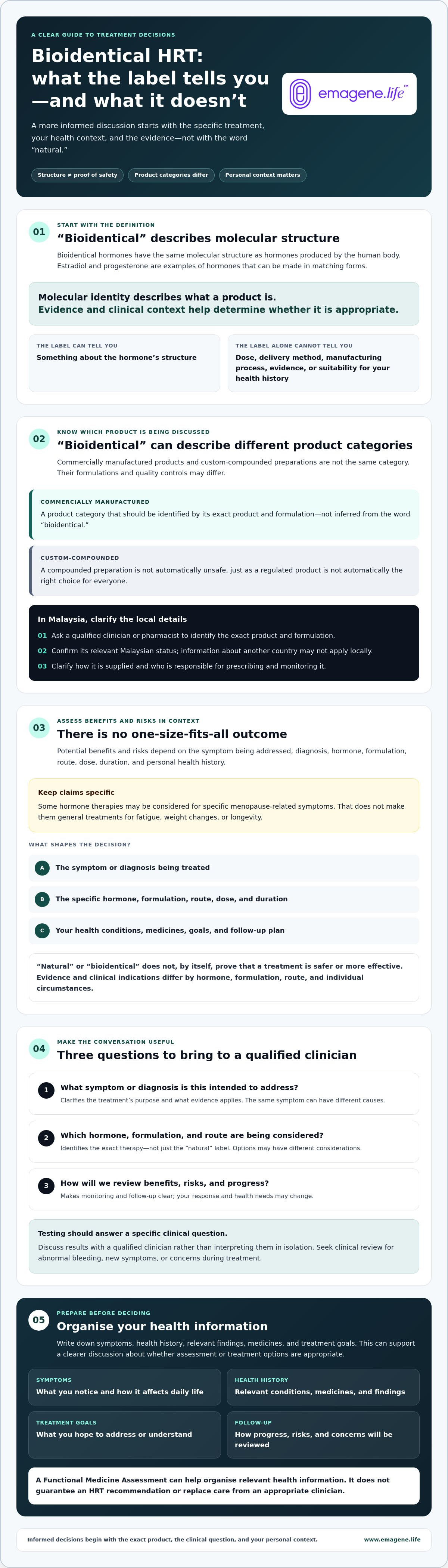
Bioidentical hormones have the same molecular structure as hormones produced by the human body. The term describes structure, not the strength of evidence for a particular treatment. It also doesn’t tell you the dose, delivery method, manufacturing process, or whether a product is suitable for your health history.
HRT means hormone replacement therapy. Clinical sources may also use terms such as “hormone therapy” or “menopausal hormone therapy,” depending on the hormone and situation being discussed. Terminology varies, so focus on the specific hormone, reason for use, and proposed treatment plan rather than the label alone. For a broad overview of the terminology and product categories, see Bioidentical hormone replacement therapy.
What does “bioidentical” mean in hormone therapy?
Estradiol and progesterone are examples of hormones that can be made in forms with a molecular structure matching hormones produced by the body. That similarity doesn’t make every use appropriate or remove the need to consider potential risks. Evidence and clinical indications differ by hormone, formulation, route, and individual circumstances.
A product’s molecular identity describes what it is; evidence for its use helps determine whether it’s appropriate. Keep that distinction in mind when weighing claims that “natural” or body-identical hormones are automatically safer or better.
Are all bioidentical hormone products the same?
No. The term can describe commercially manufactured products as well as hormones prepared through compounding. These categories may differ in formulation and quality controls. A compounded preparation isn’t automatically unsafe, and a regulated product isn’t automatically the right choice for everyone. Suitability depends on the person and the clinical question.
In Malaysia, don’t assume that information about product approval or oversight in another country applies locally. Ask a qualified clinician or pharmacist to identify the exact product and formulation, and confirm its relevant Malaysian status. Clarify how it is supplied and who will oversee its use. The phrase “bioidentical HRT” alone doesn’t tell you which product is being discussed or whether it’s suitable for you.
Bioidentical HRT benefits and risks: why 'natural' does not settle the question
Hormone therapy isn’t a single intervention with one predictable outcome. Potential benefits depend on the symptom being treated, the diagnosis, the hormone and formulation, how it’s taken, and your health history. For example, some hormone therapies may be considered for specific menopause-related symptoms, but that doesn’t make them a general treatment for fatigue, weight changes, or longevity.
Which benefits are supported, and for whom?
A clinician should connect a proposed treatment to a clear indication and explain what evidence applies to that specific option. The label alone doesn’t establish claims that “natural” or bioidentical products are safer or more effective. Mayo Clinic explains this distinction in its overview of Bioidentical hormones: Are they safer? Be especially cautious about broad wellness or prevention claims that aren’t linked to a defined diagnosis and evidence for that use.
What risks and uncertainties should you understand?
Risks vary with the hormone, route, dose, duration, and personal medical history. A treatment suitable for one person may not suit another. Before making a decision, discuss relevant health conditions, medicines, treatment goals, and the expected follow-up plan with a qualified clinician. Seek clinical review for abnormal bleeding, new symptoms, or concerns during treatment. Confirm Malaysia-specific product and prescribing details with appropriate local sources before deciding.
Use these questions to make the conversation specific:
| Question to ask | What it clarifies | Why personal context matters |
|---|---|---|
| What symptom or diagnosis is this intended to address? | The treatment’s purpose and relevant evidence | The same symptom can have different causes. |
| Which hormone, formulation, and route are being considered? | The exact therapy, not just the “natural” label | Options may carry different considerations. |
| How will we review benefits, risks, and progress? | The monitoring and follow-up plan | Your response and health needs may change. |
Suitability depends on the specific therapy and your clinical context, not on the word “bioidentical.” A Functional Medicine Assessment can help organise symptoms, history, and relevant health information before you discuss options; it doesn’t guarantee a hormone treatment recommendation. Learn more about Emagene Life’s functional medicine approach.
How to assess whether bioidentical HRT is worth discussing
A useful consultation starts with the pattern behind your symptoms, not a product label or a single test result. Prepare a clear record, review your health history, and identify what you want help understanding. A qualified clinician can then consider whether hormone-related assessment or treatment is relevant and explain the options.
What should you prepare before a hormone consultation?
Bring practical details, not just a list of symptoms. For each symptom, note when it began, how often it occurs, how severe it feels, and how it affects daily life. Record how it has changed over time and anything that seems to make it better or worse.
- List current medicines and supplements, relevant diagnoses, and family health history.
- Record any previous hormone use, including the product if known and your experience with it.
- Write down your priorities, concerns, and the outcomes you hope to discuss.
This context helps a clinician interpret findings and decide whether testing could answer a specific clinical question. Avoid drawing conclusions from an isolated hormone result without considering symptoms, timing, health history, and other relevant information.
Which questions help you compare treatment options?
Ask for the reasoning behind each proposed step. If a product is being considered, clarify its formulation and the evidence for the intended use. The Endocrine Society position on compounded BHT can help frame questions about compounded products and claims of superior safety or effectiveness. For product and prescribing details in Malaysia, ask a qualified local professional to confirm what applies.
- What diagnosis or treatment goal are we considering, and what evidence supports this option?
- What formulation is proposed? What alternatives are available, including no hormone treatment?
- How will we review progress, and what changes or symptoms should prompt follow-up?
- How will my risks and treatment plan be reassessed over time?
No single test or symptom determines suitability; the decision depends on the full pattern of symptoms, health history, goals, and clinical findings. To organise that information before discussing options, explore Emagene Life’s Functional Medicine Assessment. An assessment can inform a personalised health roadmap, but it doesn’t guarantee a recommendation for bioidentical HRT or replace care from an appropriate clinician.
A personalised assessment is the next step, not a promise of hormone treatment
Before deciding whether bioidentical HRT is worth discussing, consider the full health picture. Emagene Life’s Functional Medicine Assessment is designed to organise symptoms, health history, and relevant findings, and to investigate underlying health issues and physiological imbalances. This can help structure questions and inform a personalised health roadmap.
How can functional medicine inform hormone-related questions?
An assessment can help place hormone-related concerns in context rather than treating a label, symptom, or isolated result as the answer. Share when symptoms began, how they affect daily life, relevant diagnoses, medicines, supplements, family history, and any previous hormone use. This information can help clarify which questions may need further discussion with an appropriate healthcare professional.
Emagene Life lists Hormone Optimisation among its offerings. The available information does not establish that the centre prescribes, compounds, or dispenses hormone therapy, so confirm the service’s exact scope before assuming it includes a particular clinical intervention. An assessment does not guarantee an HRT recommendation, diagnose every possible cause, or replace care from a qualified clinician.
What is a sensible next step if you are considering HRT?
Bring your symptom notes, health history, and personal priorities to a qualified healthcare professional. Ask which options fit your situation, what evidence supports them, what risks and alternatives to consider, and how follow-up would work. If you complete an assessment, its relevant findings may help organise that discussion. They should be interpreted in context, not treated as an automatic treatment decision.
Use an assessment to prepare for a more focused conversation, not to predetermine its outcome. You can read about Emagene Life’s personalised assessment approach and decide whether it’s a useful starting point for organising your health questions.
Make your next hormone decision an informed one
The term “bioidentical” describes molecular structure, not a guarantee of safety, effectiveness, or suitability. Potential benefits and risks depend on the specific therapy and your clinical context. A thoughtful discussion starts with your symptoms, health history, priorities, and questions about evidence, options, and follow-up.
If you’re considering bioidentical HRT, avoid relying on broad promises or isolated test results. Ask a qualified healthcare professional to help interpret your situation and explain which options, if any, may be appropriate. A structured assessment can help you prepare for that conversation.
Emagene Life’s Functional Medicine Assessment is designed to investigate underlying health issues and physiological imbalances, then inform a personalised health roadmap focused on restoration and prevention. It doesn’t guarantee a hormone treatment recommendation or replace care from an appropriate clinician. Explore Emagene Life’s Functional Medicine Assessment as a possible starting point for organising your health questions.
Move forward with clear information, relevant clinical guidance, and decisions grounded in your individual needs.
Frequently Asked Questions
What is bioidentical HRT?
Bioidentical HRT is hormone replacement therapy using hormones with molecular structures matching hormones produced by the body. Estradiol and progesterone are examples when made in body-identical forms. The word describes molecular structure, not a treatment plan or proof that a product is safer or more effective. Products may be commercially manufactured or compounded, and the term alone doesn’t tell you the dose, formulation, or whether it fits your health needs.
Is bioidentical HRT safer than conventional hormone therapy?
Not simply because it’s called bioidentical or natural. Safety depends on the specific hormone, formulation, dose, route, duration, and your health history. There’s no basis for assuming a body-identical product is automatically safer than another hormone therapy. Discuss the expected benefits, possible risks, alternatives, and follow-up plan with a qualified clinician who can consider your circumstances and the exact product being proposed.
Are compounded bioidentical hormones the same as regulated hormone products?
No. Commercially manufactured hormone products and compounded preparations are distinct categories. Their formulations and quality controls may differ, but that doesn’t mean every compounded product is unsafe or every regulated product is right for everyone. In Malaysia, ask a qualified clinician or pharmacist to confirm the exact product, its formulation, and its relevant local status. Don’t rely on claims or regulatory information that applies only to another country.
Who may benefit from bioidentical hormone therapy?
People with specific symptoms or a clinical indication may benefit from discussing hormone therapy with a qualified clinician. For example, certain hormone treatments may be considered for menopause-related symptoms, depending on the person’s health history and treatment goals. That doesn’t make hormone therapy a general solution for fatigue, weight changes, or longevity. A clinician should assess likely causes, potential benefits, risks, and alternatives before advising whether a particular option is appropriate.
What tests are needed before starting bioidentical HRT?
There isn’t one test panel that determines whether everyone should start treatment. A clinician may begin with your symptoms, their timing and impact, health history, medicines, and previous hormone use, then consider whether tests can answer a specific clinical question. Results need context, including relevant symptoms and circumstances. Ask what a recommended test is intended to clarify and how its result could affect your care plan.
Can a functional medicine assessment tell me whether I need HRT?
A Functional Medicine Assessment can organise symptoms, health history, and relevant health information, but it can’t by itself determine that you need HRT or guarantee a treatment recommendation. Emagene Life’s assessment is designed to investigate underlying health issues and physiological imbalances and inform a personalised health roadmap focused on restoration and prevention. Discuss relevant findings and your priorities with an appropriate healthcare professional, who can assess treatment options and provide clinical care.


