

How Functional Medicine Resolves a Bloated Stomach
What if the food you suspect isn’t the whole story? A bloated stomach can follow a meal, build through the day, or appear alongside constipation or hormonal changes. The pattern matters more than any single suspected trigger. Bloating is the uncomfortable feeling of pressure or fullness; abdominal distension is a visible increase in your belly’s size. You can experience one, the other, or both.
If you’re unsure whether food, bowel habits, hormones, or another factor is involved, you’re not alone. Conflicting advice can make restrictive diets and supplements seem like the only options. A more measured approach starts with noticing when symptoms appear and what else is happening, without trying to diagnose yourself.
This article explains common bloating patterns and how a functional medicine perspective can consider the wider picture. You’ll find sensible first steps, including changes to eating habits and movement, and guidance on when persistent or severe symptoms need medical attention. The aim is clarity, not guesswork: understand what your symptoms may be signalling, take safe action, and know when to seek professional care.
Key Takeaways
- Notice whether you feel abdominal pressure, see visible swelling, or experience both. These patterns can guide a conversation but don’t identify the cause on their own.
- A bloated stomach may relate to meal habits, swallowed air, constipation, or food intolerance. Conditions such as IBS or coeliac disease need professional assessment.
- Track meals and bowel habits, then try comfortable movement and regular hydration to gather useful clues without making drastic changes.
- Seek prompt medical assessment for severe or sudden pain, persistent vomiting, blood in stool, or inability to pass stool or gas.
- If concerns persist after appropriate medical evaluation, a Functional Medicine Assessment may offer a personalised way to explore broader health concerns.
What does a bloated stomach feel like, and how is it different from distension?
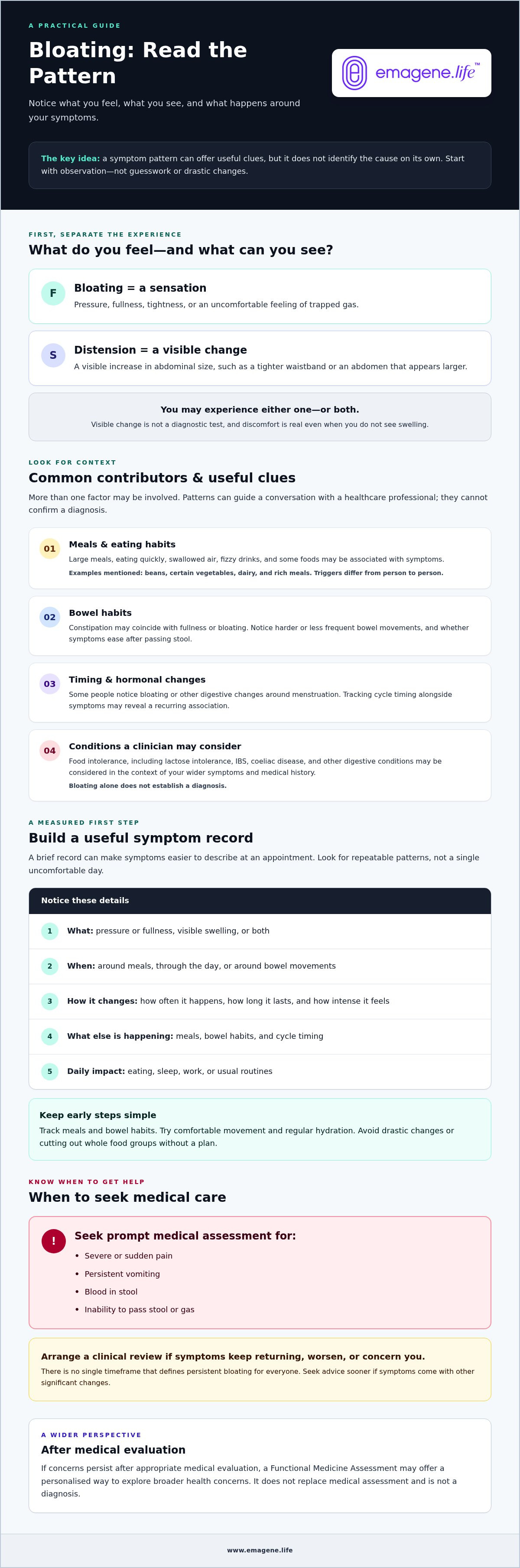
Abdominal discomfort can be distracting, restrictive, and hard to describe. A bloated stomach usually means a sensation: pressure, fullness, tightness, or an uncomfortable feeling of trapped gas. Distension is different. It refers to a visible increase in abdominal size. The NHS describes bloating as a feeling of fullness or discomfort in the tummy, sometimes with a larger-than-usual appearance.
In brief: bloating is what you feel; distension is what you can see. They may occur together or separately, and neither one reveals the cause by itself. The overview of abdominal bloating also distinguishes the subjective sensation from visible enlargement. A change in appearance is not a diagnostic test, and a lack of visible swelling doesn’t make the discomfort less real.
Can you feel bloated without your stomach looking swollen?
Yes. You may feel pressure or fullness even when your abdomen looks much the same. At other times, you might notice visible swelling, such as a tighter waistband or an abdomen that appears larger. Sensations and appearance can change over the day, including around meals or bowel movements. Notice what you experience, but don’t use the mirror alone to decide what’s causing it.
When is bloating occasional, and when is it persistent?
Occasional symptoms may follow a meal or a change in bowel habits. To understand the broader pattern, note how often it happens, how long it lasts, how intense it feels, and whether it disrupts eating, sleep, work, or daily routines. A brief record of these details can make symptoms easier to describe at an appointment.
There isn’t one timeframe that defines persistent bloating for everyone. Arrange a clinical review if symptoms keep returning, worsen, or concern you. Seek advice sooner if they come with other significant changes. The next step is to consider possible contributors without treating any single pattern as proof of a diagnosis.
What commonly causes a bloated stomach, and what patterns can offer clues?
A bloated stomach can have more than one possible contributor. Swallowing air while eating quickly, constipation, large meals, fizzy drinks, and food intolerances such as lactose intolerance may all be associated with bloating. Irritable bowel syndrome (IBS), coeliac disease, and other conditions are also possibilities a clinician may consider. Cleveland Clinic outlines several common causes in its guide to when to be concerned about bloating. This is context, not a checklist for diagnosing yourself.
Can certain foods or eating habits contribute to bloating?
Some people notice symptoms after particular fermentable foods, such as beans or certain vegetables, while others notice them after dairy or large, rich meals. Fizzy drinks and eating quickly may also contribute for some people, including by increasing swallowed air. Triggers differ from person to person. One food doesn’t explain every case, and a meal-related pattern alone can’t confirm an intolerance.
Before cutting out whole food groups, look for a repeatable pattern and consider discussing it with a healthcare professional. Broad elimination diets can make balanced nutrition harder, especially when several foods are removed without a plan. A simple record of meals and symptoms can be more useful than reacting to a single uncomfortable day.
Could constipation, IBS, or hormonal changes be involved?
Constipation may coincide with abdominal fullness or bloating. Note whether symptoms occur alongside harder or less frequent bowel movements, or ease after passing stool. Timing after meals and changes in bowel habits can offer useful context, but they don’t prove a cause.
IBS is one condition a clinician may assess, but bloating alone doesn’t establish that diagnosis. Coeliac disease and other digestive conditions may also need consideration based on your wider symptoms and medical history. Some people notice bloating or other digestive changes around menstruation. Tracking cycle timing alongside symptoms may help reveal whether there’s a recurring association.
Patterns are clues, not conclusions. If symptoms persist after appropriate medical evaluation and you’re seeking a broader, personalised review of health concerns, Emagene Life offers a Functional Medicine Assessment. It may inform a personalised health roadmap, but it shouldn’t replace medical assessment or be treated as a diagnosis of the cause of bloating.
What can you safely try for a bloated stomach, and what should you track?
Use a simple, steady process rather than changing everything at once. The aim is to collect useful information and try low-intensity steps, not to diagnose yourself or force a quick fix. Johns Hopkins Medicine explains common causes of bloating and prevention tips, but persistent or concerning symptoms still warrant clinical advice.
-
Observe. Note when the discomfort starts, how long it lasts, and whether it affects your usual activities.
-
Record. Track meals, drinks, bowel movements, and relevant menstrual-cycle timing.
-
Try gentle movement. A comfortable walk or light activity may be reasonable. Keep hydrated regularly, guided by thirst and your usual needs.
-
Review. Look for associations that recur over time. If you test one suspected change, change one factor at a time so you can interpret what happens.
How can a simple bloating diary reveal useful patterns?
Keep the log brief enough to maintain. Record when symptoms start, how long they last, their severity, what you ate and drank, bowel movements, and cycle timing if relevant. Note medication or supplement changes too, but don’t stop prescribed treatment without speaking to the professional who advised it. Repeated associations are more informative than one episode. A diary can support clinical assessment, but it doesn’t replace it.
Which self-care steps are reasonable, and which claims need caution?
Eating mindfully, slowing down, and choosing comfortable movement are practical starting points. Regular hydration can also support general wellbeing. These measures may not resolve symptoms, and what feels suitable varies from person to person.
Be cautious with detoxes, quick-fix promises, broad food exclusions, or supplement protocols. Probiotics and other supplements may not suit everyone, and evidence and suitability vary. Before restricting your diet or starting supplements, seek qualified guidance, particularly if your diet is already limited or you have ongoing symptoms. Bring your symptom log to a medical appointment to explain what you’ve noticed.
If you’ve had appropriate medical evaluation and want a personalised review of broader health concerns, explore a Functional Medicine Assessment. It may inform a personalised health roadmap, but it isn’t a substitute for medical assessment or a guaranteed explanation for bloating.
When should you seek medical care for a bloated stomach?
Most bloating isn’t an emergency, but some symptoms need prompt attention. Don’t wait for a routine appointment if pain is severe or sudden, vomiting continues, or you can’t pass stool or gas. Blood in your stool, fever, or another significant new symptom also calls for prompt professional advice.
Which bloating symptoms need prompt or urgent attention?
Seek urgent care for severe, sudden abdominal pain, repeated or persistent vomiting, or inability to pass stool or gas, particularly if symptoms are worsening. Contact a healthcare professional promptly about blood in your stool or other concerning changes. Unexplained weight loss, persistent diarrhoea, or a new change in bowel habits also deserves medical review. If you believe there’s immediate danger, use local emergency services. Emagene Life does not provide emergency care.
What should you bring to a health assessment for persistent bloating?
Book a medical appointment if symptoms are persistent, recurrent, worsening, or unexplained, especially when they affect daily life or occur with other concerning changes. A clinician may ask about your symptoms, health history, medicines, and what you’ve noticed over time. Any examination or tests will depend on your individual situation; not everyone needs the same investigations.
Prepare a symptom diary, a current medication and supplement list, relevant health history, and questions about patterns you’ve observed. Note when symptoms began, how they change, and any associated bowel or menstrual-cycle changes. This can make the conversation more focused, but it doesn’t replace clinical assessment.
For persistent concerns, a Functional Medicine Assessment may offer a broader review of health context and inform a personalised health roadmap. It shouldn’t be treated as a standalone diagnosis or a substitute for appropriate medical evaluation. Learn more about a comprehensive functional medicine assessment and how a personalised health roadmap is framed.
Turn symptom patterns into a clearer next step
A bloated stomach is a symptom, not an explanation. Distinguishing the feeling of fullness from visible distension, noticing recurring patterns, and keeping a simple symptom record can help you describe what’s happening more clearly. Use gentle self-care as a starting point, not a substitute for professional advice.
If symptoms persist, worsen, recur, or come with concerning changes, arrange a medical assessment. Seek urgent care for severe or sudden pain, persistent vomiting, blood in your stool, or inability to pass stool or gas. For ongoing concerns after appropriate medical evaluation, Emagene Life offers Functional Medicine Assessments. Assessment findings are used to inform personalised health roadmaps, without promising a diagnosis or specific explanation for bloating.
Explore Emagene Life’s Functional Medicine Assessment as one possible next step in understanding your broader health context. Careful observation and the right professional guidance can help you move forward with greater clarity.
Frequently Asked Questions
Why is my stomach bloated?
A bloated stomach may follow swallowed air, large meals, fizzy drinks, constipation, or difficulty digesting certain foods such as lactose. Recurrent bloating can also occur with conditions such as irritable bowel syndrome or coeliac disease, but symptoms alone can’t identify the cause. Note timing, bowel changes, and repeatable food associations. A clinician can interpret these alongside your health history rather than relying on a single suspected trigger.
Can stress cause a bloated stomach?
Stress may contribute to digestive symptoms or make them feel more noticeable, but it doesn’t prove stress is the only cause. The gut and brain communicate, and stress can influence digestion, eating habits, and how you perceive discomfort. Notice whether symptoms coincide with stressful periods, while also tracking meals and bowel habits. Gentle relaxation strategies may support wellbeing, but persistent or worsening bloating deserves medical assessment.
Can constipation make your stomach feel bloated?
Yes. Constipation can be associated with abdominal fullness, pressure, or visible swelling, particularly when bowel movements are less frequent or harder than usual. Pay attention to whether discomfort changes after passing stool, but don’t assume constipation explains every episode. Regular hydration and comfortable movement may support general bowel health. Seek prompt medical advice if you can’t pass stool or gas, especially with significant pain or vomiting.
What can I do at home to relieve bloating?
For occasional discomfort, try eating more slowly, choosing smaller meals, drinking fluids regularly, and doing comfortable movement such as a gentle walk. Keep a brief record of symptoms, meals, and bowel habits to spot recurring associations. Change one suspected factor at a time. Avoid detoxes, broad food exclusions, or supplement routines without qualified guidance, since they may be unsuitable and can make a balanced diet harder to maintain.
When should I see a doctor about bloating?
Arrange a medical appointment if bloating is persistent, recurrent, worsening, unexplained, or affecting daily life. Seek prompt assessment for blood in your stool or other significant new symptoms. Severe or sudden abdominal pain, persistent vomiting, or inability to pass stool or gas may require urgent care. If you believe there’s immediate danger, contact local emergency services. A clinician can assess your symptoms and decide whether any tests are appropriate.
Can a food intolerance cause a bloated stomach?
Yes. Some people experience bloating after consuming foods they don’t tolerate well, such as lactose-containing dairy, but responses vary. A repeated association between a particular food and symptoms can be a useful clue, not proof of intolerance. Record what you ate and how symptoms changed. Before removing whole food groups, seek qualified advice, especially if your diet is already restricted or symptoms continue despite dietary changes.


