

Insulin Resistance Treatment: A Functional Medicine Approach
What if effective insulin resistance treatment starts with understanding your health data, not following the strictest diet or newest supplement trend? Conflicting advice can make it hard to know what matters, especially when symptoms are vague or blood glucose results appear normal. Insulin resistance may be present before conventional glucose tests show a problem.
The next step is a careful assessment of your health history, risk factors, and relevant test results, followed by a plan suited to your needs. That plan may include sustainable changes to eating, movement, sleep, or stress management. Medication may also be considered as part of appropriate medical care when indicated.
This guide explains how clinicians assess insulin resistance, which evidence-based approaches support metabolic health, and what follow-up may involve. It also shows how a Functional Medicine Assessment can organize individual health information into a personalized roadmap, complementing rather than replacing medical care. The goal is practical progress you can sustain, with informed support to help address risk and clarify your next steps.
Key Takeaways
- Insulin resistance can affect how the body responds to insulin, so symptoms alone may not tell the whole story.
- Effective insulin resistance treatment is individualized. Nutrition, movement, sleep, and weight management can be considered in context rather than treated as a universal formula.
- Clinical assessment may combine health history, examination, and appropriate tests, with results interpreted alongside individual risk factors.
- Track concerns and agree on realistic priorities with a clinician, then review progress and adjust the plan over time.
- A Functional Medicine Assessment can help organize potential contributors to health concerns into a personalized roadmap that complements appropriate medical care.
What insulin resistance means, and when treatment deserves attention
Insulin resistance means the body’s cells respond less effectively to insulin, a hormone that helps glucose move from the bloodstream into cells for energy. The pancreas produces insulin to help regulate blood sugar. When cells become less responsive, the pancreas may release more insulin to compensate. This can keep glucose levels within a usual range for a time, though the pattern differs from person to person.
Insulin resistance describes a process affecting how the body responds to insulin. It is not, by itself, a diagnosis of prediabetes or type 2 diabetes. The American Diabetes Association’s Standards of Care in Diabetes, 2026 distinguish prediabetes and diabetes by blood glucose or A1C test results. Insulin resistance may be present even when those measures do not meet diagnostic thresholds.
How insulin resistance affects blood sugar regulation
Think of insulin as a signal that helps cells take in glucose. If cells respond less effectively to that signal, the pancreas may increase insulin production to help maintain blood sugar regulation. If that compensation becomes insufficient, glucose levels may rise. Not everyone with insulin resistance will develop prediabetes or diabetes, so personal health history and test results matter.
Possible signs, risk factors, and reasons to seek assessment
Insulin resistance can have no obvious symptoms. Risk factors and associated conditions can inform a clinician’s assessment, but they do not establish a diagnosis on their own. A clinician may consider family history, health conditions, medications, and changes in weight or activity alongside test results.
Seek clinical assessment if you have concerning symptoms or abnormal blood sugar test results. A single symptom, risk factor, or result is not enough to determine what is happening. Bring your health history and previous results to a clinician, who can decide whether further evaluation is appropriate. This helps keep insulin resistance treatment relevant to your health profile rather than driven by assumptions or online claims.
Which insulin resistance treatments have a role in care?
There is no single protocol that fits everyone. An appropriate insulin resistance treatment depends on a person’s health history, test results, priorities, and any related conditions. Lifestyle measures often provide an important foundation. A clinician can help set realistic goals and determine whether other care is appropriate. The National Institute of Diabetes and Digestive and Kidney Diseases explains the relationship between insulin resistance and prediabetes in its Insulin Resistance & Prediabetes resource.
Lifestyle measures that can support metabolic health
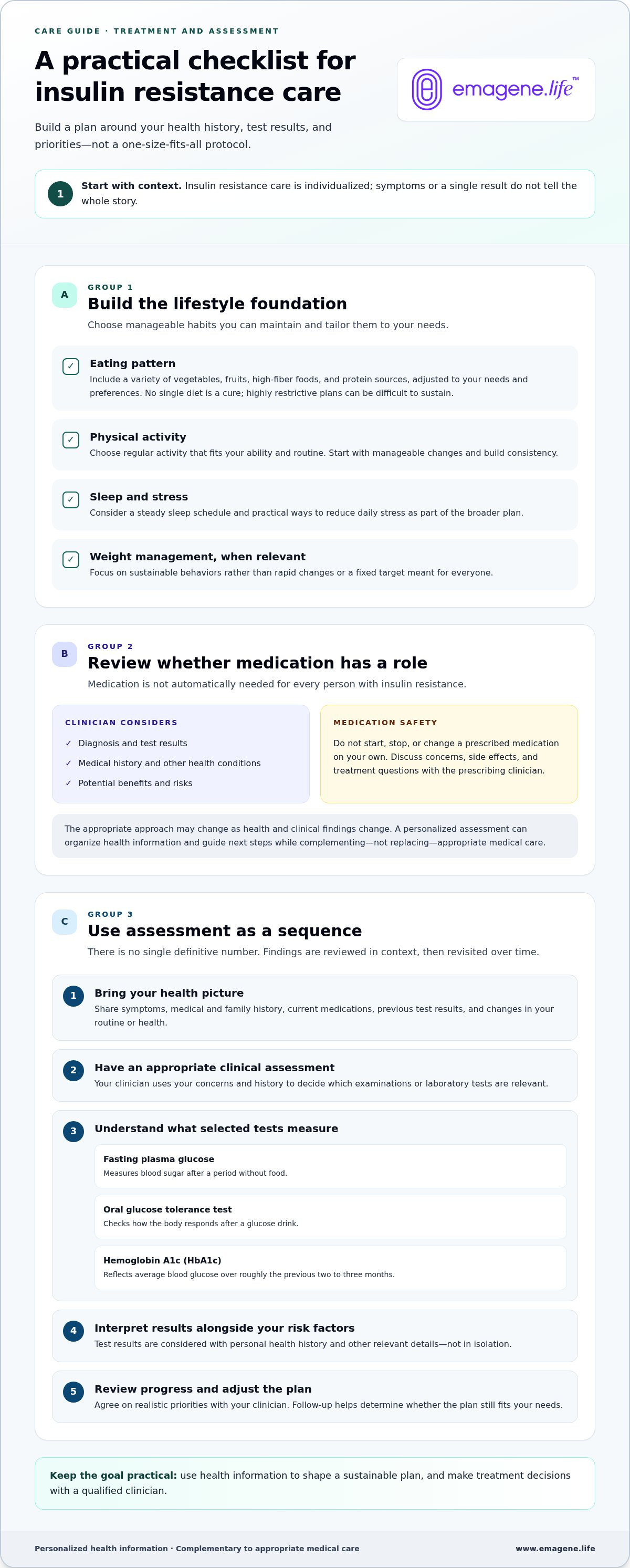
Build a pattern you can maintain rather than following a short-term food rule. A balanced eating approach can include a variety of vegetables, fruits, high-fiber foods, and protein sources, adjusted to your needs and preferences. No single diet is a cure, and highly restrictive plans can be difficult to sustain. A clinician can help tailor nutrition goals to your health context.
Regular physical activity that fits your ability and routine can support glucose regulation and overall health. Start with manageable changes and build consistency. Sleep and stress-management habits also matter. A steady sleep schedule and practical ways to reduce daily stress can support a broader plan. If weight management is a relevant goal, focus on sustainable behaviors rather than rapid changes or a fixed target meant for everyone.
When medication may be part of treatment
Medication is not automatically needed for every person with insulin resistance. A qualified clinician considers the diagnosis, test results, medical history, other health conditions, and potential benefits and risks before discussing whether medication has a role. The appropriate approach may change as a person’s health and clinical findings change.
Do not start, stop, or change a prescribed medication on your own. Discuss concerns, side effects, or treatment questions with the prescribing clinician. Functional medicine can add a personalized view of health history and potential contributors while complementing appropriate medical care. A personalized Functional Medicine Assessment can help organize health information and guide next steps without replacing clinician-directed treatment.
How clinicians assess insulin resistance and track progress
Assessment works best as a sequence, not a search for one definitive number. A clinician reviews your health history and concerns, completes an appropriate clinical assessment, selects tests based on your situation, and interprets the findings in context. Follow-up helps determine whether the plan still fits your needs.
What to discuss during a clinical assessment
Bring a clear picture of your health. Share symptoms, medical and family history, current medications, and previous test results. These details can help a clinician decide which examinations or laboratory tests are relevant. Also describe changes in your routine or health. That context helps shape the questions asked and how the answers are interpreted.
Blood tests may include fasting plasma glucose, which measures blood sugar after a period without food, or an oral glucose tolerance test, which checks how the body responds after a glucose drink. Hemoglobin A1c, also called HbA1c, reflects average blood glucose over roughly the previous two to three months. These tests help assess glucose regulation and identify prediabetes or diabetes. They do not individually provide a universal measure of insulin resistance. The clinician determines which tests are appropriate and what the results mean for you.
A Comprehensive Functional Medicine Assessment in Malaysia can help organize health information and potential contributors into a personalized roadmap, alongside appropriate medical care.
How progress can be reviewed over time
Follow-up is a chance to review more than a lab result. Your clinician may revisit relevant health markers, changes in habits, and how well you tolerate or manage the agreed plan. A result needs to be understood within the overall clinical picture, so one measurement should not be treated as proof of success or failure.
Care can evolve as new information emerges or your needs change. For an overview of how lifestyle and clinical care may relate to metabolic health, Yale School of Medicine discusses approaches to insulin resistance. Use that information as context, not as a substitute for individualized guidance. For personalized assessment and next steps, explore a Functional Medicine Assessment with Emagene Life.
A personalized path forward: turning insulin resistance insight into action
Turn information into a plan, one step at a time. Before an assessment, record your concerns, relevant health history, medications, previous test results, and any changes you have noticed. Bring these details to the appointment. Then work with your clinician to agree on priorities and decide how progress will be reviewed. This keeps insulin resistance treatment grounded in your health data rather than a generic checklist.
Build a plan around individual health data
Your history and assessment findings can help clarify which factors deserve attention first. A personalized health roadmap organizes those findings into practical next steps, such as topics to discuss with your clinician and sustainable habits to focus on. The roadmap is a guide, not a guarantee of a particular outcome. Learn more about personalized health roadmaps in Malaysia and how structured planning can support informed decisions.
Functional medicine offers a personalized way to consider potential contributors to health concerns and coordinate next steps. It complements appropriate medical care. It does not replace diagnosis, monitoring, or treatment your clinician considers necessary. Keep communication open with your care team, especially if your symptoms, test results, or treatment needs change.
Take the next step with a functional medicine assessment
A Functional Medicine Assessment with Emagene Life can help organize your health information, identify potential contributors for discussion, and shape individualized priorities into a structured path forward. Emagene Life supports people across Malaysia with personalized health planning. The assessment is a starting point for wellness planning, not a promise to cure or prevent a condition.
If you’re ready to bring more clarity to your next steps, explore a Functional Medicine Assessment with Emagene Life.
Make Your Next Metabolic Health Step Personal
Insulin resistance does not call for a one-size-fits-all response. The right insulin resistance treatment begins with clinical context: personal history, appropriate test results, and goals that fit real life. Sustainable habits can support metabolic health, while medication decisions belong in a conversation with a qualified clinician.
Progress is best understood over time, not judged by one result alone. A thoughtful assessment can help connect health information, clarify which concerns deserve attention, and turn findings into practical next steps. Emagene Life’s comprehensive Functional Medicine Assessment explores potential underlying contributors and supports a personalized health roadmap focused on restoration and prevention. It is a starting point for informed planning, not a promise of a particular outcome, and it complements appropriate medical care.
Explore a personalized Functional Medicine Assessment and take a clear, supported step toward more intentional metabolic health. Sustainable change starts with understanding your own needs.
Frequently Asked Questions
Can insulin resistance be reversed?
Insulin resistance can improve, but the degree of change and what is achievable vary from person to person. A clinician can help identify relevant health factors and monitor appropriate markers over time. Sustainable changes to eating, activity, sleep, or weight may be part of a plan, depending on individual needs. Be cautious of claims promising a guaranteed reversal, and do not stop prescribed care without discussing it with your clinician.
What is the best treatment for insulin resistance?
The best insulin resistance treatment is individualized and guided by clinical assessment. Lifestyle measures, including balanced nutrition, regular activity, adequate sleep, and sustainable weight management when appropriate, can be important foundations. A clinician considers health history, test results, related conditions, and personal priorities when shaping care. Medication may be considered in specific circumstances. There is no single diet, supplement, or treatment plan that is right for everyone.
Can insulin resistance be treated without medication?
Some people may manage relevant metabolic concerns with lifestyle measures without medication, but that depends on their diagnosis and overall health. Nutrition, movement, sleep, and sustainable behavior changes can be discussed with a clinician as part of a personalized plan. Medication may still be appropriate for some people. Do not start, stop, or change prescribed medication on your own. Discuss treatment options and concerns with the clinician overseeing your care.
How is insulin resistance diagnosed?
There is no one universal test that independently confirms insulin resistance in every person. A clinician considers health history, clinical findings, and appropriate laboratory tests. Blood glucose and HbA1c tests help assess glucose regulation and diagnose prediabetes or diabetes, but they do not directly measure insulin resistance in all cases. Test selection and interpretation depend on individual context. Share previous results, medications, symptoms, and relevant family history during assessment.
What foods should you avoid if you have insulin resistance?
There is no universal list of foods everyone with insulin resistance must avoid. A clinician can help shape an eating pattern around your health needs, preferences, and routines. As a practical starting point, consider limiting sugary drinks and frequently choosing highly processed foods, while building meals around varied, nutrient-dense options. Avoid extreme restrictions unless medically advised. A sustainable pattern is generally more practical than labeling individual foods as forbidden.
Does insulin resistance mean I have diabetes?
No. Insulin resistance does not automatically mean you have diabetes. It describes a reduced response to insulin, while prediabetes and type 2 diabetes are diagnosed using clinical criteria that include blood glucose or HbA1c results. Insulin resistance can be present before those tests reach diagnostic thresholds. If your results are abnormal or you have health concerns, ask a clinician to interpret them in the context of your overall health.


