

Why Am I Always Tired? Root Causes & Functional Solutions
What if the answer to “why am i always tired” isn’t simply getting more sleep? You may make time to rest and still wake without enough energy to work, connect with others, or manage daily tasks. Persistent tiredness deserves attention, but it doesn’t point to one diagnosis on its own.
Sleep quality and consistency, stress, mood, health conditions, and other factors can all contribute. Conflicting advice about supplements, diet, and testing can make it harder to know what to try. A clearer starting point is to notice when your energy changes, what else you’re experiencing, and whether tiredness is affecting your daily life.
This article explores common contributors without asking you to self-diagnose. You’ll learn when to seek professional care, what patterns to track, and how to prepare for a useful conversation with a healthcare professional. If concerns persist, Emagene Life’s Functional Medicine Assessment is one optional way to explore them in context and inform a personalized health roadmap. It complements, rather than replaces, appropriate medical care.
Key Takeaways
- Everyday tiredness and persistent fatigue can differ in duration, severity, and impact on daily life. Neither is a diagnosis by itself.
- When asking “why am i always tired,” consider how sleep, stress, mood, medications, and health factors may overlap rather than assuming one cause.
- Track energy changes alongside sleep quality, life events, routines, and other symptoms to give a healthcare professional a clearer picture.
- If tiredness persists or disrupts daily activities, seek professional assessment rather than relying on guesswork or unverified advice.
- An individualized assessment, such as Emagene Life’s Functional Medicine Assessment, may help explore concerns in context and complement appropriate medical care.
Why Am I Always Tired? Understand the Difference Between Tiredness and Fatigue
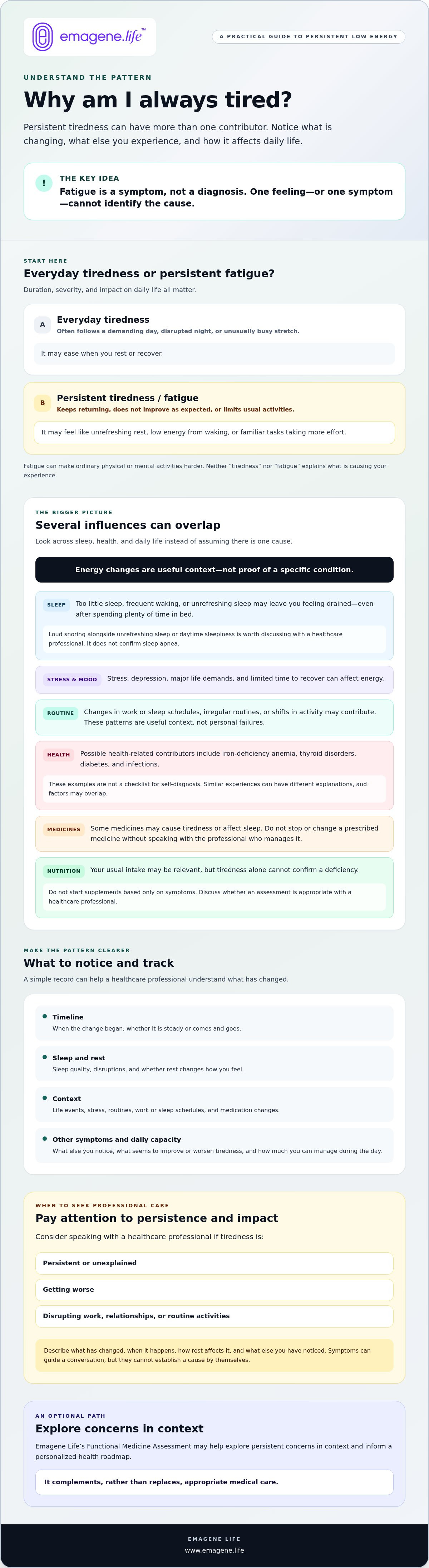
Feeling tired after a demanding day, a disrupted night, or an unusually busy stretch is a normal response. It may ease when you rest or recover. Persistent tiredness is different: it keeps returning, doesn’t improve as expected, or begins to interfere with your usual routine.
Everyday tiredness is a temporary sense of low energy; fatigue is ongoing or pronounced exhaustion that can make ordinary physical or mental activities harder. Fatigue is a symptom, not a diagnosis. The Fatigue overview describes how it can differ from general tiredness and have varied causes. Neither the word “fatigue” nor a particular symptom reveals what is causing your experience.
What does it mean to feel tired all the time?
You might have low energy from the moment you wake, feel unrefreshed after resting, or find that familiar tasks take more effort. You may also notice changes in concentration, motivation, or how much you can manage during the day. Several contributors can overlap, so asking “why am i always tired” is a starting point for looking at patterns, not a way to identify a condition.
Start with the timeline. Note when the change began, whether it is steady or comes and goes, and what seems to improve or worsen it. Record changes in your daily capacity as well as how tired you feel.
When should tiredness get your attention?
Consider speaking with a healthcare professional if tiredness is persistent, unexplained, getting worse, or disrupting work, relationships, or routine activities. Duration matters, but so do severity and impact. A short-lived dip after a clear period of strain is different from an unexplained change that continues to limit your life.
Symptoms can help guide a conversation, but they can’t establish a cause by themselves. Avoid matching one sign to one condition. Instead, describe what has changed, when it happens, how rest affects it, and what else you’ve noticed. That information gives a professional a more useful starting point for considering possible contributors.
Why Am I Always Tired? Common Causes Across Sleep, Health, and Daily Life
There isn’t one universal explanation for low energy. Persistent fatigue can reflect overlapping influences, including disrupted sleep, psychological strain, medication effects, nutritional factors, and health conditions, so one symptom alone can’t identify the cause. The MedlinePlus guide to fatigue also outlines how lifestyle, medical, and mental health factors may be involved.
Sleep, stress, mood, and routine
Too little sleep or frequent waking can leave you feeling drained, even if you spend plenty of time in bed. Loud snoring, particularly alongside unrefreshing sleep or daytime sleepiness, is worth discussing with a healthcare professional as a possible sign of sleep-disordered breathing. It doesn’t confirm sleep apnea.
Stress, depression, major life demands, and limited time to recover can also affect energy. Changes in work or sleep schedules, irregular routines, or shifts in activity may contribute too. These patterns aren’t personal failures. They’re useful context for understanding what may be affecting your day-to-day energy.
Medical conditions, medicines, and nutrition
Health-related possibilities include iron-deficiency anemia, thyroid disorders, diabetes, and infections. Some medicines may also cause tiredness or affect sleep. These examples aren’t a checklist for self-diagnosis: similar experiences can have different explanations, and several factors may be present at once.
Nutrition may be relevant, including whether your usual intake meets your needs, but tiredness alone can’t confirm a deficiency. Don’t start supplements based only on symptoms; discuss whether assessment is appropriate with a healthcare professional. Likewise, don’t stop or change a prescribed medication without speaking with the professional who manages it.
If you’re asking, “why am i always tired,” look for patterns rather than a single culprit. Note changes in sleep, stress, routines, medication, and other symptoms, then share that context with a healthcare professional. Emagene Life’s Functional Medicine Assessment is an optional way to explore persistent concerns in context and inform a personalized health roadmap. It complements, rather than replaces, appropriate medical care.
Always Tired? Track Patterns and Know When to Seek Care
A useful next step is to turn “why am i always tired” into a clearer record of what’s happening. Track patterns without trying to diagnose yourself. A simple note on your phone or in a journal can help you describe changes and give a healthcare professional context.
- Observe: Notice when tiredness appears, how your energy shifts during the day, and whether rest feels refreshing.
- Record: Note sleep quality, schedule changes, stressful events, activity, and any other symptoms.
- Review: Look for patterns in your routines, meals, hydration, and time for recovery. A consistent sleep schedule and balanced daily habits can support well-being, but they aren’t guaranteed treatments for persistent fatigue.
- Arrange care: Contact a healthcare professional if tiredness persists, remains unexplained, worsens, or interferes with daily life.
Fatigue can have medical, lifestyle, workplace, or psychological contributors. The Better Health Channel’s overview of fatigue is a useful reminder to consider the wider context, not just one isolated symptom.
How to prepare for a conversation with a healthcare professional
Bring a concise timeline: when the tiredness began, how it affects your usual activities, and what seems to change it. Include associated symptoms, current medicines and supplements, and relevant health history. Your notes don’t need to be perfect. Use them to start an open conversation about possible next steps, rather than arriving with a predetermined diagnosis or test request.
Which symptoms should not wait?
Seek urgent medical attention for severe, sudden, or rapidly worsening symptoms. Chest pain, severe difficulty breathing, fainting, and confusion are warning signs that need prompt assessment. This list isn’t exhaustive. If symptoms feel urgent or you’re unsure about their seriousness, contact local emergency services or go to the nearest emergency department in Malaysia.
If persistent tiredness needs a more individualized exploration, Emagene Life’s Functional Medicine Assessment is an optional way to consider health concerns in context. It complements, rather than replaces, appropriate medical care.
How an Individualized Assessment Can Help Investigate Persistent Fatigue
Persistent fatigue can leave you asking, “why am i always tired?” An individualized assessment offers one way to explore that question in context. It considers a person’s health history and reported concerns alongside appropriate clinical judgment. Symptoms can guide what to discuss, but they don’t confirm a cause on their own.
What a broader health review can add
Looking at health concerns and patterns together can help frame useful questions and inform a personalized health roadmap. Emagene Life’s Functional Medicine Assessment is designed to evaluate health concerns and physiological imbalances. The aim is to explore possible contributors and guide personalized wellness strategies, not to promise a diagnosis, prevent illness, or guarantee restored energy. Specific tests or assessment steps depend on the clinical context and shouldn’t be assumed.
For an overview of the approach, read about a comprehensive functional medicine assessment. This guide to a personalized health roadmap explains how individualized planning can be framed.
Choosing a useful next step
If fatigue is persistent, concerning, or interfering with daily life, seek appropriate medical care. An individualized functional medicine assessment may be an additional option for exploring ongoing concerns, but it doesn’t replace urgent care or necessary medical evaluation. Sudden or severe symptoms need prompt medical attention, not a wellness assessment.
Keep notes on symptoms, routines, and relevant health history for a conversation with a healthcare professional. If your concerns remain unexplained and you’re considering a broader review, Emagene Life’s Functional Medicine Assessment is one possible next step. Choose the level of care that fits your needs, and treat any assessment as complementary to appropriate medical care.
Take a Clearer Next Step Toward Better Energy
If you’re asking “why am i always tired,” remember that persistent fatigue is a signal to investigate patterns, not a diagnosis. Sleep, stress, daily routines, medicines, and health factors may overlap. Tracking when your energy changes, what else you notice, and how tiredness affects daily life can help you have a more focused conversation with a healthcare professional.
Seek appropriate medical care for persistent or concerning symptoms. An individualized assessment may offer another way to explore health concerns in context, but it doesn’t replace necessary medical evaluation or urgent care.
Emagene Life’s Functional Medicine Assessment is designed to evaluate health concerns and physiological imbalances, with personalized wellness strategies as part of its approach. If you’re considering this option, learn more through Emagene Life’s Functional Medicine Assessment.
Start with your experience, ask questions, and take the next step that fits your needs. A clearer understanding can begin with careful attention to your own patterns.
Frequently Asked Questions
Why am I always tired even when I get enough sleep?
Enough time in bed doesn’t always mean restful sleep. Frequent waking, an inconsistent sleep schedule, or possible sleep-disordered breathing can leave you tired; loud snoring may be worth mentioning to a healthcare professional. Stress, mood, medications, and health conditions can also affect energy. Track sleep quality, daytime energy, and other symptoms to discuss. These patterns can guide an evaluation, but they can’t identify a cause by themselves.
Can stress make you feel tired all the time?
Yes, ongoing stress can contribute to persistent tiredness. Major life demands and limited time to recover may affect sleep, mood, and daily energy. Stress can overlap with other contributors, so don’t assume it explains everything. Notice whether tiredness changes during stressful periods and record any related sleep or mood changes. If it persists, worsens, or disrupts daily life, discuss it with a healthcare professional.
What medical conditions can cause persistent tiredness?
Persistent tiredness can be associated with conditions such as iron-deficiency anemia, thyroid disorders, diabetes, or infections. Some medications may also affect energy or sleep, and psychological factors can contribute. These are possibilities, not conclusions: tiredness alone can’t establish a diagnosis, and more than one factor may be involved. Share your symptoms, health history, and current medicines with a healthcare professional, who can help determine what evaluation is appropriate.
When should I see a doctor about always feeling tired?
Arrange a healthcare appointment if tiredness is persistent, unexplained, worsening, or interfering with work, relationships, or everyday activities. Bring notes on when it began, sleep quality, energy changes, associated symptoms, and medicines or supplements. Seek urgent medical attention for severe, sudden, or rapidly worsening symptoms, including chest pain, severe difficulty breathing, fainting, or confusion. This isn’t a complete list; contact local emergency services in Malaysia if you need urgent help.
Can changing my sleep routine help with fatigue?
A consistent sleep and wake schedule may support better rest, especially if your routine varies. You can also note whether late-day caffeine, evening activities, or a changing workload seem to affect your sleep or energy. These adjustments may be supportive, but they aren’t guaranteed to resolve fatigue or treat an underlying condition. If tiredness continues despite routine changes, or disrupts daily life, seek professional guidance rather than relying on sleep habits alone.
Can a functional medicine assessment identify why I am tired?
A functional medicine assessment can provide a structured way to explore persistent tiredness, but it can’t guarantee that a cause will be identified. Emagene Life’s Functional Medicine Assessment is designed to evaluate health concerns and physiological imbalances and inform a personalized health roadmap. Share your symptoms and relevant history as part of the discussion. This assessment is optional and complements, rather than replaces, appropriate medical evaluation or urgent care.


