

Clear Brain Fog: A Functional Medicine Guide
What if brain fog is a signal to investigate, not a diagnosis to treat blindly? You may recognize the feeling: concentration slips, familiar words won’t come, or everyday tasks take more effort than they used to. The term can describe a real, disruptive experience, but it doesn’t explain what’s behind it.
This guide will help you understand brain fog as a symptom description, recognize patterns worth discussing with a qualified clinician, and consider informed next steps without self-diagnosing. We’ll look at factors that may contribute, including sleep, stress, hormonal changes, and nutrition, while keeping in mind that the same symptoms can have different explanations.
A structured assessment can bring your health history and concerns into clearer focus. Emagene Life’s Functional Medicine Assessment explores potential contributors and provides a foundation for a personalized health roadmap, without promising a specific cause or outcome. You’ll also learn when cognitive changes call for prompt or urgent medical attention, so you can respond with clarity rather than rely on quick fixes or online guesswork.
Key Takeaways
- Notice how changes in concentration, memory, or thinking affect your daily life. Consider whether symptoms are new, recurring, or changing.
- Brain fog can have different possible contributors. Reviewing sleep, stress, illness, medications, and nutrition with a qualified clinician can help guide the conversation.
- Record when symptoms began, how often they occur, what’s happening around them, and any accompanying changes to prepare for a more focused clinical discussion.
- A Functional Medicine Assessment can organize your symptoms and health history into a personalized roadmap, without assuming one cause or promising a particular result.
What Does Brain Fog Feel Like, and When Does It Matter?
Brain fog is a commonly used label for changes in focus, memory, or mental clarity, not a diagnosis or an explanation of their cause. It can describe feeling mentally slow, struggling to concentrate, forgetting details, or needing more effort to complete familiar tasks. The experience varies from person to person, so the pattern and its effect on daily life matter more than the label alone.
Which experiences do people commonly describe as brain fog?
You might lose your train of thought while preparing a familiar meal, reread the same paragraph several times, or pause because a familiar word won’t come to mind. Some people describe mental fatigue, a sense that thinking or concentrating takes extra effort. The overview of mental fatigue explores this experience, though it doesn’t identify the cause of an individual’s symptoms.
An occasional lapse can happen without signaling illness. Notice whether these moments are unusual for you, how often they occur, and whether they interfere with work, conversations, or everyday responsibilities. One forgotten name is different from a repeated change that makes routine tasks difficult.
When should changes in thinking prompt medical attention?
Arrange a clinical discussion if changes persist, worsen, recur, or interfere with daily functioning. A clinician can consider your symptoms in context rather than assume that “brain fog” points to one particular condition. Sudden changes need a different response.
Seek urgent medical care for sudden severe confusion or a sudden change in thinking, especially if it occurs with weakness or numbness on one side, trouble speaking, difficulty understanding speech, vision changes, loss of balance, or a severe sudden headache. These symptoms can signal a medical emergency. Don’t wait for a routine appointment or assume they’re ordinary forgetfulness. If you’re unsure how serious a sudden change is, seek urgent medical help.
What Can Contribute to Brain Fog? Understand the Possible Connections
There isn’t one universal explanation for brain fog. Changes in mental clarity can occur alongside disrupted sleep, sustained stress, an illness, medication use, or nutritional concerns. These are factors to review, not conclusions to draw from a symptom alone. Difficulty concentrating cannot confirm a nutrient deficiency, hormone issue, or specific diagnosis.
How can sleep, stress, and daily routines affect mental clarity?
Poor or disrupted sleep may coincide with daytime fatigue and difficulty focusing. Sustained stress can also make everyday thinking feel more difficult. Neither factor explains every person’s symptoms, so look for patterns rather than assuming cause and effect.
Note whether changes in mental clarity began around a shift in sleep, workload, stress, meals, activity, or daily schedule. Illness can be relevant, too. For example, Harvard Health Publishing discusses cognitive symptoms that may follow COVID-19 in its overview of brain fog after COVID-19. A timeline can help a clinician understand what changed and when.
Why review health conditions, medications, and nutrition?
Health conditions, recent or ongoing illness, medication effects, and nutritional factors may all warrant clinical review. The details matter: when symptoms started, how they vary, what else is happening, and whether a medication or routine changed around the same time.
Timing, context, and accompanying symptoms help guide what to investigate; the symptom alone cannot identify its cause. Share a current medication and supplement list with a qualified clinician, and don’t stop prescribed treatment or start supplements based on guesswork. A clinician can decide whether further evaluation or testing is appropriate and interpret findings in the context of your health history.
For persistent symptoms, a structured review can help organize relevant health context and questions. Emagene Life’s Functional Medicine Assessment explores health concerns and possible physiological imbalances to inform a personalized health roadmap, without assuming one explanation or guaranteeing a particular result.
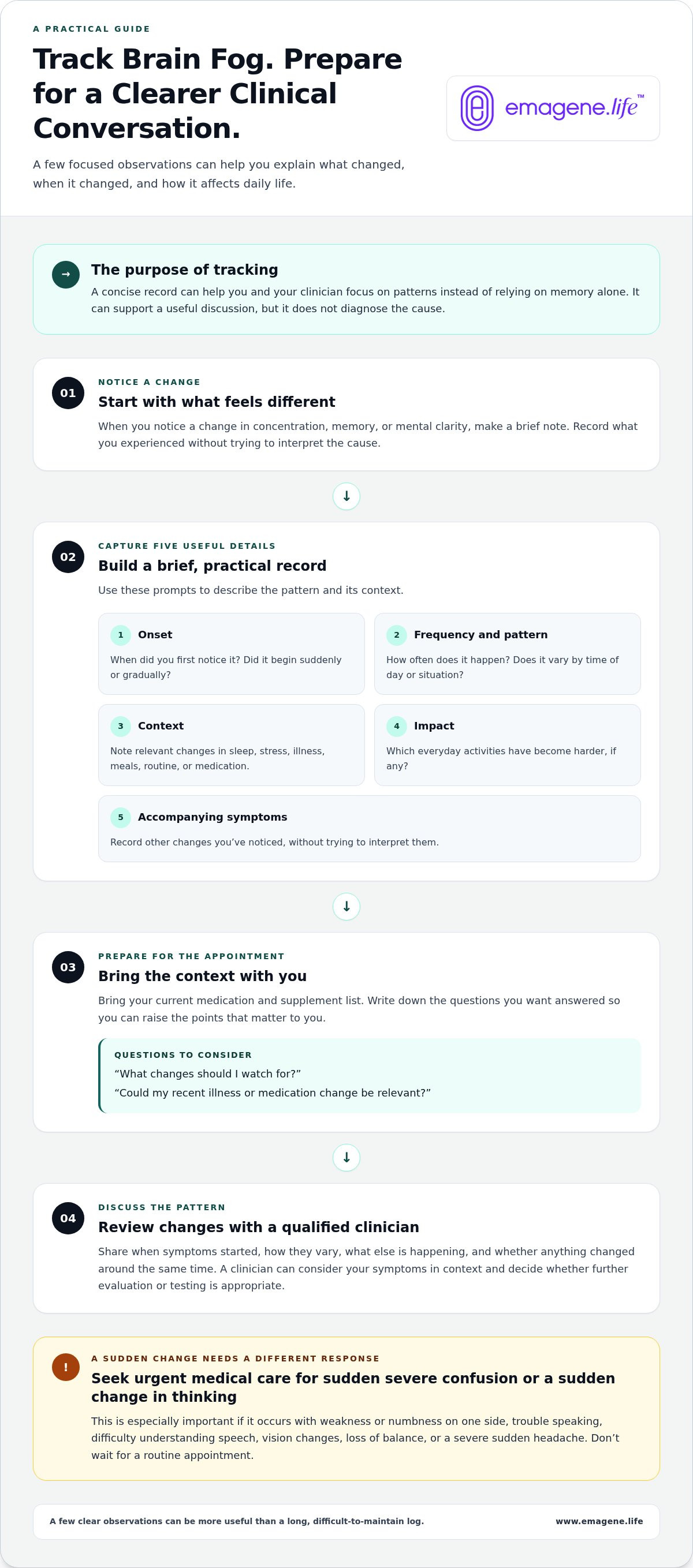
How to Track Brain Fog and Prepare for a Useful Clinical Conversation
A concise record can make it easier to describe what’s changed and when. It won’t diagnose the cause, but it can help you and your clinician focus on patterns instead of relying on memory alone. Healthdirect Australia’s overview of symptoms and causes of brain fog also offers a useful starting point for understanding the experience.
What details are useful to record before an appointment?
Keep brief notes when you notice a change. Include:
- Onset: When did you first notice it? Did it begin suddenly or gradually?
- Frequency and pattern: How often does it happen? Does it vary by time of day or situation?
- Context: Note relevant changes in sleep, stress, illness, meals, routine, or medication.
- Impact: Which everyday activities have become harder, if any?
- Accompanying symptoms: Record other changes you’ve noticed, without trying to interpret them.
You don’t need to track every detail or monitor yourself constantly. A few clear observations can be more useful than a long, difficult-to-maintain log. Bring your current medication and supplement list, and write down the questions you want answered. For example: “What changes should I watch for?” or “Could my recent illness or medication change be relevant?”
What should you expect from an initial clinical discussion?
A clinician may ask about your health history, when symptoms began, how they affect daily life, and what else was happening around the same time. Any examination or testing depends on your individual circumstances and the clinician’s judgment. A symptom log provides context, not a diagnosis or a substitute for clinical evaluation.
A structured review can help organize symptoms and health history into informed next steps. To explore Emagene Life’s Functional Medicine Assessment, learn about a personalized health assessment.
How a Functional Medicine Assessment Can Organize Next Steps for Brain Fog
Once you’ve noted how symptoms show up and what’s happening around them, the next step is to consider that information in context. A Functional Medicine Assessment reviews health concerns, relevant history, and possible physiological imbalances to help organize the questions that need attention. It can provide a clearer starting point for discussing persistent symptoms, without assuming that one factor explains everything.
What can an individualized assessment help bring into focus?
Patterns matter. A clinician may consider when symptoms began, how they fluctuate, your health history, and relevant changes in daily life. That broader view can help guide discussion about whether further evaluation is appropriate. Any examination or testing depends on individual circumstances and clinical judgment, not on the symptom label alone.
The assessment is designed to explore possible contributors and provide a foundation for a personalized health roadmap. That roadmap can help organize potential next steps around your individual context. It doesn’t guarantee a single explanation, diagnosis, or particular result.
How do you move forward without chasing a quick fix?
Choose a measured process over a one-size-fits-all solution. Review options with a qualified clinician, consider recommendations in light of your health history, and avoid starting supplements or changing prescribed medication without professional guidance. An individualized plan is a basis for informed discussion, not a promise of a cure.
Seek prompt medical attention for sudden or severe changes in thinking, especially if they occur with other urgent neurological symptoms. Don’t wait for a wellness assessment to address a possible emergency.
If persistent symptoms are affecting your daily life, Emagene Life’s Functional Medicine Assessment offers a structured way to consider your health concerns and inform a personalized roadmap.
Turn Your Observations Into a Clear Next Step
Brain fog describes changes in focus, memory, or mental clarity. It doesn’t identify the cause. Notice whether symptoms persist, worsen, or disrupt daily life, and bring a clear record of their timing, context, and impact to a qualified clinician. Sudden, severe changes call for urgent medical attention.
Sleep, stress, illness, medications, nutrition, and other aspects of health may be relevant, but no single symptom confirms a specific explanation. A careful review helps replace guesswork with informed questions and appropriate next steps.
Emagene Life’s Functional Medicine Assessment is designed to explore underlying contributors to health concerns and provide a foundation for a personalized health roadmap. That roadmap can inform individualized wellness strategies, without guaranteeing a diagnosis or particular outcome. Explore Emagene Life’s Functional Medicine Assessment to consider a structured next step.
You don’t need to solve everything at once. Start with what you’ve noticed, seek guidance, and move forward with greater clarity.
Frequently Asked Questions
Is brain fog a medical diagnosis?
No. Brain fog is a familiar phrase for experiences such as difficulty concentrating, forgetfulness, or reduced mental clarity; it doesn’t identify a single cause. Occasional lapses can happen, but persistent, worsening, or disruptive symptoms deserve attention. Discuss them with a qualified clinician, who can review your health history and decide whether further evaluation is appropriate. Describe what has changed and how it affects your daily activities.
Can stress or poor sleep cause brain fog?
Stress and disrupted sleep can occur alongside difficulty focusing or thinking clearly, but they don’t explain every case. Notice whether symptoms vary with sleep, workload, or routine, and record relevant patterns without assuming one factor is responsible. If symptoms persist, worsen, or interfere with daily activities, discuss them with a qualified clinician. A broader review can help assess the situation in context rather than attributing everything to stress or sleep.
How long does brain fog last?
There’s no single duration that applies to everyone because brain fog describes symptoms, not one condition with a predictable course. Note when the changes began, whether they’re improving or worsening, and how they affect daily activities. If they persist, become more disruptive, or appear alongside other concerning symptoms, seek clinical guidance. A clinician can consider the timeline and your health context when deciding what evaluation may be appropriate.
What should I do if brain fog is affecting daily life?
Start by noting when symptoms occur, what else is happening, and how they affect work or everyday tasks. Arrange a conversation with a qualified clinician, especially if the changes persist or worsen. Bring a current list of medications and supplements, and mention relevant routine or health changes. Don’t stop prescribed medication or begin supplements to self-treat without appropriate medical guidance. A concise record can help make the discussion more focused.
Can a nutrient deficiency cause brain fog?
A nutritional factor may be one consideration, but brain fog alone can’t establish a deficiency. Don’t assume supplements are the answer or use them in place of an evaluation. Share your symptoms, relevant dietary context, health history, and any supplements you take with a qualified clinician. They can decide whether assessment or testing is appropriate and interpret any findings in context. Avoid starting supplements to treat symptoms without professional guidance.
When is brain fog an emergency?
Sudden confusion or a rapid, severe change in thinking may require urgent medical attention, particularly if it occurs with new or severe neurological symptoms. Don’t wait for routine tracking or a wellness assessment when symptoms are sudden and serious. Seek urgent care or contact local emergency services. If you’re unsure how serious a sudden change is, err on the side of getting immediate medical help rather than waiting to see whether it passes.


