

How to build an adrenal fatigue recovery plan with better sleep and stress management
An adrenal fatigue recovery plan should support sleep and stress regulation while encouraging assessment of persistent symptoms. “Adrenal fatigue” is not an official medical diagnosis, and evidence does not support the theory that chronic stress reduces adrenal function. This distinction matters: ongoing tiredness, weakness, or sleep problems call for careful assessment, not assumptions.
If you feel worn down, disrupted sleep and ongoing stress can affect daily life, and it is understandable to want a clear way forward. This article explains how symptoms described as adrenal fatigue are approached, how sleep and stress-management habits may support well-being, and what mainstream medicine recognizes about adrenal insufficiency.
You’ll find practical steps for building a steadier routine, along with guidance on when to discuss persistent symptoms with a healthcare professional. The goal is to support your health without mistaking a popular label for a diagnosis.
Key Takeaways
- Build a consistent sleep routine and reserve demanding tasks for earlier in the day, with restorative activities in the evening.
- Choose regular meals that combine protein, healthy fats, and complex carbohydrates to support steady energy.
- Use manageable stress-reduction practices and gentle movement to create a routine you can sustain.
- Persistent fatigue and sleep problems deserve a closer look at possible causes, rather than an assumption of “adrenal fatigue.”
- Learn how mainstream medicine distinguishes this label from adrenal insufficiency, a recognized condition assessed through hormone testing.
Sleep schedules and stress management
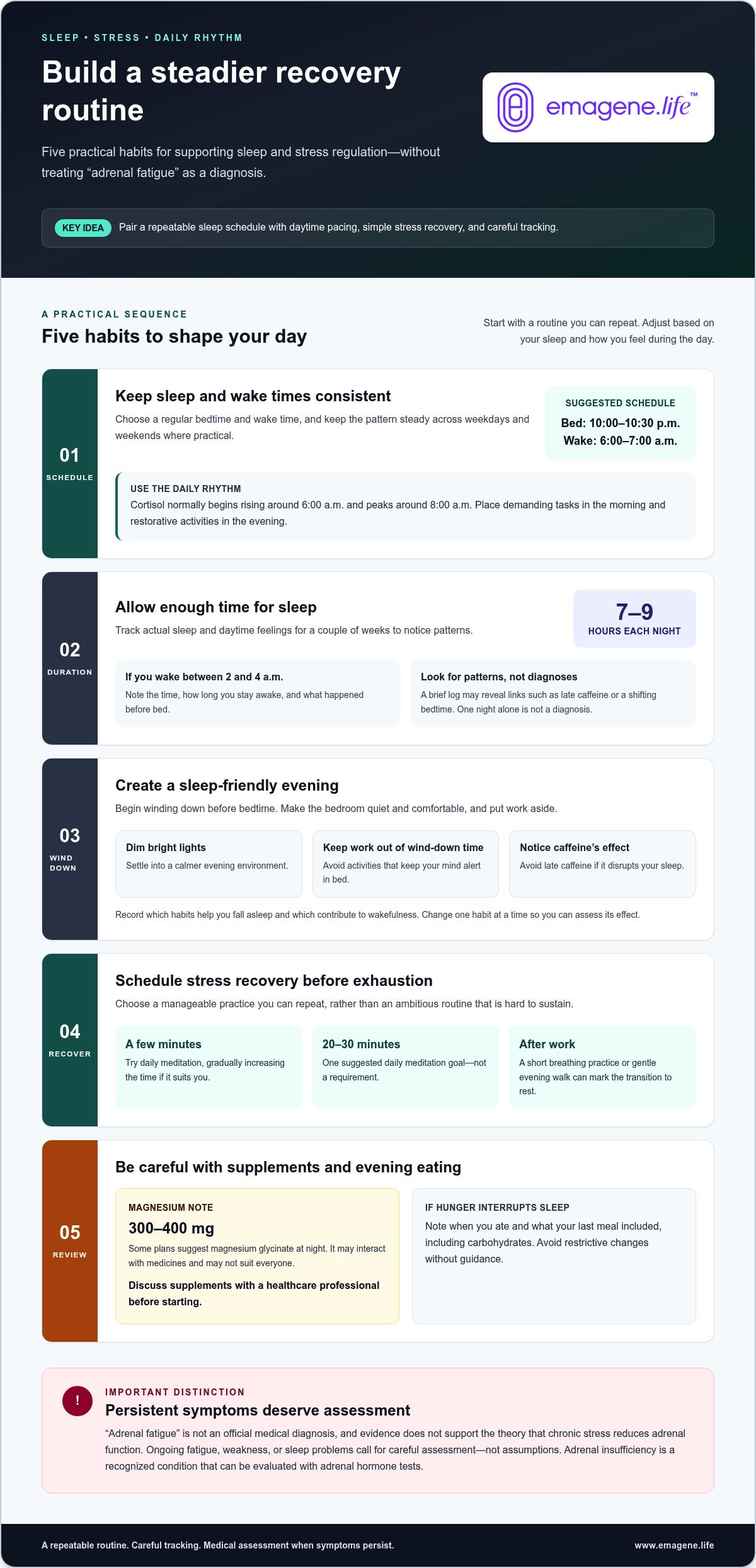
Build a repeatable sleep routine, then pair it with daytime pacing and simple stress-reduction habits. Use these steps to create a schedule you can track and adjust.
-
Set consistent sleep habits
Choose a regular bedtime between 10:00 and 10:30 p.m., and aim to wake between 6:00 and 7:00 a.m. Cortisol normally begins rising around 6:00 a.m. and reaches a peak around 8:00 a.m., so place demanding tasks in the morning and restorative activities in the evening. Keep the schedule steady across weekdays and weekends where practical.
-
Prioritize sleep duration
Allow 7 to 9 hours for sleep each night, then track your actual sleep and daytime feeling for a couple of weeks. If you regularly wake between 2 and 4 a.m., note the time, how long you stay awake, and what happened before bed. A brief log can reveal patterns, such as late caffeine or a shifting bedtime, without treating one night as a diagnosis.
-
Apply sleep hygiene practices
Set a wind-down routine that starts before your chosen bedtime. Dim bright lights, put work aside, and avoid using the bed for activities that keep your mind alert. Keep the bedroom quiet and comfortable, and avoid late caffeine if it disrupts your sleep. Record which habits help you fall asleep and which contribute to wakefulness. Change one habit at a time to assess its effect.
- Schedule stress recovery instead of waiting until exhaustion. Try a few minutes of meditation each day, then gradually increase the time if it suits you; 20 to 30 minutes daily is one suggested goal. A short breathing practice after work or a gentle evening walk can also create a clear transition from demanding tasks to rest. Choose an activity you can repeat, not an ambitious routine you quickly abandon.
- Review supplements and evening eating with care. Some plans suggest 300-400 mg of magnesium glycinate at night, but supplements can interact with medicines and may not suit everyone. Discuss magnesium or a vitamin supplement with a healthcare professional before starting it. If hunger interrupts sleep, note the timing and contents of your last meal, including carbohydrates, rather than making a restrictive change without guidance.
Use the daily rhythm as a guide for arranging effort and recovery: the page recommends scheduling demanding tasks in the morning and restorative activities in the evening to align with daily cortisol rhythms. This approach makes the timing of activities part of the routine, rather than treating sleep as an isolated nighttime concern. Dr. Will Cole aimed to get at least seven hours of uninterrupted, quality sleep each night, while the page recommends 8-10 hours of quality sleep per night as a strategy for improving adrenal-fatigue-type symptoms. These are stated as sleep-duration targets, not a guarantee of a particular result.
The author tried to be in bed by 10 and asleep by 10:30 on weekdays, and the page recommends waking by 6:00-7:00 am. Use those examples alongside the routine and tracking habits above to assess whether your schedule feels workable and consistent. If your needs or circumstances differ, focus on observing your sleep and daytime experience, then make measured adjustments rather than forcing a schedule that is difficult to sustain.
How is Adrenal Fatigue Treated?
“Adrenal fatigue” is not an official diagnosis, so care should focus on symptoms and their possible causes. Use these steps to support regular nutrition without relying on unsupported treatments.
-
Build balanced regular meals
Eat regular meals that include protein, healthy fats, and complex carbohydrates. This balance can support steadier blood sugar and energy throughout the day. A practical pattern is three main meals and one or two small snacks, adjusted to your appetite and routine. Avoid relying on processed foods or skipping meals to manage fatigue. Food choices support general health, but they do not diagnose or treat adrenal insufficiency.
-
Include protein in meals and snacks
Add a protein source to each meal, such as eggs at breakfast, tofu or fish at lunch, and beans or chicken at dinner. One meal plan suggests 20-30 g of protein at every meal. Pair protein with vegetables, fruit, or whole grains for a balanced plate. This is a flexible structure, not a required prescription or a cure for persistent fatigue.
-
Review example daily meals
Use meal times as a flexible template: breakfast at 8:00 AM, a snack at 9:00 AM, lunch between 11:00 AM and noon, another snack between 2:00 and 3:00 PM, and dinner between 5:00 and 6:00 PM. Examples include eggs with whole-grain toast, fruit with yogurt, or fish with vegetables and brown rice. Adapt the pattern to appetite and schedule.
Have breakfast within an hour of waking. Notice whether coffee or other caffeine disrupts your sleep, increases anxiety, or affects your energy, and avoid using it instead of food. A meal log can help you connect meal timing and food choices with changes in how you feel.
-
Investigate other causes of fatigue
For persistent fatigue, see a general practitioner in Malaysia. Possible causes include adrenal insufficiency, which occurs when the adrenal glands do not make enough hormones, and other medical conditions. An adrenal fatigue recovery plan should not replace medical assessment. Adrenal insufficiency can be evaluated with tests of adrenal hormone levels; CT scans or MRI may also help assess it.
Adrenal support supplements have no established role in treating “adrenal fatigue,” which isn’t a recognized diagnosis. Supplements may interact with medicines, so discuss them with a healthcare professional before use. Don’t take adrenal hormone supplements or corticosteroids without a prescription. A practical adrenal fatigue recovery plan can focus on supportive habits while a clinician evaluates ongoing symptoms. For hormone-related concerns, Hormone Optimisation may be relevant.
Stress-related effects on immune, digestive, and metabolic functions
Stress can affect how you feel and function, but “adrenal fatigue” is not an established explanation for those effects. Use these steps to notice patterns, reduce strain, and keep your approach to symptoms grounded in evidence.
- Track stress alongside changes in digestion, appetite, sleep, and energy. The hypothalamic-pituitary-adrenal (HPA) axis helps coordinate the body’s hormonal response to stress. Stress can influence hormone signaling and bodily functions, but that does not show that the adrenal glands have become fatigued or stopped working properly. Record what happens on demanding workdays, around meals, and after rest. A simple log can help you distinguish a recurring pattern from an isolated difficult day.
- Build a stress-reduction practice you can repeat. Start meditation with a few minutes each day, then gradually increase the time; 20 to 30 minutes daily is one suggested goal. Another approach is practicing stress-reducing exercises three times a week. Choose a specific activity, such as yoga, breathing practice, or a gentle walk, and note its effect on tension, digestion, and concentration. Consistency matters more than forcing an intense routine.
- Protect recovery time after periods of burnout instead of immediately restoring every demand. One personal account described no change during the first two months of a recovery protocol and still not feeling fully recovered a year later. These are individual experiences, not a reliable timetable for everyone. Reports on recovery range from 3 months to 3 years, depending on symptom severity and response to treatment. Track function, sleep, and daily capacity rather than expecting a fixed turning point.
- Pair stress management with regular meals and adequate nutrients, then observe how your body responds. For example, skipping a meal during a demanding morning may make it harder to tell whether later fatigue relates to stress, hunger, or another cause. Note meal timing, symptoms, and stressors together. If fatigue or digestive problems persist or worsen, share your record with a healthcare professional. Stress-related symptoms can have other causes, so assessment should consider your overall health.
Keep expectations flexible when judging whether stress-related symptoms are changing. The page says improvement in adrenal-fatigue-type symptoms usually takes months, while fuller recovery can take 6-24 months. That range is context, not a deadline or proof that a particular explanation fits your symptoms. Compare your notes over time, including whether daily tasks, digestion, sleep, and energy are becoming more manageable. A slow or uneven course does not, by itself, show what is causing the symptoms; use persistent concerns as a reason to discuss the whole pattern with a healthcare professional.
Choose a stress-management practice you can realistically repeat, rather than treating it as a test of willpower. The author said she tried to attend a yoga class at least once a week. Use that example as a reminder to make a plan that fits your schedule, without assuming yoga or any single routine will work the same way for everyone. Note how you feel around the practice and whether it is sustainable. If a class is not practical, keep the principle of consistency by choosing an approach that suits your circumstances, then review its effect alongside other changes.
Mainstream medicine's recognition of adrenal fatigue
Seek urgent medical care for severe vomiting, profound tiredness, or lightheadedness with low blood pressure. These symptoms can occur with adrenal insufficiency and need prompt assessment.
- Distinguish the label from a recognized diagnosis. “Adrenal fatigue” describes nonspecific symptoms such as tiredness, weakness, sleep problems, and sugar or salt cravings. It is not an official medical diagnosis. The adrenal glands sit above the kidneys, but low energy alone does not show that they have lost function.
- Separate chronic stress from adrenal insufficiency. There is no evidence supporting the theory that chronic stress reduces adrenal function and causes “adrenal fatigue.” A systematic review titled “Adrenal fatigue does not exist” was published in BMC Endocrine Disorders (DOI 10.1186/s12902-016-0128-4). Stress can affect how you feel, but that experience alone does not diagnose an adrenal hormone disorder.
- Understand what a medical evaluation can assess. Adrenal insufficiency occurs when the adrenal glands do not make enough hormones. Tests can measure adrenal hormone levels, while CT or MRI imaging may help evaluate the condition. A healthcare professional considers symptoms and health history alongside test results. This differs from using a commercial cortisol test or symptom checklist to label everyday fatigue.
- Address persistent or worsening symptoms instead of assuming their cause. Adrenal insufficiency may follow another medical condition, surgery, radiation, or certain medicines. Symptoms can include severe tiredness, body aches, appetite loss, weight loss, nausea, vomiting, low blood pressure, lightheadedness, loss of body hair, darker skin, salt cravings, and depression. Share these changes and your medication history during a medical assessment.
- Keep lifestyle practices in their proper role. A consistent sleep schedule, balanced eating, and stress-management habits can support general well-being, but they don’t replace assessment for a medical cause. If fatigue persists despite changes to your routine, a Functional Medicine Assessment can help explore health concerns through a broader view of contributing factors.
Emagene Life: Functional Medicine Assessment
Emagene Life’s Functional Medicine Assessment offers a broader view of persistent fatigue and related health concerns. It focuses on identifying potential root causes and physiological imbalances, rather than treating “adrenal fatigue” as a confirmed diagnosis. The findings can inform personalized wellness strategies through functional medicine, with a focus on healthy longevity.
Consider an assessment if fatigue continues to affect daily life and you want to explore possible contributing factors alongside appropriate medical evaluation. For suspected adrenal insufficiency or urgent symptoms, seek medical care; a wellness assessment is not a substitute for diagnosis or emergency treatment. Contact Emagene Life to learn about its Functional Medicine Assessment.
Choose a Clear, Sustainable Next Step
Progress starts with a plan you can observe and adapt. Treat your adrenal fatigue recovery plan as a practical framework, not a label that explains every change in energy. Notice which routines fit your schedule, keep useful notes, and bring unresolved concerns into a focused health conversation. A precise approach responds to patterns rather than chasing every new supplement or restriction.
If symptoms continue to interfere with daily life, take the next step by considering your wider health picture. Emagene Life’s Functional Medicine Assessment supports exploration of potential contributing factors and personalized wellness strategies, with functional medicine and longevity among its areas of focus. It complements, rather than replaces, appropriate medical care for suspected adrenal insufficiency or urgent symptoms.
Contact Emagene Life to discuss your options. A thoughtful next step can help you move forward with greater clarity and confidence.
Frequently Asked Questions
Is adrenal fatigue a medically recognized diagnosis?
No. “Adrenal fatigue” is not an official medical diagnosis, and chronic stress is not established as a cause of reduced adrenal function. Adrenal insufficiency is a recognized condition in which the adrenal glands don’t produce enough hormones. If you’re preparing for a medical appointment, describe your symptoms in your own words, including when they began and how they affect work, home responsibilities, or concentration.
What evidence-based steps help improve chronic fatigue and energy levels?
Start by seeking an assessment for persistent fatigue rather than treating a self-diagnosis. Before your appointment, note when the fatigue began, whether it changes during the day, and what makes daily tasks harder. Bring a current list of medicines and supplements, plus relevant health history. These details help a healthcare professional consider possible causes and decide which evaluation is appropriate, instead of relying on an “adrenal fatigue” label.
Can diet, sleep, exercise, or stress management help with persistent fatigue?
Yes, these habits can support general well-being, but they do not establish the cause of ongoing fatigue or replace medical assessment. Choose a manageable change, such as a consistent wake time or gentle movement, and observe its effect on daily function. Avoid adding several supplements or making restrictive diet changes at once. If fatigue persists or limits ordinary activities, discuss it with a healthcare professional.
What are the risks of taking adrenal hormone supplements or corticosteroids without a prescription?
Adrenal support supplements may interact with medicines and have no established role in treating “adrenal fatigue.” Do not take adrenal hormone supplements or corticosteroids without a prescription.


