

Managing Autoimmune Disease Naturally Through Diet and Self-Care
Natural strategies can support autoimmune disease management, but they should complement prescribed treatment, not replace it. Managing autoimmune disease naturally may involve an autoimmune protocol diet, with three phases: elimination, reintroduction, and maintenance. The aim is to explore how food and daily habits may affect well-being while recognizing that the immune response drives the condition.
It’s understandable to look for practical steps involving food, movement, sleep, and stress. But restrictive diets can create nutritional risks, and autoimmune conditions don’t all respond alike. This guide explains how the autoimmune protocol diet works, its potential benefits and drawbacks, and how autoimmune disease involves the immune system attacking healthy tissue. It also covers ways self-care can complement medical treatment, helping you make measured changes rather than relying on one approach.
Key Takeaways
- The autoimmune protocol diet uses elimination, reintroduction, and maintenance phases; learn how to approach each step thoughtfully.
- Restrictive eating may create nutritional gaps, so understand the potential trade-offs before removing multiple food groups.
- Build supportive habits around meals, sleep, movement, and stress while keeping prescribed treatment part of your care plan.
- See how autoimmune disease involves the immune system reacting against healthy tissue, and why symptoms can affect different parts of the body.
- Explore how a Functional Medicine Assessment can help connect health concerns with a personalized view of your well-being.
1. What Is the Autoimmune Protocol Diet?
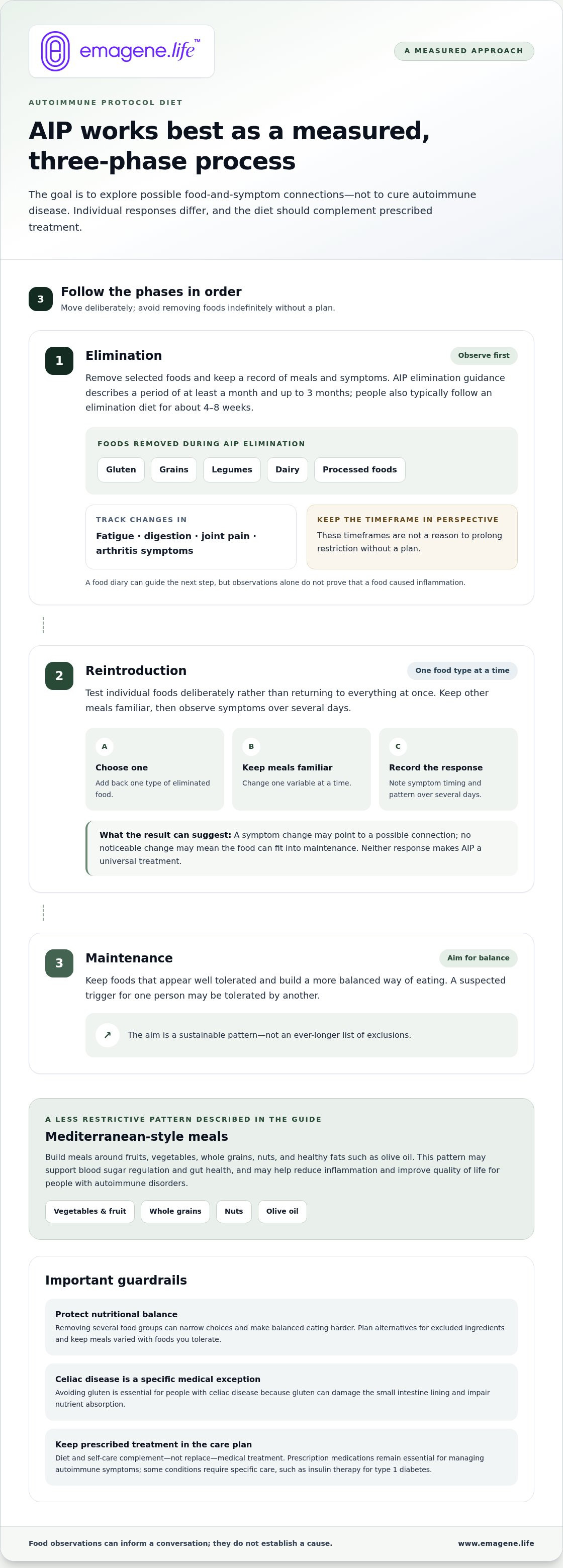
The autoimmune protocol diet, or AIP, is an elimination approach with three phases: elimination, reintroduction, and maintenance. It aims to identify foods that may trigger symptoms, not to cure autoimmune disease. During elimination, a person removes selected foods and tracks symptoms. Reintroduction then tests whether individual foods correspond with reactions. This structured process can help distinguish a suspected trigger from a food that causes no noticeable change.
AIP removes gluten, grains, legumes, dairy, and processed foods during its elimination phase. People typically follow an elimination diet for about 4–8 weeks; AIP elimination guidance describes a period lasting at least a month and up to 3 months. These timeframes are not a reason to prolong restriction without a plan. Keep a record of meals and symptoms, including changes in fatigue, digestion, joint pain, or arthritis symptoms. Such observations can guide the next step, but they don’t prove a food caused inflammation.
Reintroduction is deliberate, not a return to eating everything at once. Add back one type of eliminated food at a time, then observe symptoms over several days. For example, test one food while keeping other meals familiar, and record any changes. If symptoms appear, their timing and pattern may suggest a possible connection. If they don’t, that food may fit into the maintenance phase. This approach aims to support a more balanced diet than indefinite elimination.
The proposed AIP approach is to reduce exposure to foods that may aggravate symptoms, then use reintroduction to identify individual responses. It is not a universal treatment: a food trigger for one person may be tolerated by another. A Mediterranean diet offers a less restrictive pattern built around fruits, vegetables, whole grains, nuts, and healthy fats such as olive oil. This predominantly plant-based approach may support blood sugar regulation and gut health.
The Mediterranean diet may also help reduce inflammation and improve quality of life for people with autoimmune disorders. Its focus on plant foods and healthy fats offers an alternative to removing multiple food groups. A practical starting point is to build meals around vegetables, fruit, whole grains, and olive oil, while reducing highly processed or refined foods. For celiac disease, avoiding gluten is essential because consuming it can damage the small intestine lining and impair nutrient absorption.
Can stress management techniques reduce autoimmune symptoms? Yoga, meditation, and tai chi can help manage stress, and reducing stress may lower inflammatory markers and support quality of life. Try a regular practice and note whether it affects your daily symptoms. Sleep habits matter too: keep a consistent sleep and wake schedule, create a relaxing environment, and turn off electronic devices at least an hour before bed.
Diet and self-care complement, rather than replace, medical treatment. Prescription medications remain essential for managing autoimmune symptoms, and some conditions require specific care, such as insulin therapy for type 1 diabetes. Before adopting a restrictive plan, consider how food exclusions affect nutrient intake and daily routines. A measured approach helps preserve nutritional balance while exploring whether particular foods or habits relate to symptoms.
2. Potential benefits and nutritional risks
Dietary changes may support well-being, but benefits depend on the person, condition, and overall nutrition. A plant-rich pattern can provide fiber and a range of nutrients while reducing reliance on highly processed foods. Regular consumption of ultraprocessed foods is associated with a 17% higher likelihood of developing rheumatoid arthritis. That association does not prove these foods cause the condition, but it gives a practical reason to focus on meal quality.
A Mediterranean diet centers meals on vegetables, fruit, whole grains, nuts, and healthy fats. Add protein and non-refined oils, such as olive oil, to make meals satisfying and varied. For example, combine vegetables, beans, and whole grains with seeds or avocado. This approach may support gut health and reduce inflammation. It also avoids broad restrictions that can make balanced daily nutrition harder.
Restrictive plans involve trade-offs. Removing several food groups can narrow meal choices and make balanced eating harder, especially when substitutions are limited. Track what you eat and note symptoms, energy, and digestion as you make changes. A food diary can help show whether a change corresponds with a response, without assuming every flare or symptom is caused by food.
For people with celiac disease, avoiding gluten is essential because gluten can damage the small intestine lining and interfere with nutrient absorption. That medical need differs from removing gluten without a diagnosis. A broad elimination plan may not suit everyone. Keep meals varied using foods you tolerate, and plan alternatives for excluded ingredients rather than simply removing them.
Probiotics and prebiotics may help strengthen and heal the gut lining. Fermented foods such as kimchi, sauerkraut, and kombucha can provide beneficial bacteria. Yogurt is another option for people who aren’t sensitive to dairy. Introduce one food at a time and observe your digestion and symptoms. This makes it easier to notice whether a particular food suits your routine.
Supplements may help address nutritional imbalances, but they should match a specific need. Omega-3 fatty acids from fish oil, vitamins C and D, and curcumin are among the options that may support people with autoimmune disease. Food sources and supplements serve different roles, so don’t treat a supplement as a substitute for meals or prescribed treatment. Record what you take alongside food and symptom changes.
Choose a sustainable eating pattern, not a longer list of exclusions. Plant-based meals with vegetables, fruit, protein, and healthy fats can support dietary variety. If you try a restrictive approach, review its effects on symptoms and nutrition, then adjust based on what you observe. The aim is to identify useful changes while maintaining nourishment and an everyday eating pattern you can sustain.
3. What are autoimmune diseases?
Autoimmune diseases are chronic conditions in which the immune system mistakenly attacks healthy tissue. More than 80 types have been classified, and they can affect the joints, skin, digestive system, endocrine system, or nervous system. Rheumatoid arthritis affects joints, while celiac disease can damage the small intestine lining after gluten exposure. These conditions have no cure, although some can enter remission. Remission means symptoms ease; it doesn’t mean the disease is cured.
Symptoms vary depending on the condition and the tissue involved. Joint pain, fatigue, rashes, and muscle aches can occur, while inflammation may cause warmth, redness, swelling, or pain. Diagnosis can involve a physical examination, health history, blood tests, and imaging such as an X-ray, MRI, CT scan, or ultrasound. These steps help clinicians relate symptoms to affected body systems and distinguish among possible conditions.
Can lifestyle changes help manage autoimmune disease symptoms? Yes. Habits such as regular gentle movement, restorative sleep, and balanced eating that includes vegetables may support well-being and symptom management. They complement, rather than replace, prescription medication. Track symptoms alongside changes in sleep, activity, and meals. This gives you and your healthcare team a clearer view of patterns without assuming one habit caused a flare.
Functional medicine considers how factors such as diet, stress, sleep, and physical health may relate to a person’s overall function. It can help organize questions about possible contributors, but it cannot establish one universal root cause. The medical community hasn’t reached agreement on what causes autoimmune disease. A careful assessment should complement diagnosis and treatment, rather than treat a proposed cause as proven or advise stopping medication.
What are the risks of stopping immunosuppressant medication without medical advice? Symptoms may return or worsen, and the condition may become harder to control. Don’t change or stop a prescribed dose on your own; discuss side effects, concerns, or treatment changes with the prescribing clinician. Prescription treatment remains essential for managing autoimmune symptoms, while lifestyle strategies can support daily care.
Which doctors and dietitians in Malaysia can help manage autoimmune disease? A rheumatologist can assess conditions such as rheumatoid arthritis or lupus, while the relevant specialist can guide care for other affected systems. A registered dietitian can help plan balanced meals around symptoms, food restrictions, and nutritional needs. Your treating doctor can coordinate care. Seek medical review if symptoms recur or worsen, or treatment seems less effective, and bring a symptom and medication record to your appointment.
4. Autoimmune disease and the immune response
The immune system protects the body, but autoimmune conditions involve it attacking healthy tissues. In rheumatoid arthritis, lupus, and multiple sclerosis, this misdirected response can affect different parts of the body. Inflammation may contribute to pain, swelling, fatigue, or changes in movement. The affected tissue helps explain why symptoms vary between conditions and individuals.
Treatments for many autoimmune conditions suppress immune function to temper uncontrolled inflammation. This can help manage symptoms, but it’s not a reason to stop medication independently. Medication targets disease activity, while sleep, movement, and nutrition can support overall well-being. A careful approach to managing autoimmune disease naturally keeps these roles distinct and works alongside prescribed care.
The gut is relevant to immune activity. Nearly 70% of the body’s immune cells are housed there, and intestinal permeability is described as a common thread among autoimmune diseases. That connection doesn’t establish one cause or mean gut-focused changes cure disease. It helps explain why digestive health and immune function are often considered together.
Food choices may influence the environment in which immune activity occurs, but they don’t explain every flare. A diet low in fiber and high in processed foods is associated with greater inflammation, a key driver of autoimmune symptoms. Replace some processed foods with fiber-rich choices, such as vegetables, fruit, and whole grains, while tracking symptoms. This can help you identify personal patterns without relying on assumptions.
Stress is another aspect of daily health worth tracking. Yoga, meditation, and tai chi are options for stress relief, and reducing stress may lower inflammatory markers and support quality of life. Choose a repeatable practice, then note changes in sleep, energy, and symptoms. Managing autoimmune disease naturally also means observing these patterns without assuming stress causes an autoimmune condition.
Keep a simple record to connect these factors: note symptoms, medication changes, sleep, stress, activity, and meals. If symptoms recur or worsen, or treatment seems less effective, discuss the pattern with your healthcare provider. This record can support a focused conversation without replacing clinical assessment or prescribed care.
To examine how health patterns may relate to immune function, explore a personalized health assessment as part of a broader, informed approach.
Emagene Life: Functional Medicine Assessment
Emagene Life’s Functional Medicine Assessment can help you examine health concerns and physiological imbalances as part of a broader view of well-being. Consider this approach when you want to explore how symptoms, daily habits, and health history may relate. Functional medicine focuses on understanding potential contributing factors and shaping personalized wellness strategies. It complements, rather than replaces, diagnosis and treatment from your medical team. Continue prescribed medication as directed, and discuss your questions about diet, sleep, stress, or supplements with your care team. This can help you consider next steps in context. For an individualized discussion of your health goals, contact Emagene Life or visit www.emagene.life.
Make Your Next Step More Personal
A thoughtful approach to managing autoimmune disease naturally starts with sustainable choices and observations you can discuss with your healthcare team. Make your next step specific: identify the concern you most want to address, whether it’s energy, daily function, or understanding how your routines fit into your broader health picture. Progress comes from informed decisions, not changing everything at once.
Emagene Life offers Functional Medicine Assessment, functional medicine, and Longevity. These offerings can support a broader, personalized perspective on health goals and possible contributing factors, alongside your established medical care. If you’re ready to explore that perspective, contact Emagene Life to begin a conversation. Take one considered step forward, with clarity and confidence.
Frequently Asked Questions
How do I take care of myself?
Build a routine that helps you notice changes and keep care organized. Use a calendar for medication doses and appointments, and keep an up-to-date list of prescriptions, supplements, and allergies. During a flare, adjust demanding tasks and make time to rest rather than pushing through worsening symptoms. Bring your notes to appointments so your healthcare team can see what changed and when. Continue prescribed treatment unless your prescriber advises otherwise.
What Is the Autoimmune Protocol Diet?
The Autoimmune Protocol Diet is a structured eating plan that temporarily removes selected foods, then tests them individually before setting a longer-term pattern. Its restrictions can make meal planning challenging, especially when several familiar ingredients are excluded. Before starting, write down your usual meals and identify suitable alternatives for protein, fiber, and other nutrients. A dietitian can help assess whether the plan fits your diagnosis, nutritional needs, and everyday routine.
What are autoimmune diseases?
Autoimmune diseases are conditions in which immune activity is misdirected toward the body’s own cells or tissues. The effects depend on the target: a condition affecting the thyroid can influence hormone function, while one affecting joints can limit movement. The term covers distinct diagnoses, not one uniform illness. Keep a record of how symptoms affect work, sleep, and daily tasks; those details can help your clinician assess your individual condition.
What are the risk factors?
There isn’t one established cause or risk profile that explains every autoimmune disease. Genetic factors may contribute, while environmental factors such as diet, pathogens, and toxic chemical exposure may also play a role. About 30% of autoimmune diseases have a genetic component, and about 70% may be due to environmental factors. These figures describe possible contributions, not a personal prediction. A family history alone can’t determine whether someone will develop an autoimmune condition.
When should I see my healthcare provider?
Arrange medical review when symptoms are new, recurring, worsening, or interfering with daily activities. Contact your care team if a prescribed treatment seems less effective or side effects make it harder to follow the plan. Bring a list of symptom changes, medication concerns, and questions about diet or supplements. Don’t wait for a self-care experiment to resolve persistent changes, and don’t alter prescribed medication without discussing it with your prescriber.
Which questions should I ask my provider?
Use your appointment to clarify the diagnosis and how you’ll evaluate changes over time. Ask which symptoms need prompt follow-up, whether your current medicines or supplements could interact, and what to do if you miss a dose. If you’re considering a restrictive diet, ask how to protect nutritional intake and whether a dietitian’s input would help. Before leaving, confirm the next step and how to report changes in symptoms.


