

Biohacking for Executives in Malaysia: Health, Nutrition and Performance
Executive performance is easier to guide when you track the signals behind it. Biohacking for executives in Malaysia can combine wearable data on sleep, heart rate, recovery, and stress with personalized nutrition, movement, and deliberate recovery. Start with a protein-rich breakfast, seven to nine hours of sleep in a cool, dark, tech-free space, and 10 minutes of natural light at the start of the day.
Busy schedules can make health feel like another demand to manage. Biohacking for executives in Malaysia isn’t about adding pressure or chasing every new technique. It means noticing how daily choices relate to energy, focus, and well-being, then making measured adjustments that fit your routine.
This guide explains how health tracking and personalised food choices can inform an executive wellness plan, and how recovery practices and workplace culture can support it. You’ll find practical ways to turn everyday observations into sustainable habits, focusing on individual needs rather than one-size-fits-all protocols.
Key Takeaways
- Use wearable data to notice patterns in sleep, heart rate, recovery, and stress, then focus on changes that fit your routine.
- Observe how different foods affect your energy and focus, and build meals around sustained nourishment rather than quick fixes.
- Make recovery and daily movement part of your performance plan, not optional extras reserved for quieter weeks.
- At work, start wellness initiatives with conversations and expert input, then weave recovery, movement, and mindset into workplace culture.
- A Functional Medicine Assessment can help connect personal health patterns with a more tailored approach to well-being and longevity.
Executive health tracking and personalized performance data
For executives, biohacking starts with observation, not guesswork. Use a wearable fitness tracker to monitor heart rate, sleep, recovery, and stress. Review trends alongside work demands, meals, and exercise. A demanding travel day followed by shorter sleep, for example, may coincide with a different recovery reading. Treat the device as a tool for spotting patterns, not as a diagnosis.
Build a simple review habit: record your baseline, note meaningful changes, and adjust one routine at a time. Sleep quality, energy, and concentration can add context to device data. Malaysia’s Air Pollutant Index uses a 24-hour running average of its most dominant parameter. Consider local air quality when planning outdoor activity, then compare your response with your usual patterns.
- Breathwork: Schedule a short breathing practice before a demanding meeting or after work, then note how you feel.
- Sauna or cold plunges: Treat each as a deliberate recovery activity, not a substitute for sleep or medical care.
- Health retreats: Use a retreat to step away from work routines and examine habits in a focused setting.
- Red light therapy: It is one approach discussed for supporting mitochondrial function, alongside cold exposure, quality sleep, and supplements.
Mitochondria help cells manage energy, so recovery habits deserve attention alongside productivity metrics. Red light therapy and cold exposure are sometimes used to support mitochondrial function, but neither replaces basic routines. Track what you do and how you feel afterward. Change one variable at a time, such as adding breathwork after work, to make your response easier to interpret.
Yap Yann Fang, an entrepreneur in beauty and wellness for over 20 years, began a year-long journey to explore optimizing her body and mind. She attended the Biohacker Summit in Amsterdam in October 2022. Her experience illustrates a practical principle: pair curiosity with consistent observation, instead of adopting every new intervention at once.
Malaysian executive screening packages can differ in their measurements, laboratory tests, consultations, and follow-up. Compare the listed inclusions and how results are explained, rather than judging a package by its label. Metabolic health is one area to discuss: ask how an assessment considers blood sugar and diabetes risk, and how findings relate to your personal health history.
Malaysian health insurance coverage depends on each policy’s benefits and exclusions. Executive screening and biohacking treatments are not automatically covered as one category. When reviewing your policy, distinguish preventive screening from medically indicated tests and elective interventions.
A personalised health assessment can connect screening results with sleep, nutrition, activity, and recovery patterns. For example, compare a wearable’s sleep trend with a record of late meals and next-day energy. This gives you a clearer basis for deciding which habit to adjust first and which results merit a clinical conversation.
Nutrition and personalized food responses
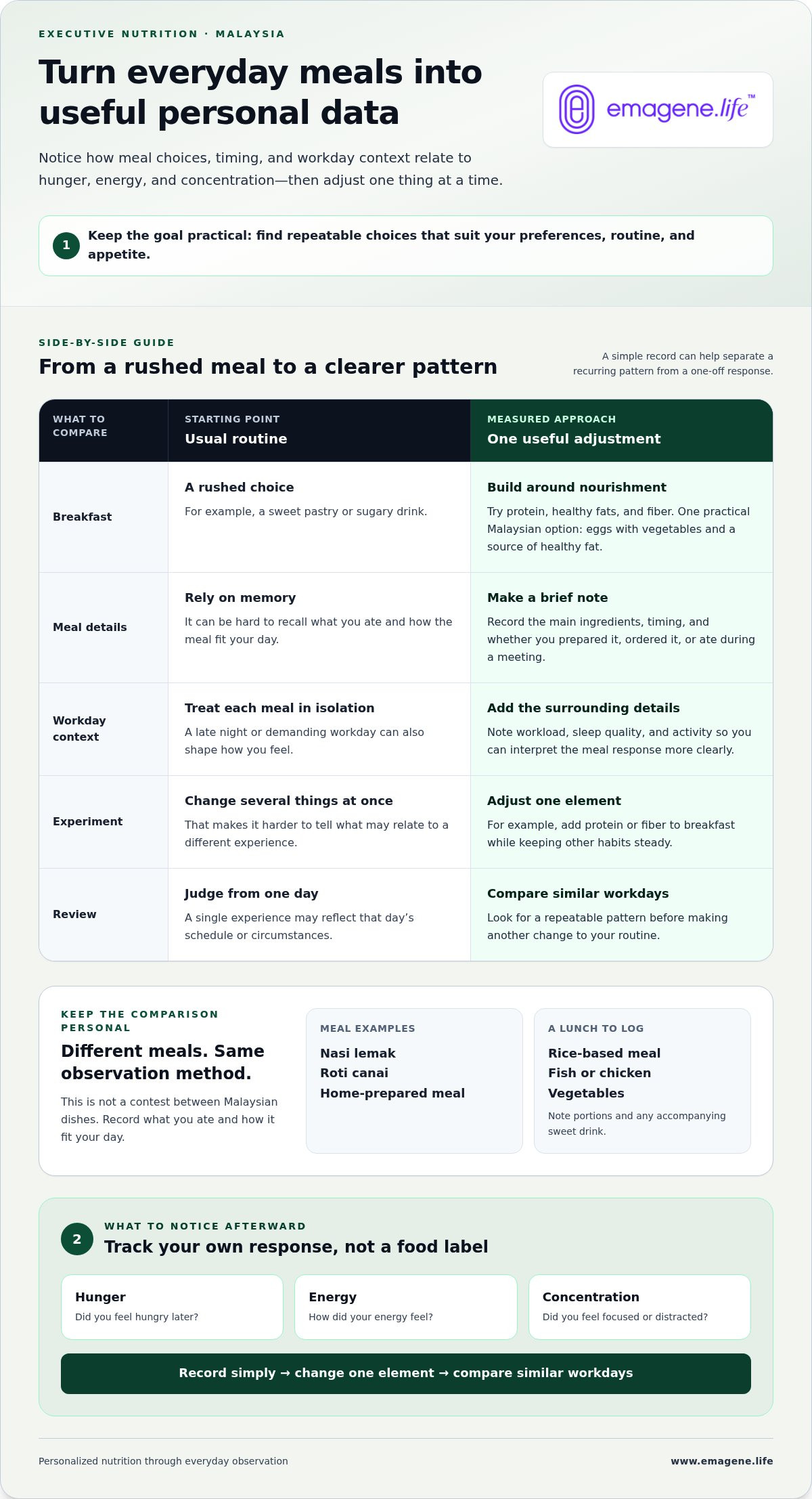
Nutrition is more useful when you observe your own response instead of following a rigid menu. Start with one meal and record its ingredients, timing, hunger, energy, and concentration afterward. For example, compare a rushed breakfast with a planned meal. Keep the notes simple. The aim is to spot actionable patterns, not label foods as universally good or bad. For biohacking for executives in Malaysia, this kind of self-observation can make food choices more practical.
Build breakfast around protein, healthy fats, and fibre, rather than relying on sugary foods and refined carbohydrates. A practical Malaysian option might combine eggs with vegetables and a source of healthy fat. If you usually choose a sweet pastry or sugary drink, change one part first. Keep the rest of your morning routine steady, then notice how the change fits meetings and focused work. The goal is a repeatable meal, not a perfect menu.
Personalisation means accounting for the meal, setting, and schedule. Nasi lemak, roti canai, and a home-prepared meal each have different ingredients and portions. Note what and when you ate, and whether you felt hungry or distracted later. This record helps distinguish a repeatable pattern from a one-off response after a late night or demanding workday. Biohacking for executives in Malaysia can start with these everyday observations, without turning meals into a complicated tracking project.
- Record the meal: Note its main ingredients and whether you prepared it, ordered it, or ate during a meeting.
- Track the context: Add meal timing, workload, sleep quality, and activity to interpret food exposure more clearly.
- Change one element: Try adding protein or fiber to breakfast while keeping other habits consistent.
- Review the pattern: Compare similar workdays before making another adjustment to your routine.
Use the same method at lunch. A rice-based meal with fish or chicken and vegetables gives you a concrete meal to log. Note the portions and any accompanying sweet drink. On another comparable day, adjust one element, such as the drink, and record your experience. This isn’t a contest between Malaysian dishes. It’s a way to identify choices that suit your preferences, routine, and appetite.
Keep the process practical. Choose meals you can repeat during a regular workweek, and plan for client lunches or travel without treating one meal as failure. If food patterns feel difficult to interpret alongside other health concerns, a personalized health assessment can help connect nutrition observations with your broader health picture. Use your notes to guide a focused conversation and decide which change to test next.
Performance, recovery, and long-term well-being
Executive performance depends on how well effort and recovery work together. Protect time for movement, mental resets, and routines that remain workable during demanding weeks.
Biohacking for Business Performance
Use health habits to support clear thinking and sustainable leadership, not to chase constant output. Put a short walk between back-to-back meetings, or schedule breathwork after a high-pressure presentation. Then notice how these choices affect your energy and concentration. A useful routine is one you can repeat during travel, deadlines, and ordinary office days.
Yap Yann Fang’s routine began at 6am with 45 minutes of chanting and meditation. She also finished work around 4pm. These are personal examples, not universal prescriptions. The practical lesson is to protect boundaries around focused work and recovery, then notice whether they remain realistic across your own schedule.
In Malaysia, don’t assume the label “biohacking” gives every treatment the same regulatory status. Before pursuing treatment, check a practitioner’s registration and scope through the relevant Malaysian professional register.
Burnout prevention starts with noticing strain before it becomes your normal operating mode. Track whether long meeting days repeatedly displace movement or quiet recovery. Discuss workload patterns with your team and protect realistic breaks. When leaders build recovery into the calendar, colleagues can more easily treat well-being as part of work culture.
Clinical Evidence for Interventions
Prioritise foundational habits: regular movement, balanced meals, consistent sleep, and stress-management practices. Ask whether each habit is sustainable and supports daily function. Try walking, strength training, yoga, or breathwork, then note how each fits your week. A monthly reset involving breathwork, meditation, and audio stimuli is one example of a structured personal routine.
Be cautious about claims for productivity technologies or intensive interventions. Ask what outcome is being measured, how the intervention is evaluated, and whether that measure matters to your daily life. Distinguish personal improvement from evidence that an intervention works reliably for others. The word “biohacking” alone doesn’t establish clinical effectiveness.
IV drips, peptides, hormones, and supplements can carry risks that depend on the substance, route, dose, health history, and other medications. Discuss those factors with a qualified practitioner before use, rather than treating a trending protocol as routine. Hormone-related concerns call for individualized clinical assessment; Hormone Optimisation is one area to explore through that lens.
Make your next step measurable. Choose one recovery habit, record when you practise it, and review whether it fits your work demands. If meetings consistently displace the routine, change the schedule rather than adding another demanding protocol. Sustainable performance comes from repeatable decisions, not intensity alone.
Protect sleep by aiming for seven-to-nine hours in a cool, dark, tech-free space. Intermittent fasting can improve energy, focus and metabolic health, though routines should remain workable alongside recovery and ordinary demands. Build daily movement into the schedule: walking, strength training, squats, high intensity interval training or yoga are options. Choose practices you can maintain, and pay attention to whether they support clear thinking and long-term well-being.
Executive wellness in Malaysia
Executive wellness in Malaysia works best when it reflects local routines and real workplace demands. Build a plan around conversations, expert input, recovery, movement, and mindset, then make those practices part of everyday work. Biohacking for executives in Malaysia should support how people work and live, not add another layer of pressure.
Choose a considered, evidence-informed programme by defining a health goal, reviewing the proposed methods, and understanding how progress will be assessed. Look for a plan that considers your health history and explains the purpose of each intervention. Biohacking for executives in Malaysia should be tailored to individual needs, not delivered as one protocol for everyone.
Workplace wellness needs leadership support and practical design. Start conversations about barriers such as consecutive meetings, business travel, or limited time for movement. Bring in appropriate expertise to shape initiatives, then integrate recovery, movement, and mindset tools into workplace culture. A walking meeting, for example, can make movement part of a familiar work activity rather than another calendar commitment.
Make participation easier by fitting practices into existing routines. A team might protect a short break between demanding sessions, create space for stretching, or use a quiet room for a brief mental reset. The specific format matters less than whether employees can access it during a normal workday. Ask what helps people participate, then adapt the approach based on their feedback.
Malaysia’s year-round sunlight offers an opportunity to consider daylight when planning outdoor breaks. Schedule a walk when work demands and local conditions allow, and adapt the activity to the day. A useful biohacking plan for executives in Malaysia accounts for local routines while reflecting personal preferences, work patterns, and health needs.
- Start with dialogue: Ask executives which workday pressures make recovery or movement difficult.
- Involve expertise: Connect workplace goals with relevant professional guidance.
- Build into routines: Use walking meetings, planned breaks, or quiet spaces as practical entry points.
- Review participation: Gather feedback and refine the initiative around what employees can sustain.
Yap Yann Fang described reaching a professional crossroads in 2022, when her body was asking her to slow down. Her account offers a useful leadership prompt: notice when work routines conflict with well-being, then consider which routine needs to change.
For a personal next step, explore a tailored approach to health and well-being that connects individual needs with longer-term goals. At work, begin with one practical change, invite feedback, and build from what employees can maintain.
Emagene Life: Functional Medicine Assessment
Emagene Life’s Functional Medicine Assessment helps executives explore health concerns and physiological imbalances. It may be a relevant next step when tracking, nutrition, and recovery habits have raised questions that call for a broader, personalised health perspective.
Functional medicine explores potential root causes and connects health patterns with individual wellness strategies. This can inform a considered approach to longevity and, where relevant, hormone optimisation. Bring observations about your energy, sleep, food, and work demands into the conversation so they can inform your health goals.
If you’re ready to explore a personalised assessment, visit www.emagene.life.
Make Your Next Step Intentional
For executives exploring biohacking in Malaysia, the next move isn’t adding another protocol. Decide which health question deserves attention first, then choose a considered way to explore it. This turns experimentation into a more purposeful path, grounded in your priorities rather than trends or someone else’s routine.
Emagene Life offers Functional Medicine Assessment, functional medicine, and longevity services for people seeking a personalised perspective on health concerns and long-term well-being. These approaches can help you frame the questions you want to explore and connect them with your goals. Progress starts with clarity, not complexity.
Bring your priorities into a conversation about executive wellness and the next steps that may fit your needs. Contact Emagene Life to discuss executive wellness and take a thoughtful step toward a more intentional approach to your health.
Frequently Asked Questions
What does biohacking for executives involve, and what are its evidence-based benefits?
Executive biohacking combines measurable health habits with targeted interventions suited to individual goals. Core examples include sleep routines, balanced meals, regular movement, stress management, and reviewing relevant health data. Their value lies in supporting everyday function and helping identify patterns, not promising a fixed performance outcome. For example, an executive can compare work capacity across different routines and continue with practices that are practical and sustainable.
What steps should someone take before starting a biohacking programme, including baseline tests and follow-up?
Start by defining a specific goal, such as improving sleep consistency or understanding an ongoing energy concern. Review your health history, current routines, symptoms, and medications with a qualified practitioner. Select baseline tests based on that context, not a generic checklist. Record the initial results and agree on which changes to assess. During follow-up, compare like with like, discuss unexpected changes, and adjust the plan based on the findings.
Which executive health and biohacking clinics are available in Malaysia?
Emagene Life’s Functional Medicine Assessment connects personal health patterns with a tailored approach to well-being and longevity.


