

How to Reduce Systemic Inflammation: Evidence-Based Steps
Reducing inflammation usually starts with a pattern of everyday habits, not a single “superfood” or supplement. The term can be confusing because inflammation is a normal, helpful response to injury or infection, while prolonged immune activity is different and may deserve attention. Inflammation itself isn’t a diagnosis, and persistent symptoms can have more than one explanation.
Understanding how to reduce systemic inflammation means focusing on practical habits while recognizing when concerns need individualized evaluation. This guide explains how acute and chronic inflammation differ, which eating, movement, sleep, and stress-management habits may support overall health, and why no single habit is a guaranteed fix.
It also covers when ongoing symptoms warrant professional guidance. Emagene Life’s Functional Medicine Assessment explores potential underlying causes and physiological imbalances, providing a foundation for a personalized health roadmap. The goal is a clear, realistic next step, not self-diagnosis or an all-or-nothing overhaul.
Key Takeaways
- Inflammation is an immune response, not automatically a disease. Acute inflammation can help the body respond to injury or infection.
- Learn how to reduce systemic inflammation with complementary habits around food, movement, sleep, and stress, without treating any one change as a cure.
- Build a practical four-step plan: establish a baseline, choose one habit, track it consistently, and review your progress.
- Use notes about habits and changes to reflect on your routine, not to diagnose yourself.
- Persistent, worsening, or concerning symptoms deserve professional evaluation. Urgent or severe symptoms need timely medical attention.
What systemic inflammation means, and why reducing it is not always the goal
Inflammation is an immune response, not automatically a disease. It helps the body react to threats such as infection or injury. A short-lived inflammatory response can support healing, while persistent or widespread immune activity is something to understand rather than suppress blindly. Systemic inflammation refers to inflammation affecting the body more broadly, rather than being limited to one spot. The Systemic Inflammation overview offers additional background, but the term alone doesn’t establish a diagnosis or explain the cause of someone’s symptoms.
Acute and chronic inflammation are not the same
Imagine cutting your finger. The area may become red, warm, swollen, or tender as the immune system responds. This short-term, localized reaction is acute inflammation and can be part of the body’s normal response to injury. Similar immune activity helps the body respond to infection.
Chronic inflammation describes immune activity that continues over time. Depending on its cause and context, prolonged activity may affect healthy tissues. That doesn’t mean every inflammatory response is harmful or that the goal should be to eliminate inflammation altogether. Instead, persistent concerns call for attention to their context, rather than treating a normal healing response as a problem.
Can symptoms tell you that you have systemic inflammation?
Not on their own. Ongoing fatigue, aches, or feeling generally unwell can have many possible causes. These symptoms may be worth discussing with a health professional, especially if they persist, worsen, or interfere with daily life. Symptoms alone can’t confirm systemic inflammation or identify its cause.
Cleveland Clinic’s discussion of inflammation symptoms illustrates why the signs can be broad and nonspecific. Use that information as general context, not as a way to diagnose yourself. A clinician can consider the full picture, including your health history and any relevant evaluation, before drawing conclusions.
This distinction matters when considering how to reduce systemic inflammation. Everyday habits may support overall health, but they can’t replace an assessment when symptoms are persistent or concerning. Note what you’re experiencing and seek individualized guidance when the pattern needs more than guesswork.
How to reduce systemic inflammation through everyday habits
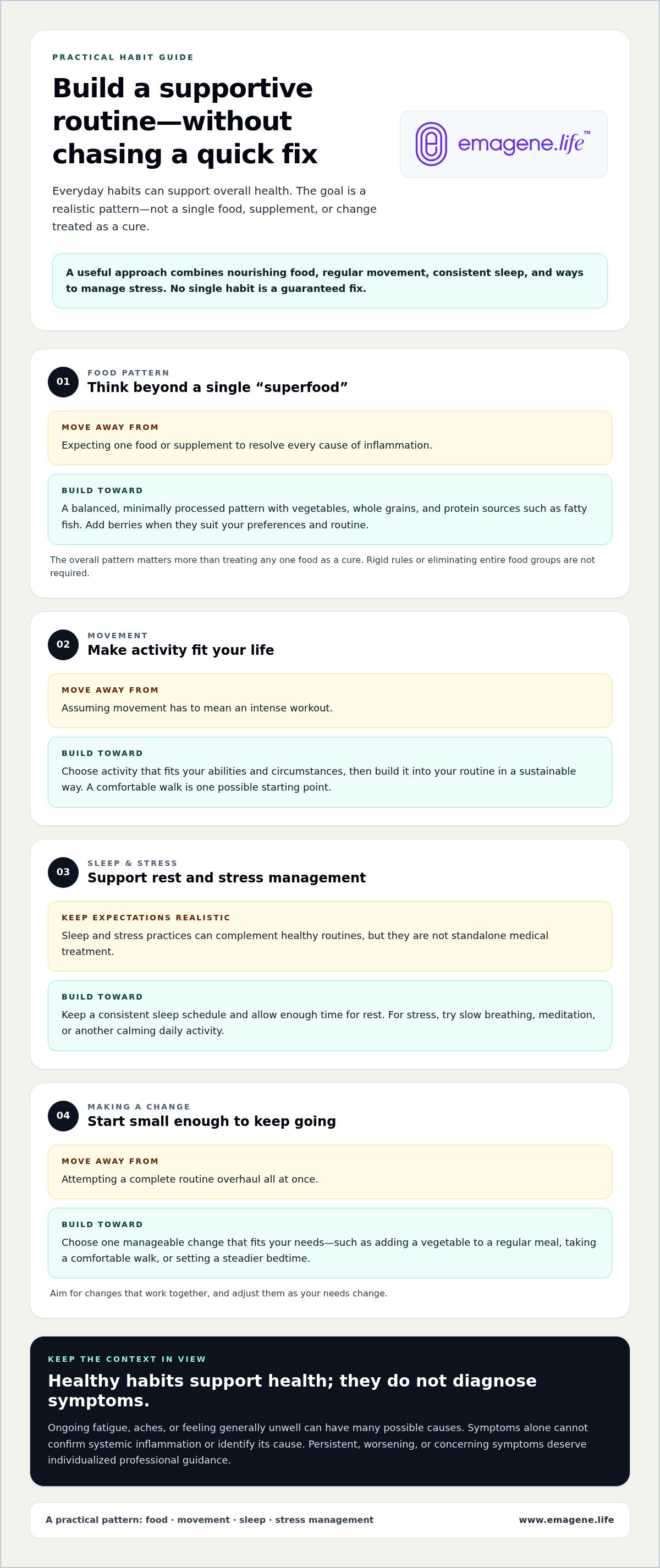
There’s no single switch to flip. A practical approach combines a nourishing eating pattern with regular movement, consistent sleep, and ways to manage stress. These habits can support overall health, but they aren’t guaranteed treatment for inflammation or an underlying condition. Choose changes that fit your abilities, health needs, and routine so they’re realistic enough to maintain.
No single food or habit can diagnose or resolve every cause of inflammation. Focus on patterns, not quick fixes. Harvard Health Publishing highlights vegetables, berries, whole grains, and fatty fish as examples within an eating pattern associated with lower inflammation. The overall pattern matters more than treating any one food as a cure.
Build meals around a balanced, minimally processed pattern
Plan meals that regularly include vegetables, whole grains, and sources of protein such as fatty fish. Add berries when they suit your preferences and routine. These are examples, not a checklist or prescription. A balanced pattern can include a range of foods; it doesn’t require rigid rules, labeling foods as “toxic,” or eliminating entire food groups without a specific reason. If a health condition affects what you eat, adapt changes to your needs with professional guidance.
Support the pattern with movement, sleep, and stress management
Movement doesn’t have to mean an intense workout. Choose activity that fits your abilities and circumstances, then build it into your routine in a sustainable way. Keep a consistent sleep schedule and allow enough time for rest. For stress, try a supportive practice such as slow breathing, meditation, or a calming daily activity. These approaches can complement healthy routines, but they aren’t standalone medical treatment.
Start with one manageable change. You might add a vegetable to a regular meal, take a walk that feels comfortable, or set a steadier bedtime. Aim for changes that work together rather than attempting a complete overhaul at once. The most useful plan is one you can follow and adjust as your needs change.
If you have ongoing health concerns and want to explore possible underlying factors, Emagene Life’s Functional Medicine Assessment can inform a personalized health roadmap. This assessment can complement practical lifestyle habits, but it isn’t a requirement for everyone.
A practical four-step plan to reduce systemic inflammation
A useful plan is repeatable, not extreme. If you’re figuring out how to reduce systemic inflammation, start with what you can observe and adjust. A simple record can help you notice routine changes, but it can’t confirm inflammation or explain its cause. Use these steps to make your routine easier to review without turning daily habits into a diagnosis.
- Establish a baseline. Before changing several things, briefly note your usual meals, movement, sleep, stress, and any health concerns you want to discuss. The aim is to understand your starting routine, not to judge yourself or interpret every sensation as a sign of inflammation.
- Choose one practical habit. Pick a change that fits your life and health needs, such as adding a regular walk, making one meal more balanced, or keeping a steadier bedtime. Start with something manageable. A small adjustment you can maintain is more useful than an all-or-nothing reset that quickly becomes difficult.
- Track consistently. Use a notebook or simple phone note to record whether you followed the habit and any changes you notice in your routine or how you feel. Keep the notes concise. They can help you describe patterns in a conversation with a health professional, but perceived improvement doesn’t prove inflammation was present or identify the cause of a symptom.
- Review and adapt. Look back at your notes and consider whether the change feels sustainable and appropriate for you. Progress and the right next step vary from person to person, so don’t rely on a fixed timeline or expect a guaranteed result. If a concern persists or worsens, seek individualized guidance. Don’t stop prescribed care or start supplements without appropriate professional advice.
This process is about building useful information, not chasing a perfect routine. For broader context on how individualized planning can support health goals, explore this personalized health roadmap guide. If persistent concerns call for a more individualized next step, a Functional Medicine Assessment evaluates potential underlying causes and physiological imbalances and can inform a personalized health roadmap.
When to seek help for persistent inflammation concerns
Lifestyle changes can support well-being, but they can’t explain every symptom. If a concern persists, worsens, or disrupts daily life, seek professional evaluation rather than assuming inflammation is the cause. Fatigue, pain, and other changes can have many explanations. A pattern of symptoms deserves attention, but it does not establish a diagnosis.
When lifestyle adjustments are not the whole answer
A healthier routine may be worthwhile, but it can’t identify every underlying health issue. If symptoms continue despite changes, or you’re concerned about what you’re experiencing, discuss them with a qualified health professional. Urgent or severe symptoms require timely medical attention. Don’t rely on diet, exercise, or stress-management practices alone in that situation.
How an individualized assessment can inform next steps
For concerns that call for a closer look, Emagene Life’s Functional Medicine Assessment evaluates potential underlying causes of health concerns and physiological imbalances. It can serve as the foundation for a personalized health roadmap and help inform an individualized discussion about possible next steps. It isn’t a guaranteed diagnosis or cure, and it isn’t necessary for every ordinary inflammatory response.
Bring a clear account of what you’ve noticed, how it affects you, and what has changed over time. That context can make a professional conversation more useful. For more detail on what an assessment involves, explore the Functional Medicine Assessment guide.
Understanding how to reduce systemic inflammation also means knowing when self-directed changes aren’t enough. You don’t need to label your symptoms before asking for guidance. Start with the concern itself, then consider an individualized assessment as one way to explore underlying factors and inform a health roadmap.
Learn more about Emagene Life’s Functional Medicine Assessment.
Choose a thoughtful next step
Let curiosity guide your next move, not pressure to control every signal your body sends. A thoughtful approach to how to reduce systemic inflammation takes context into account: what you’re experiencing, what may be contributing, and what kind of support fits your needs. If concerns continue, you don’t have to assume a lifestyle change will answer every question.
Emagene Life’s Functional Medicine Assessment explores potential underlying causes and physiological imbalances. Its findings can provide a foundation for a personalized health roadmap and help shape an informed discussion about possible next steps. It does not promise a diagnosis or cure, but it can offer a structured starting point for individualized guidance.
Take a considered step toward a clearer understanding of your health. Small, informed decisions can build momentum. Keep moving forward with patience, perspective, and support that reflects your individual needs. Explore Emagene Life’s Functional Medicine Assessment.
Frequently Asked Questions
Can you reduce systemic inflammation naturally?
Supportive habits may benefit overall health, but they can’t guarantee that inflammation will decrease or explain what’s causing a symptom. To explore how to reduce systemic inflammation in a practical way, choose one change that fits your usual week, such as preparing a balanced lunch for workdays. If you have a health condition or specific dietary needs, seek advice before making major changes. Lifestyle steps don’t replace professional evaluation when concerns persist.
How long does it take to reduce systemic inflammation?
There’s no reliable timeline that applies to everyone. Outcomes can depend on the underlying cause, individual health, and which changes are suitable and sustainable. Rather than counting days, consider whether a new routine is manageable and how your health concerns develop. Day-to-day fluctuations don’t prove that inflammation has changed. If symptoms continue, worsen, or concern you, discuss them with a qualified health professional.
Can a blood test show systemic inflammation?
Some blood tests measure markers associated with inflammation, but results need to be considered alongside a person’s health and symptoms. A result by itself may not reveal what’s causing a concern or provide a complete diagnosis. Don’t interpret a number in isolation or use it to guide treatment on your own. A healthcare professional can determine whether testing is appropriate and explain what the result means for you.
Are supplements necessary to reduce inflammation?
Supplements aren’t a universal requirement. Whether one is appropriate depends on your individual health needs, and a supplement shouldn’t replace prescribed care or be treated as a shortcut. Some may be unsuitable for certain people or interact with medications. Before starting one, share the product and its ingredients with an appropriate healthcare professional, especially if you take medication or have an ongoing health condition.
When should I see a healthcare professional about possible inflammation?
Seek professional advice if symptoms persist, worsen, or interfere with daily activities. Don’t assume inflammation is the cause; fatigue, discomfort, and other changes can have different explanations. Severe or urgent symptoms need timely medical attention. Don’t delay care while testing lifestyle changes or waiting to see whether symptoms pass. A healthcare professional can consider your circumstances and help determine appropriate next steps.


