

Longevity Diet and Lifestyle: Evidence-Based Steps for a Healthier Life
A longevity superfood won’t outweigh an everyday routine you can’t sustain. The strongest longevity diet and lifestyle habits are practical patterns, not miracle ingredients or rigid protocols.
Conflicting advice can make ordinary meals feel like a high-stakes decision. One plan rules out familiar foods; another promises dramatic results from a supplement. It’s reasonable to want clear, evidence-informed guidance that fits around work, family, and personal preferences.
This article focuses on habits that matter over time: building meals around nourishing whole foods, moving regularly, supporting restorative sleep, and making room for meaningful connection. You’ll learn how to turn those principles into a flexible routine without treating any single food or practice as a guarantee of a longer life.
Your starting point matters, too. Health conditions, medications, and individual needs can affect which changes are appropriate. The guidance below explains how to make steady progress while adapting general habits to your circumstances.
Key Takeaways
- Healthspan means the years lived in good health; no single food or routine can guarantee a longer life.
- A sustainable longevity diet and lifestyle centers on overall patterns rather than chasing individual ingredients or supplements.
- Build consistency by choosing one priority, making it specific, and attaching it to an existing part of your day.
- Health history, symptoms, medications, and preferences can change which habits are right for you.
- Persistent symptoms or complex health needs may call for qualified clinical guidance to personalize your next steps.
Longevity Diet and Lifestyle: What Healthy Aging Habits Can, and Cannot, Do
Conflicting claims can make healthy aging feel like a test you’re always at risk of failing. One headline praises a superfood; another warns against it. A more useful framework is to focus on patterns you can repeat and treat bold promises with caution. No single food, supplement, or daily routine guarantees a longer life.
Evidence-informed habits may help reduce health risks and support well-being; they cannot promise to extend an individual’s lifespan. Lifespan is the total time a person lives. Healthspan is the period of life spent in good health, with the ability to function physically and cognitively. The two are related, but they aren’t interchangeable. The broader picture of Longevity includes lifestyle alongside genetics and environmental influences.
What does a longevity diet and lifestyle mean?
A longevity diet and lifestyle is an overall pattern of eating and daily behaviors, not a branded plan or a list of mandatory foods. Consistency matters more than perfection: a flexible approach is easier to maintain through changing schedules, preferences, and circumstances. Instead of searching for one superfood, look at how your usual meals, movement, sleep, and social connections fit together. Health outcomes also reflect individual circumstances, so the same routine won’t suit everyone.
Why healthspan is a more useful goal than anti-aging promises
Healthspan shifts attention from trying to look younger to supporting function over time, including mobility, strength, clear thinking, and independence. No specific habit can reverse or stop biological aging. The practical aim is to support health through choices that are realistic and appropriate for you, not to chase an impossible guarantee. For a broader look at how longevity science approaches long-term health, explore this longevity science overview.
Keep the standard grounded. A routine doesn’t have to be flawless to be worthwhile, and one less-than-ideal day doesn’t erase your efforts. Sustainable habits create a steadier foundation than rigid rules that collapse when life gets busy. Focus on what you can repeat, adapt when needed, and seek individualized guidance when personal health factors make general advice a poor fit.
How Food and Daily Habits Support Long-Term Health
Think in patterns, not ingredients. The value of an eating routine depends on the overall mix and how consistently it fits your life, rather than on a single “superfood.” A varied pattern can include vegetables and fruit, legumes, whole grains, and protein-containing foods such as fish, eggs, tofu, tempeh, or poultry. For a practical starting point, look at a meal you already eat and consider what vegetable, fruit, legume, or whole grain could fit alongside it. Choose foods that suit your health needs, preferences, and usual meals.
Build meals around a varied, balanced dietary pattern
Plant foods provide different nutrients and fiber, which supports digestive health and helps make meals satisfying. Protein-containing foods provide building blocks the body uses to maintain and repair tissues. There’s no one menu everyone needs to follow. A Mediterranean-style pattern is one studied approach, not a guaranteed longevity prescription. For a broader overview of how diet, activity, sleep, and social connection fit together, see Harvard Health Publishing’s lifestyle strategies for longevity.
Include movement, sleep, and recovery in the picture
Food is one part of the routine. Regular movement can support physical function and general well-being; adapt the type and pace to your abilities and circumstances. Consistent, adequate sleep supports overall health, while stress regulation can help create space for recovery. Meaningful social connection also belongs in the picture. Treat these as complementary parts of daily life, not as individual guarantees of a longer lifespan.
Well-established healthy habits are steady, adaptable foundations; emerging longevity interventions are not substitutes for them. Be cautious of claims that a supplement, protocol, or advanced treatment will reliably extend life. Evidence and individual needs vary, so prioritize practical behaviors you can maintain and discuss specific health concerns with a qualified clinician.
Emagene Life’s functional medicine and longevity approach connects these general principles with personal health context. Its Functional Medicine Assessment is designed to explore underlying causes of health concerns and physiological imbalances, supporting a personalized health roadmap.
How to Build a Longevity-Focused Routine You Can Maintain
A sustainable routine should work on ordinary days, not only when your calendar is clear. Instead of changing everything at once, choose small actions that match your preferences, schedule, and current abilities. The aim is to make supportive choices easier to repeat, then adjust as life changes.
Start with one food habit and one lifestyle habit
Pick changes that feel manageable now. You might add a plant food to a meal you already enjoy and schedule a short walk after a regular daily task. If you prepare meals at home, set aside ingredients while making dinner so they’re ready for another meal. Simple planning can help, but it doesn’t need to become a strict system. Build around your needs, not someone else’s ideal routine.
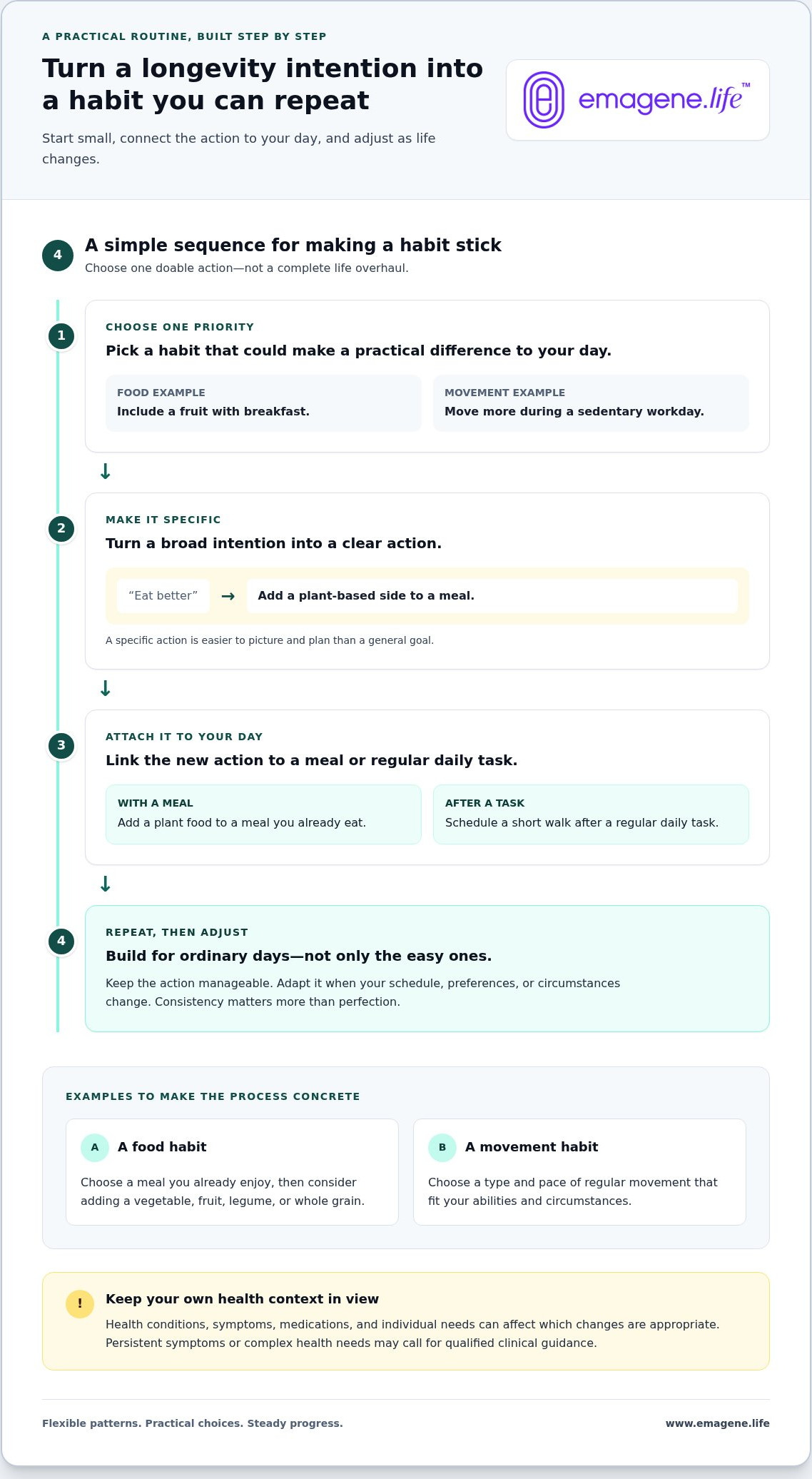
Use this sequence to turn an intention into a plan:
- Choose one priority. Identify a habit that would make a practical difference to your day, such as including a fruit with breakfast or moving more during a sedentary workday.
- Make it specific. Replace “eat better” with a clear action, such as adding a plant-based side to a meal you already prepare. Keep the step realistic for your preferences and health needs.
- Attach it to an existing routine. Decide when or where it will happen. You could take a walk after lunch or prepare ingredients while making dinner. A familiar cue can make a new action easier to remember.
Make progress measurable without chasing perfect compliance
Track whether you followed through and what helped or got in the way. A brief note or simple calendar mark can reveal patterns without turning self-monitoring into another source of pressure. Use the record for reflection, not as a diagnosis or a prediction of how long you’ll live.
Review the plan when it feels difficult to repeat. If a walk keeps being displaced by work, try a different time or a shorter route. If meal preparation feels like too much, simplify it or choose another food habit. A disruption is information, not failure. Adjust the plan and restart with a step that fits your current circumstances.
Emagene Life’s personalized longevity approach focuses on practical next steps shaped around individual health context and goals.
When to Personalize Your Longevity Diet and Lifestyle Plan
General health guidance can offer a useful starting point, but it can’t account for every person’s health history, symptoms, medications, or preferences. A change that suits one person may need adjustment for someone managing a health condition or taking medication. Personalization isn’t about making daily choices complicated. It’s about making sure your plan fits your circumstances.
Recognize when general guidance may not fit your needs
Persistent or unexplained symptoms deserve individualized clinical evaluation, rather than guesswork or increasingly restrictive food rules. Existing conditions and medications can also affect which dietary or activity changes are appropriate. Don’t diagnose yourself based on a symptom or an online checklist. If your health needs are complex, discuss changes with a qualified clinician and continue appropriate medical care.
Share the context that could shape your next steps: what concerns you, how long they’ve been present, relevant diagnoses, medications, and the routines you can realistically maintain. Your food preferences and daily schedule matter, too. A plan that ignores them may be difficult to follow, even if it sounds ideal on paper.
Turn general habits into a personalized health roadmap
Emagene Life’s Functional Medicine Assessment is a detailed evaluation designed to explore underlying contributors to health concerns and physiological imbalances. The assessment provides a foundation for identifying individual priorities and creating a personalized health roadmap, rather than relying on a one-size-fits-all routine.
The goal is not to replace appropriate medical care or promise a particular result. It’s to connect your health context with practical, evidence-aware choices. Your next step might be adapting a general eating pattern, considering how a symptom affects your routine, or identifying which questions to discuss with a clinician.
Personalization can make a longevity diet and lifestyle plan more relevant to your needs while keeping the focus on realistic, sustainable habits. Emagene Life’s longevity programs use functional medicine interventions to support long-term physical and cognitive performance.
Shape Your Next Step Around What Matters to You
Long-term health isn’t a finish line you reach by following a perfect plan. It’s an ongoing process of noticing what supports your well-being, what feels difficult to sustain, and where your needs may be changing. Let your next decision reflect your real life, not an idealized routine or a promise of guaranteed results.
The longevity diet and lifestyle choices that serve you best are the ones you can make thoughtfully and adapt over time. If a health concern or personal factor makes it hard to know where to begin, individualized guidance can help you consider your options with greater clarity.
Emagene Life’s personalized approach connects your health context with practical next steps. Explore Emagene Life’s Functional Medicine Assessment and longevity approach to take a considered next step toward your health goals.
Start with curiosity, not pressure. A more informed next step is progress in its own right.
Frequently Asked Questions
Is a longevity diet the same as the Mediterranean diet?
No. A longevity diet describes a broad approach to eating for long-term health, while the Mediterranean diet is one specific dietary pattern that has been studied. You can draw on its emphasis on plant foods, legumes, whole grains, and unsaturated fats without copying every traditional food or meal. Adapt choices to your culture, budget, preferences, and health needs. No single named diet is essential for pursuing healthier habits.
Can supplements extend lifespan?
No supplement has been established as a reliable way to extend lifespan for everyone. Products such as vitamin D, omega-3, or resveratrol may be discussed for specific health contexts, but that doesn’t prove they prolong life in generally healthy people. Supplements can also interact with medications or be unsuitable for some conditions. Before starting one, consider your diet, health history, and any suspected deficiency with a qualified clinician.
How much protein should I eat for healthy aging?
There isn’t one protein target that fits every person. Needs can depend on factors such as body size, activity, age, kidney health, and overall diet, so a personalized amount may be appropriate. Include protein-containing foods in meals, such as eggs, fish, tofu, tempeh, beans, or dairy if suitable for you. If you have kidney disease or another condition affecting food choices, discuss a major change with your clinician.
Do I need to fast to follow a longevity diet?
No. Fasting is not required to eat in a way that supports health. You can build a balanced routine around meals that suit your schedule and nutritional needs without setting a fasting window. Fasting may not be appropriate for everyone, particularly people managing certain health conditions, taking medications that require food, or with a history of disordered eating. Discuss it with a qualified clinician before trying it if any of these apply.
Can lifestyle changes guarantee a longer life?
No. Lifestyle choices can support health, but they can’t guarantee how long an individual will live. Outcomes are shaped by multiple influences, some of which a person can’t control. Be skeptical of programs or products that promise a specific lifespan result. A more useful measure of progress is whether a habit feels sustainable and supports your day-to-day well-being, rather than whether it appears to predict future longevity.
Is it too late to improve my health habits as I get older?
No. It can still be worthwhile to discuss manageable changes at any age, taking current abilities and health needs into account. For example, someone who finds strenuous exercise difficult might discuss safe ways to add movement with a clinician; another person might begin with a meal adjustment. Start from your current baseline, not an idealized routine. If a change causes concerning symptoms, pause and seek qualified clinical guidance.


