

Understanding Fatigue Symptoms: A Guide to Root Causes
What if low energy isn’t just a bad night’s sleep, but a pattern worth paying attention to? Ordinary tiredness often improves with rest. Fatigue symptoms can persist, interfere with daily activities, or remain even after sleep. That difference matters, but symptoms alone can’t identify the cause.
If you’re unsure what changes in your energy mean, you’re not alone. Fatigue can have many possible contributors, which makes online lists overwhelming and self-diagnosis unreliable. Start by noting what you’re experiencing, when it began, and whether it is changing or affecting your usual routine.
This guide explains how fatigue may show up, which patterns to track, and when it’s sensible to seek medical advice. You’ll also learn what details to bring to an assessment so the conversation can focus on your experience and possible next steps. A Functional Medicine Assessment may offer a structured way to explore underlying contributors and inform a personalized health roadmap. It should complement, not replace, appropriate medical care.
Key Takeaways
- Notice whether fatigue symptoms involve sleepiness, low energy, or physical or mental exhaustion, and consider how they affect your usual activities.
- Track when symptoms began, how they vary during the day, and how they relate to sleep, activity, medications, and other changes.
- Seek medical guidance if fatigue persists, worsens, or disrupts daily life. Sudden, severe, or alarming symptoms call for urgent local medical care.
- A Functional Medicine Assessment may offer a structured way to explore possible contributors and inform a personalized health roadmap, without guaranteeing an explanation or replacing appropriate medical care.
Fatigue Symptoms: What They Feel Like and How They Differ from Tiredness
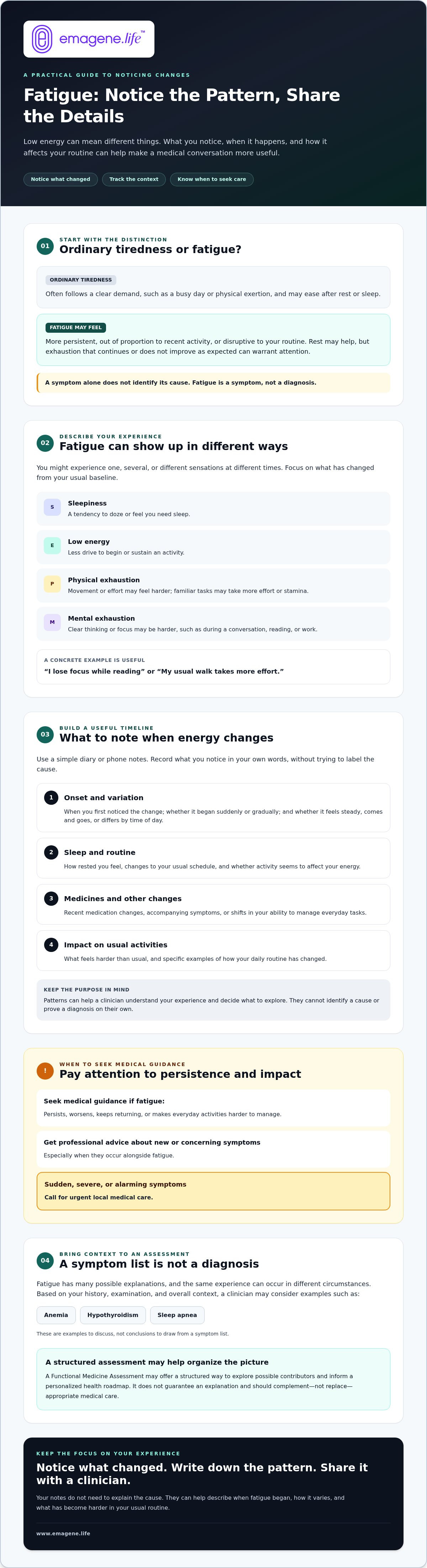
Fatigue is a feeling of physical or mental exhaustion, low energy, or reduced capacity to carry out usual activities. It’s a symptom, not a diagnosis, and it can feel different from sleepiness or ordinary tiredness. The medical definition of fatigue offers a broader overview, but describing what has changed for you is often the most useful place to start.
These experiences can overlap, but they aren’t identical. Sleepiness is a tendency to doze or feel you need sleep. Low energy may feel like having less drive to begin or sustain an activity. Physical exhaustion can make movement or effort feel harder, while mental exhaustion may affect clear thinking or focus. You might experience one, several, or different sensations at different times.
How can you tell fatigue from ordinary tiredness?
Ordinary tiredness often follows a clear demand, such as a busy day or physical exertion, and may ease after rest or sleep. Fatigue can feel more persistent, out of proportion to recent activity, or disruptive to your routine. Rest may help, but ongoing exhaustion that doesn’t improve as expected can warrant attention. A lingering symptom doesn’t automatically mean you have an illness, and no single description identifies its cause.
What physical, mental, and daily-life changes may accompany fatigue?
Look for changes from your usual baseline. You may notice reduced stamina during familiar tasks, difficulty concentrating during a conversation or at work, or less motivation to start activities you’d normally manage. Everyday routines may take more effort, even if you can still complete them.
Experiences vary. You might feel mentally drained without feeling sleepy, or notice physical weakness or a general lack of energy. Symptoms can also occur together. Rather than choosing a medical label, write down the words that fit and a concrete example, such as “I lose focus while reading” or “my usual walk takes more effort.” This gives a clinician clearer information to consider alongside timing, context, and other health details.
Fatigue Symptom Patterns: What Timing and Triggers Can Tell You
A timeline can make fatigue easier to describe. Note whether it started suddenly or gradually, feels steady or comes and goes, and changes after sleep, activity, or a shift in routine. These patterns help a clinician understand your experience and decide what to explore, but they can’t identify a cause on their own. Symptom patterns inform an evaluation; they don’t prove a diagnosis.
Which details should you track when fatigue changes?
Keep a simple diary or notes on your phone. Record what you notice in your own words, without trying to label the cause. Include details such as:
- Onset and variation: When you first noticed the change, and whether your energy differs by time of day or from one day to another.
- Sleep and routine: How rested you feel, changes to your usual schedule, and whether activity seems to affect your energy.
- Medicines and other changes: Any recent medication changes, accompanying symptoms, or shifts in your ability to manage everyday tasks.
A brief entry might say, “I felt drained after my usual afternoon routine,” or “I woke up tired despite sleeping through the night.” Compare these notes with your usual routine to make changes easier to describe. The aim is to capture useful context, not to follow a prescribed tracking period or prove a particular condition.
Can fatigue point to one specific condition?
No. Fatigue has many possible explanations, and the same experience can occur in different circumstances. A clinician may consider possibilities such as anemia, hypothyroidism, or sleep apnea based on your history, examination, and overall context. These are examples to discuss, not conclusions to draw from a symptom list. MedlinePlus also describes a range of causes of fatigue.
Bring your notes and questions to a medical appointment. If you’re seeking a broader, structured evaluation of ongoing health concerns, you can learn about a Functional Medicine Assessment as one possible next step. It may support a personalized health roadmap, but it doesn’t guarantee an explanation or replace appropriate medical care.
When Fatigue Symptoms Need Medical Attention, and How to Prepare
Consider seeking medical guidance if fatigue persists, worsens, keeps returning, or makes everyday activities harder to manage. New or concerning symptoms alongside fatigue also deserve professional advice. An evaluation can put your experience in context, but symptoms alone can’t establish a diagnosis. For general guidance on causes of fatigue and when to seek medical attention, see Mayo Clinic’s overview.
Routine assessment is different from urgent care. If symptoms are sudden, severe, or alarming, seek urgent local medical care and follow local emergency guidance. Don’t wait for a routine appointment if you feel you need immediate help.
What should you bring to a fatigue appointment?
A concise record can help you explain what has changed. Before your appointment, prepare these details:
- Summarize the timeline. Note when the fatigue began, whether it fluctuates or is getting worse, and how it affects your usual activities. Include examples, such as needing more breaks during a familiar routine.
- List related changes. Write down other symptoms, changes in sleep or routine, and anything you’ve noticed that seems to affect your energy.
- Gather health information. Bring a current list of medications and supplements, along with relevant health history. Don’t stop a prescribed medication unless a healthcare professional advises you to.
- Prepare questions. Note what you’re most concerned about and what you want to understand. This can help keep the conversation focused on your priorities.
Clear observations are more useful than trying to arrive with a diagnosis. Share what you know, including what you’re unsure about, and let the healthcare professional guide the assessment.
If you’re seeking a broader, structured evaluation of ongoing health concerns, explore Emagene Life’s Functional Medicine Assessment. It is designed to evaluate possible underlying contributors and inform a personalized health roadmap. It should complement, not replace, appropriate medical care.
A Personalized Assessment Can Help Make Sense of Ongoing Fatigue
Persistent fatigue can be difficult to interpret in isolation. An evaluation considers your experience alongside your health history, lifestyle factors, and other relevant findings. The aim is to guide appropriate next steps, not to assume that one explanation fits everyone.
What can an individualized fatigue evaluation involve?
A clinician may review when your fatigue symptoms began, how they have changed, and how they affect your daily life. They may also consider your health history and lifestyle context, then conduct an examination or recommend appropriate investigations based on your individual presentation. The scope of an evaluation depends on the person and the clinician’s judgment. No single assessment guarantees a clear explanation.
A functional medicine assessment is one approach to evaluating health concerns. It may provide a broader, structured review, but it doesn’t replace appropriate medical care or establish a diagnosis from symptoms alone. Share any concerns with a qualified healthcare professional, especially if fatigue is worsening or disrupting your routine.
How can a personalized health roadmap support next steps?
Assessment findings may help inform personalized next steps. A health roadmap can organize areas to discuss and guide further decisions, but recommendations should reflect your needs and be reviewed with qualified professionals. Your plan may need to change as your circumstances or health information change.
Emagene Life’s Functional Medicine Assessment is designed to evaluate underlying contributors to health concerns and inform a personalized health roadmap. To learn more about the approach, explore Emagene Life’s Functional Medicine Assessment. For additional context, see “Comprehensive Functional Medicine Assessment in Malaysia: A Precision Roadmap to Longevity.”
Take the Next Step Toward Understanding Your Energy
Fatigue is a symptom to investigate, not a diagnosis to guess. Notice how your energy changes, what else you experience, and how those changes affect daily life. If fatigue symptoms persist, worsen, or disrupt your routine, seek medical guidance and bring clear notes about what you’ve observed.
A thoughtful assessment can help organize next steps. Emagene Life offers a Functional Medicine Assessment designed to evaluate possible underlying contributors to health concerns and inform a personalized health roadmap. It can be one structured option for a broader evaluation, while appropriate medical care remains essential. Emagene Life serves customers nationally across Malaysia.
Explore a personalized Functional Medicine Assessment to learn more. You don’t need to have every answer before seeking support. Start with what you’ve noticed, and take the next step toward greater clarity with confidence.
Frequently Asked Questions
What are the most common symptoms of fatigue?
Common fatigue symptoms include low energy, physical or mental exhaustion, reduced stamina, and difficulty concentrating. You may also feel less able to start or complete your usual tasks. These experiences can occur together or separately, and they can vary over time. Describe what has changed for you, such as needing more breaks during familiar activities, rather than assuming a symptom points to a specific condition.
Is fatigue the same as feeling sleepy?
No. Sleepiness is feeling drowsy or having a tendency to doze, while fatigue can involve low energy or physical or mental exhaustion without feeling sleepy. The experiences can overlap, but they aren’t interchangeable. For example, you might struggle to focus or feel drained while remaining fully awake. Explaining which sensation you notice can help a healthcare professional understand your experience more clearly.
Can fatigue be a symptom of a medical condition?
Yes. Fatigue can accompany a range of health conditions, but it can also have other explanations, and the symptom alone doesn’t identify a cause. A clinician may consider possibilities such as anemia, hypothyroidism, sleep apnea, or mental health concerns in light of your history and other symptoms. Avoid using a symptom list to diagnose yourself. A professional evaluation can help determine what should be considered.
How can I tell if my fatigue needs medical attention?
Seek medical guidance if fatigue persists, worsens, returns repeatedly, or interferes with daily activities. New or concerning symptoms alongside it are also a reason to contact a healthcare professional. There isn’t one time threshold that applies to everyone. If symptoms are sudden, severe, or alarming, seek urgent local medical care and follow local emergency guidance rather than waiting for a routine appointment.
What happens during an assessment for ongoing fatigue?
An assessment may include a review of your symptoms, health history, daily context, and relevant findings. A healthcare professional may examine you and consider appropriate investigations based on your individual presentation. The scope can vary, and no single symptom or assessment guarantees a particular explanation. Bring a concise timeline, note how fatigue affects your routine, and list your medications, supplements, and related health changes.
Can a functional medicine assessment help investigate fatigue?
A Functional Medicine Assessment can offer a structured approach to evaluating health concerns, including possible underlying contributors to ongoing fatigue. Emagene Life offers this assessment to inform a personalized health roadmap. It cannot guarantee an explanation, and symptoms alone don’t establish a diagnosis. Use it as a possible broader evaluation alongside, not instead of, appropriate medical care and guidance from qualified healthcare professionals.


