

Managing Hashimoto's Thyroiditis With Diet and Selenium
Eggs can be part of a Hashimoto’s diet unless you have an allergy or notice a personal sensitivity. Managing Hashimoto's thyroiditis holistically means considering nutrition, symptoms, and thyroid function together, rather than focusing on one food. Selenium supplementation may lower thyroid peroxidase antibody levels, but diet and supplements do not replace appropriate medical care.
It’s understandable to wonder whether eggs or other foods could affect your symptoms. This article explains how Hashimoto’s differs from hypothyroidism, what selenium may contribute, and how an anti-inflammatory eating pattern can support overall health. It also covers why restrictive diets are not automatically necessary and why food choices should reflect your individual symptoms and needs.
Key Takeaways
- Learn how Hashimoto’s thyroiditis differs from hypothyroidism, and why the terms describe different aspects of thyroid health.
- Explore how selenium and nutrient-rich foods may support thyroid health without treating supplements as a substitute for medical care.
- See how an anti-inflammatory eating pattern can emphasize variety and whole foods rather than automatic, restrictive food rules.
- Recognize symptoms that can accompany Hashimoto’s and understand why thyroid function and autoimmune activity both matter.
- Discover how a Functional Medicine Assessment can help connect symptoms, health history, and individual wellness goals.
Selenium supplementation
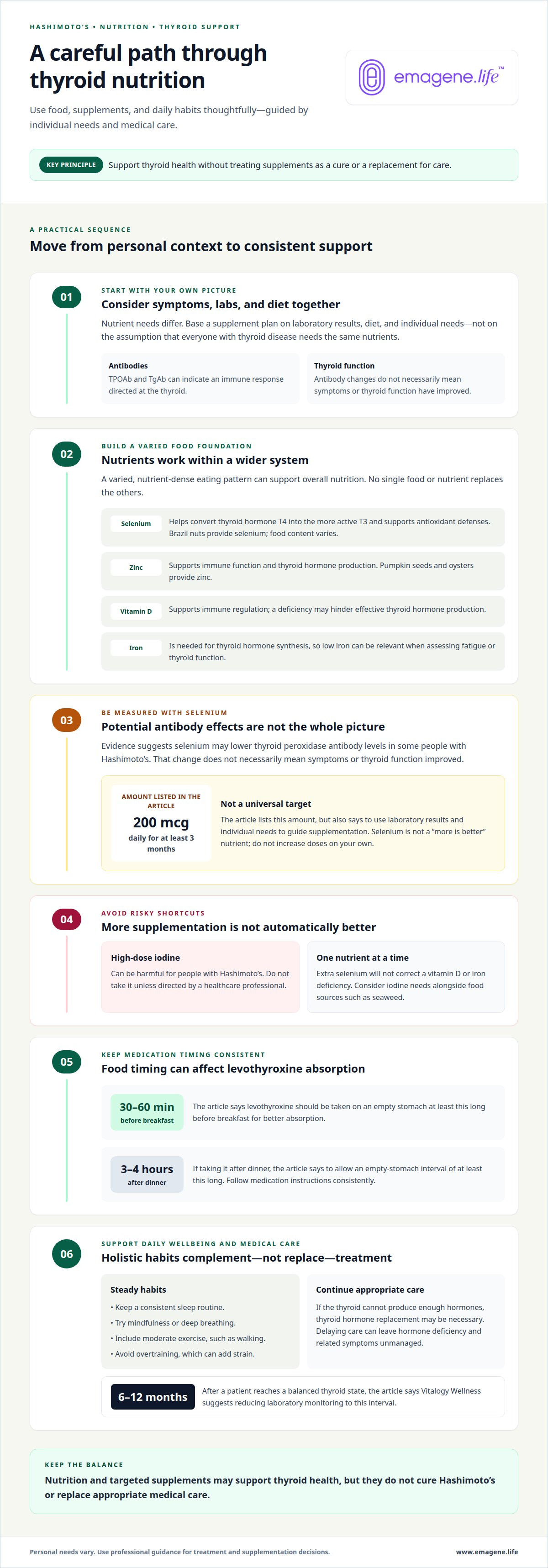
Diet and targeted supplements may support thyroid health and improve some Hashimoto’s symptoms, but they do not cure the autoimmune disease. Evidence suggests selenium can lower thyroid peroxidase antibody levels in some people. However, a change in antibody levels does not necessarily mean symptoms or thyroid function have improved.
Selenium helps the body convert thyroid hormone T4 into the more active T3 and supports antioxidant defenses. Foods that provide selenium include Brazil nuts, while pumpkin seeds and oysters provide zinc. Food content varies, so a handful of nuts or a supplement doesn’t guarantee a specific intake. Base supplementation on laboratory results, diet, and individual needs rather than assuming every person with thyroid disease needs the same nutrient plan.
Zinc supports immune function and thyroid hormone production. Vitamin D supports immune regulation, and a deficiency may hinder effective thyroid hormone production. Iron is needed for thyroid hormone synthesis, so low iron can be relevant when assessing fatigue or thyroid function. These nutrients work within a wider system: taking extra selenium will not correct a vitamin D or iron deficiency.
High-dose iodine supplements can be harmful for people with Hashimoto’s. Do not take them unless directed by a healthcare professional, and consider iodine needs alongside food sources such as seaweed. Selenium is not a “more is better” nutrient either. Use laboratory results and individual needs to guide targeted supplements, and do not increase doses on your own.
Levothyroxine should be taken on an empty stomach at least 30-60 minutes before breakfast for better absorption, according to Vitalogy Wellness. Food timing matters, so follow the medication instructions consistently; taking it after dinner requires an empty-stomach interval of at least 3-4 hours.
For fatigue, stress, and sleep, focus on steady habits: keep a consistent sleep routine, try mindfulness or deep breathing, and include moderate exercise such as walking. Avoid overtraining, which can add strain instead of supporting daily energy.
Holistic measures should complement, not replace, conventional treatment. If the thyroid can’t produce enough hormones, thyroid hormone replacement may be necessary; delaying care can leave hormone deficiency and related symptoms unmanaged. After a patient reaches a balanced thyroid state, Vitalogy Wellness suggests reducing laboratory monitoring to every 6-12 months.
The page lists selenium supplementation at 200 mcg daily for at least three months; it also states that selenium can lower TPOAb levels in people with Hashimoto’s.
Anti-inflammatory diet
An anti-inflammatory eating pattern emphasizes varied, nutrient-dense foods rather than one “thyroid” ingredient. A practical approach to managing Hashimoto's thyroiditis holistically starts with meals that support overall nutrition and are realistic to maintain.
Anti-Inflammatory Dietary Strategies
Build meals around vegetables, fruit, healthy fats, and protein. Leafy greens, berries, olive oil, avocado, turmeric, and ginger add variety, while fish provides omega-3 fats. Pairing protein and fiber with healthy fats creates balanced meals and can help prevent blood sugar spikes that contribute to inflammation.
A Mediterranean-style eating pattern offers a useful framework: include vegetables, fruit, fish, herbs, and healthy fats across meals. Get selenium and zinc from a varied diet rather than relying on one ingredient to change thyroid function. Consistent, balanced meals can also be easier to maintain during periods of stress or changing energy levels.
Gluten-Free and Whole-Food Diets
A whole-food diet prioritizes minimally processed ingredients, including vegetables, fruit, fish, and protein sources. It makes variety a central focus without broad restrictions that can complicate everyday meals or weight management.
Gluten removal has reduced thyroid antibody levels and improved thyroid function in some research, but it isn’t a universal requirement. In a six-month study of 34 women with Hashimoto’s, a gluten-free diet reduced antibody levels and improved thyroid function and vitamin D levels compared with a control group. People diagnosed with Hashimoto’s should also be screened for celiac disease.
Food sensitivities vary from person to person. If you suspect gluten or dairy triggers symptoms, a structured elimination followed by gradual reintroduction can help identify patterns. Record what you eat, your symptoms, and when they occur. Changing several foods at once makes results harder to interpret. The Autoimmune Protocol diet requires prescription and monitoring by an experienced healthcare professional.
In a ten-week study of 16 women with Hashimoto’s, the Autoimmune Protocol diet improved quality-of-life scores and reduced C-reactive protein. Another study of 218 women found lower oxidative-stress markers among those who ate fruits and vegetables more frequently. These findings support thoughtful, individualized choices, not automatic food exclusions for everyone.
When managing Hashimoto's thyroiditis holistically, start with one practical change, such as adding leafy greens or berries to a meal, then track symptoms and digestion. Keep dietary experiments distinct from prescribed treatment decisions. A personalized assessment of nutrition and health patterns can help organize observations into a more targeted plan.
Is thyroid dysfunction linked to other chronic diseases?
Hashimoto’s is an autoimmune condition in which immune activity inflames the thyroid gland and may impair thyroid hormone production. Its symptoms can overlap with those of other health problems, so diagnosis and care require more than matching symptoms.
Thyroid Autoimmunity and Possible Contributors
In Hashimoto’s, thyroid antibodies such as TPOAb and TgAb indicate an immune response directed at the thyroid gland. Inflammation can damage thyroid tissue, reduce hormone production, and lead to hypothyroidism. Iodine intake matters: avoid high-dose iodine supplements unless a healthcare professional directs you to take them. A balanced diet that includes natural iodine sources is different from taking concentrated supplements.
Coexisting Autoimmune Conditions
Other autoimmune conditions are separate immune disorders that can occur alongside Hashimoto’s, rather than symptoms caused only by low thyroid hormone. Celiac disease is one relevant example, and people diagnosed with Hashimoto’s should be screened for it. Mention persistent digestive problems or new symptoms during a clinical review, as identifying another condition can affect testing and treatment decisions.
Symptoms of Hashimoto’s may include fatigue, weight gain, brain fog, hair thinning, depression, and joint pain. An enlarged thyroid, called a goiter, can also occur. These symptoms don’t identify the cause on their own, because several conditions can produce similar changes. Assessment may include TSH, free T4, free T3, TPO antibodies, and thyroglobulin antibodies to evaluate thyroid function and autoimmune activity.
Medical treatment addresses the thyroid’s hormone output. If the gland cannot produce enough hormone, thyroid hormone replacement may be necessary. Treatment decisions depend on thyroid function and clinical findings. Food changes and lifestyle measures do not replace prescribed medication when hormone levels require treatment.
Monitoring tracks both hormone levels and symptoms. TSH may be remeasured 6-8 weeks after medication or supplement changes. Once a balanced thyroid state is reached, Vitalogy Wellness suggests reducing laboratory monitoring to every 6-12 months. Follow-up also considers symptom changes, since a laboratory result is only one part of assessing progress.
Seek prompt medical advice if symptoms worsen, you notice an enlarged neck, or new concerns arise after starting treatment. A clinician can assess whether thyroid function has changed or another condition needs attention. Rapidly worsening symptoms call for urgent evaluation, not reliance on diet or supplements alone.
In Malaysia, Hashimoto’s care may involve clinical assessment, thyroid blood tests, medication, and follow-up. Costs depend on the assessments and tests needed, the treatment plan, and the setting where care is received. The clinical priority is to confirm thyroid function and autoimmune activity, then match treatment and monitoring to those findings.
Hypothyroidism versus Hashimoto’s thyroiditis
Hashimoto’s thyroiditis and hypothyroidism are related, but they mean different things. Hashimoto’s is an autoimmune condition that can damage the thyroid gland; hypothyroidism means the gland produces too little hormone. This distinction explains why autoimmune thyroid activity can be present before an underactive thyroid develops.
Think of Hashimoto’s as a possible cause and hypothyroidism as a resulting state. Over time, inflammation from Hashimoto’s can damage thyroid tissue and reduce hormone production. Symptoms alone cannot show whether the cause is autoimmune, another thyroid problem, or something unrelated. Diagnosis combines symptoms with laboratory findings.
Thyroid antibodies can be detectable years before clinical signs of Hashimoto’s appear. Tests used to evaluate thyroid function and autoimmune activity include TSH, free T4, free T3, TPO antibodies, and thyroglobulin antibodies. TSH alone is not enough to diagnose Hashimoto’s. Antibody results help assess autoimmune activity, while thyroid hormone tests show how well the gland is functioning.
These results answer different questions. Elevated TSH is typically the first sign of an underactive thyroid, while free T4 and free T3 provide additional information about circulating thyroid hormones. The thyroid converts free T4 into free T3, the most active form of thyroid hormone. A clinician interprets these results together rather than treating one number as the complete picture.
The distinction also shapes treatment. If Hashimoto’s has not impaired hormone production, care may focus on monitoring thyroid function and symptoms. If the gland cannot make enough hormone, thyroid hormone replacement may be needed. Food changes, selenium supplementation, and other lifestyle measures can support overall health, but they do not restore hormone production when the thyroid is underactive.
Follow-up also depends on which problem is being tracked. Thyroid hormone tests help assess function; thyroid antibodies reflect autoimmune activity. After medication or supplement changes, TSH is remeasured 6-8 weeks later. Antibody changes may take up to three months to show on laboratory tests, so short-term symptoms and antibody results may not move together.
The practical takeaway: Hashimoto’s identifies an autoimmune process, while hypothyroidism identifies reduced thyroid output. Someone can have one without the other at a given point in the disease’s course. Use testing to clarify both, then align treatment and monitoring with thyroid function. For a structured review of symptoms and health patterns, explore a personalized thyroid health assessment.
Hashimoto’s remains distinct from hypothyroidism, even though it is described as the most common cause of hypothyroidism in the United States.
Emagene Life: Functional Medicine Assessment
Emagene Life’s Functional Medicine Assessment can help you explore how your symptoms, health history, and physiological imbalances may fit together. Consider it if thyroid concerns persist, your symptoms seem broader than one lab result, or you want a more integrated view of your health.
The assessment focuses on identifying potential root causes and shaping personalized wellness strategies. It provides a broader framework for discussing nutrition, lifestyle, and thyroid health alongside your existing medical care. Emagene Life also offers functional medicine, longevity, and Hormone Optimisation.
Bring your questions, symptom history, and relevant test results to support a focused discussion. Contact Emagene Life to explore your health priorities through a personalized assessment.
Build a Clearer Path Forward
Managing Hashimoto's thyroiditis holistically is not about adding every supplement or eliminating every suspected food. It means making measured choices, noticing how your health changes, and keeping medical treatment in the picture. Give each change a clear purpose and record what you observe, so future decisions rely on more than guesswork.
Choose one priority to discuss with your healthcare professional, such as persistent symptoms, nutrition questions, or how to interpret your thyroid results. A focused conversation can help you decide what needs attention first and how lifestyle choices fit alongside your existing care. Keep your next step practical and personal.
If you’re ready to explore your health priorities with Emagene Life, begin a conversation about your next steps. Progress starts with informed choices and a plan that fits your life. Keep asking clear questions, stay engaged with your care, and move forward with confidence.
Frequently Asked Questions
Can you eat eggs if you have Hashimoto’s?
Yes, eggs can be part of a Hashimoto’s diet if you tolerate them and do not have an egg allergy. There is no general rule here that everyone with Hashimoto’s must avoid eggs. If you suspect eggs affect your symptoms, record what you ate and how you felt, then discuss the pattern with a healthcare professional before removing multiple foods from your diet.
What Is Hashimoto’s Thyroiditis?
Hashimoto’s thyroiditis is an autoimmune condition in which immune activity targets the thyroid gland. The resulting inflammation can damage thyroid tissue and affect its ability to produce hormones. Thyroid antibodies may be present before obvious symptoms develop, so feeling well does not necessarily reveal what is happening biologically. The term describes the autoimmune process, not a specific diet, symptom, or treatment plan.
What is Autoimmune Thyroiditis?
Autoimmune thyroiditis describes inflammation of the thyroid linked to an immune response against thyroid tissue. Hashimoto’s thyroiditis is a common form of this condition. Antibodies such as TPOAb and TgAb can help identify autoimmune activity, while thyroid hormone tests assess gland function. These results answer different questions, so a clinician interprets them together rather than treating an antibody result as the whole picture.
What is Hashimoto's Disease?
Hashimoto’s disease is another name for Hashimoto’s thyroiditis. Both terms describe the autoimmune process affecting the thyroid, not necessarily low thyroid hormone levels. For example, someone may have thyroid antibodies without established hypothyroidism. The distinction matters because the diagnosis and the gland’s current hormone output are related, but not interchangeable.
What triggers Hashimoto’s flare-ups?
“Flare-up” is often used to describe worsening symptoms, but a symptom change alone doesn’t prove that autoimmune activity has increased. Stress can affect how the body converts T4, and high-dose iodine supplements are a concern in Hashimoto’s. Track symptom changes alongside medication, supplement, and diet changes. That record can help a clinician assess whether thyroid function or another health factor needs attention.
What is Hashimoto’s thyroiditis and how is it diagnosed?
Hashimoto’s thyroiditis is an autoimmune thyroid condition diagnosed by evaluating symptoms, thyroid function, and evidence of autoimmune activity. A clinician may review TSH, free T4, free T3, TPO antibodies, and thyroglobulin antibodies, along with your health history and examination. TSH alone can’t establish Hashimoto’s. If fatigue or hair thinning persists, bring a symptom timeline and current medication list to your appointment.


