

Prolonged fatigue: causes, associated conditions and assessment
Persistent exhaustion is a symptom, not a diagnosis. Prolonged fatigue can have several causes, and chronic fatigue that lasts six months or more and does not improve with rest or sleep needs careful assessment.
If rest has not restored your energy, it is reasonable to want more than a guess. Understanding what fatigue means and what may be contributing can help you decide what to do next.
This article explains how medical conditions and sleep disorders may contribute to fatigue, what an assessment can involve, and how management depends on the cause. You’ll also learn when ongoing symptoms warrant medical attention and why a clearer picture of your health is a useful starting point.
Key Takeaways
- Fatigue is a symptom with multiple possible contributors, so identifying the cause matters more than treating tiredness as a diagnosis.
- Sleep habits, diet, activity levels, medications, and underlying health conditions can all shape energy and recovery.
- Sleep disorders may disrupt restorative rest even when time in bed seems adequate; persistent daytime tiredness deserves attention.
- An assessment can help distinguish possible causes, and ME/CFS has no single test that confirms it.
- Management depends on what is driving the symptoms and may involve targeted changes or treatment rather than a one-size-fits-all plan.
What medical conditions cause fatigue?
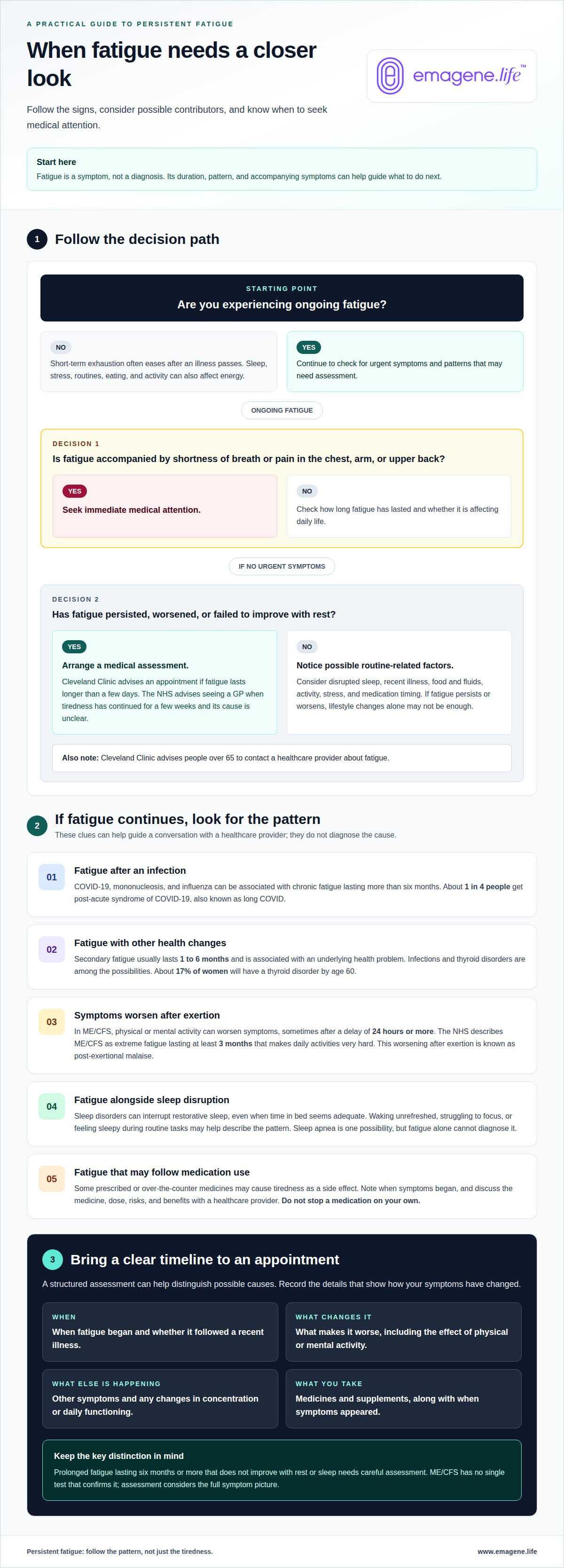
Fatigue is a symptom, not a diagnosis, and short-term exhaustion often eases after an illness passes. Poor sleep, demanding routines, stress, and changes in eating or activity can also affect energy. If tiredness continues despite rest, note when it began, what makes it worse, and whether other symptoms appeared. These details can help distinguish temporary fatigue from a problem that needs assessment.
Sleep is a core part of recovery. Most adults need 7-9 hours of quality sleep each night, while the NHS advises adults with tiredness to aim for 6-9 hours. Irregular bedtimes, late caffeine, or a noisy room can disrupt sleep and leave someone tired the next day. Relaxing before bed and avoiding food, caffeine, and exercise close to bedtime may help protect sleep.
Food and fluids matter, too. Cleveland Clinic recommends a balanced diet and plenty of water to support nourishment and hydration. Large or particular meals can bring on sleepiness within 10 to 30 minutes for some people, so notice whether symptoms follow specific foods. Regular meals and adequate fluids can support steadier energy, but they cannot diagnose the cause of persistent exhaustion.
Activity can influence energy in different ways. A general exercise goal is at least 30 minutes of physical activity most days of the week, but excessive exercise can cause fatigue. Cleveland Clinic advises discussing an appropriate exercise plan with a healthcare provider. This distinction matters in myalgic encephalomyelitis, also called ME/CFS, where physical or mental exertion can worsen symptoms. Pushing through exhaustion may be counterproductive.
How can sleep, diet, exercise, and stress management improve fatigue? Consistent sleep routines, balanced meals, enough water, suitable activity, and stress-reduction practices can support recovery and reduce avoidable strain. Cleveland Clinic identifies yoga, mindfulness, meditation, and regular exercise as ways to help relieve stress and boost energy.
How is prolonged fatigue treated based on its cause? Treatment depends on what is contributing to the symptoms and may include dietary or lifestyle changes, psychological support, appropriate exercise, or medication when needed. The NHS also describes talking therapies, better-sleep advice, and guidance on relaxation or lifestyle changes as possible approaches.
Start with factors that may be linked to your symptoms, such as disrupted sleep or a recent illness, and observe whether routine adjustments make a difference. If fatigue persists or worsens, a professional assessment can help investigate other causes instead of relying on lifestyle changes alone.
Medical conditions associated with fatigue
Ongoing exhaustion can reflect a medical condition, even when its cause is initially unclear. Secondary fatigue usually lasts 1 to 6 months and is associated with an underlying health problem. Infections, thyroid disorders, and myalgic encephalomyelitis/chronic fatigue syndrome (ME/CFS) are among the conditions to consider. The pattern matters: note whether fatigue began after an illness, worsens with activity, or comes with other symptoms.
Some infections can leave energy levels disrupted well beyond the acute illness. COVID-19, mononucleosis, and influenza can cause chronic fatigue lasting more than six months. About one in four people get post-acute syndrome of COVID-19, also known as long COVID. Thyroid disorders can also be relevant: about 17% of women will have a thyroid disorder by age 60. A doctor considers the full symptom picture rather than treating fatigue alone as a diagnosis.
ME/CFS involves severe fatigue that rest does not improve. The NHS describes it as extreme fatigue lasting at least 3 months that makes daily activities very hard. Physical or mental activity can worsen symptoms, sometimes after a delay of 24 hours or more. This worsening after exertion is known as post-exertional malaise. A change in activity tolerance, concentration, or daily functioning can help a doctor assess whether this condition needs consideration.
Medication can contribute, too. Some prescribed or over-the-counter drugs may cause tiredness as a side effect, and the timing of symptoms may help identify a possible connection. Don’t stop a medication on your own. Cleveland Clinic advises discussing its risks and benefits with a healthcare provider first. That conversation can consider the medicine, dose, symptom onset, and condition being treated before any change is made.
Schedule a medical appointment if fatigue lasts longer than a few days, according to Cleveland Clinic. The NHS advises seeing a GP when tiredness has continued for a few weeks and its cause is unclear. Cleveland Clinic also advises people over 65 to contact a healthcare provider about fatigue. Seek immediate medical attention for fatigue accompanied by shortness of breath or pain in the chest, arm, or upper back.
Before an appointment, record when the fatigue began, how it affects physical activity, recent illnesses, and medicines or supplements taken. These details give the doctor a clearer timeline and help guide assessment. For ongoing symptoms, a structured review of health concerns can help organize the factors that may be contributing.
Sleep disorders
Sleep disorders can disrupt restorative sleep and leave you with low energy during the day, even when you seem to spend enough time in bed. The pattern of nighttime waking and daytime symptoms can help show whether sleep may be part of the problem.
Sleep Disorders and Mental Fatigue
Sleep disorders interrupt sleep or reduce its quality, while mental fatigue can appear as poor concentration, slower thinking, or difficulty staying alert. Ongoing sleep disruption can make work, learning, and everyday decisions harder. Sleep apnea, for example, can involve breathing pauses lasting a few seconds during sleep. Repeated interruptions may leave sleep feeling unrefreshing.
Notice the pattern, not just the tiredness: waking unrefreshed, struggling to focus during the day, or feeling sleepy during routine tasks can help describe the problem. Sleep apnea is one possibility, but fatigue alone cannot diagnose it. Chronic fatigue syndrome is a separate condition, not another name for poor sleep. A healthcare professional considers symptoms and their impact alongside possible sleep-related causes.
Exercise and Sleep Advice
Advice on exercise and sleep focuses on supporting steady recovery without adding strain. Cleveland Clinic recommends consistent bedtimes and wake times as part of good sleep habits. A stable routine can make changes in sleep quality easier to notice. Exercise can support energy, but timing and intensity matter: activity that leaves you overtired may make it harder to wind down that evening.
For people with severe fatigue or suspected chronic fatigue syndrome, a fixed exercise target may not be appropriate. Symptoms can worsen after exertion in ME/CFS, so activity should reflect the person’s response rather than a standard goal. Track whether a walk, workout, or busy day affects sleep or next-day alertness. That pattern can provide useful information for an assessment.
Sleep habits are only one part of the picture. The NHS advises adults experiencing tiredness or fatigue to aim for 6 to 9 hours of sleep, while most adults need 7-9 hours of quality sleep each night. These recommendations use different ranges, but both highlight the value of sufficient, restorative sleep. Individual needs and sleep quality also matter; time in bed does not guarantee uninterrupted rest.
With sleep apnea, breathing may pause for a few seconds, disrupting normal sleep even if you do not fully remember waking. A bed partner may notice repeated interruptions, while you may mainly notice daytime exhaustion or mental fatigue. Sharing these observations with a healthcare professional can help distinguish a sleep-related pattern from fatigue associated with illness or other causes.
Use a simple record to connect nighttime and daytime symptoms: note bedtime, wake time, awakenings, exercise, and next-day concentration. Cleveland Clinic recommends regular bedtimes and wake times, which can make the record more meaningful. If fatigue remains severe, affects daily activities, or occurs with signs of disrupted breathing during sleep, seek medical assessment rather than assuming lifestyle changes alone will resolve it.
How fatigue is assessed and managed
A useful assessment looks beyond the feeling of tiredness. A healthcare professional can investigate the cause by reviewing when symptoms began, how they change, and which daily activities they affect. Details such as recent illness, sleep disruption, medication use, physical exertion, and mental health problems help build a clearer timeline. Since fatigue is a symptom, the aim is to identify a possible medical condition or other contributing factor.
Bring specific examples to an appointment: difficulty concentrating at work, needing extra rest after routine activity, or waking unrefreshed. The NHS advises seeing a GP if tiredness has continued for a few weeks and its cause is unclear. Contact a healthcare professional if rest, stress reduction, healthy eating, and adequate fluids have not helped after two or more weeks. A prolonged pattern deserves investigation, not guesswork.
An assessment may include questions about symptoms, health history, medicines, sleep, and mood changes, including depression. A healthcare professional may then decide whether an examination or tests are appropriate to investigate possible causes. No single test can identify every source of fatigue. For myalgic encephalomyelitis/chronic fatigue syndrome (ME/CFS), no specific test confirms the condition, so the clinical picture and exclusion of other explanations matter.
A questionnaire can add structure, but it cannot replace diagnosis. The Pichot fatigue scale scores each of its eight statements from 0 to 4 points. A score higher than 22 points indicates excessive fatigue, but the scale is informational and requires a doctor's diagnosis for confirmation. Use a score as a description of symptom burden, not proof of a syndrome or another disease.
Management depends on the cause and your response. Treatment may involve addressing an underlying illness, reviewing a medicine with a healthcare professional, or getting support for sleep, stress, and mental health. For ME/CFS, NICE advises tailoring activity to the person and adjusting it to symptoms rather than automatically increasing it. This matters because a fixed exercise target can worsen problems when exertion triggers a symptom flare.
Track changes in energy, concentration, sleep, and activity after each management adjustment. This record helps show whether a treatment supports daily function or brings on worse symptoms. If fatigue comes with shortness of breath or pain in the chest, arm, or upper back, seek immediate medical attention. For a structured review of persistent symptoms and possible contributing factors, explore a personalized health assessment.
Emagene Life: Functional Medicine Assessment
Emagene Life’s Functional Medicine Assessment offers a broader way to understand persistent fatigue and possible physiological imbalances. It focuses on identifying potential root causes of health concerns rather than treating tiredness as an isolated symptom. Consider an assessment if fatigue continues to affect daily life and you want a personalised view of factors that may be influencing your health.
Emagene Life uses functional medicine to develop personalised wellness strategies, with a focus on supporting healthy longevity. Hormone Optimisation may also be relevant when hormonal health is among the concerns being assessed. The aim is a clearer, more integrated understanding of your health, not a promise of a specific outcome.
If ongoing fatigue has led you to consider a more comprehensive assessment, contact Emagene Life to discuss the Functional Medicine Assessment.
Move From Uncertainty to a Clearer Next Step
Ongoing exhaustion can narrow your days and make planning difficult. Treat the pattern as useful information, not a personal failing. Notice what changes your capacity, what helps restore it, and which daily demands have become harder. This perspective can help you make a more informed decision about support instead of pressuring yourself to push through.
If prolonged fatigue continues to affect your quality of life, a broader view of your health may help shape your next steps. Emagene Life’s Functional Medicine Assessment considers possible contributors to health concerns through a personalised approach to functional medicine and longevity. It provides a way to explore your health in context, with attention to your individual needs.
Contact Emagene Life today to discuss whether a Functional Medicine Assessment fits your next step. Small, informed decisions can create room for a more sustainable path forward.
Frequently Asked Questions
What is fatigue?
Fatigue is a symptom involving persistent tiredness, low energy, or reduced capacity for physical or mental activity. It can feel different from ordinary sleepiness: you may feel drained even after a quiet day. Fatigue itself is not a diagnosis. Describing how it affects concentration, work, and daily routines helps distinguish it from a brief dip in energy.
How can I ease or relieve fatigue at home?
Try pacing demanding tasks instead of using all your energy at once. For example, divide household chores into shorter activities and pause when symptoms increase. Keep a simple record of sleep, activity, meals, and energy changes to spot patterns. If exertion brings a delayed worsening of symptoms, avoid pushing through it. Home strategies can support daily function, but persistent or worsening fatigue needs medical assessment.
How can my healthcare provider help me manage fatigue?
A healthcare professional can assess your symptoms, review possible medical causes, and discuss an appropriate management plan. Bring a current list of medicines and supplements, along with examples of tasks that have become harder. Mention changes in mood, memory, sleep, or physical tolerance. These details can guide decisions about further evaluation and whether treatment should focus on an underlying condition, medication effects, or another contributor.
What causes prolonged fatigue?
Prolonged fatigue can have several causes, including disrupted sleep, infection, thyroid disorders, medication effects, and mental health conditions such as depression. Sometimes the cause is not immediately clear, so the timeline and combination of symptoms matter. For example, fatigue that began after an infection differs from tiredness that coincides with a medication change. A healthcare professional can assess these clues and consider possible explanations.
When should prolonged fatigue be checked by a doctor?
Cleveland Clinic advises seeking medical advice if fatigue lasts longer than a few days. The NHS advises seeing a GP if you have felt tired for a few weeks and don’t know why. Seek assessment sooner if symptoms are worsening or interfering with ordinary activities. Note when the tiredness began and what changed around that time, such as an illness or new medication.
What symptoms with fatigue require urgent medical attention?
Seek immediate medical attention for fatigue accompanied by chest pain, shortness of breath, an irregular or fast heartbeat, or feeling faint. Severe stomach, pelvic, or back pain, unusual bleeding, and a severe headache also require urgent attention. Cleveland Clinic advises getting immediate help if fatigue comes with thoughts of harming yourself or others. In Malaysia, contact local emergency services for urgent symptoms or immediate danger.


